


In brief
- Air fryer technique for a restaurant-quality steak with minimal smoke and fast cleanup.
- Key steps: room-temperature meat, a hot preheated basket, coarse seasoning, flip once, and a 10-minute rest for juicy steaks.
- Cook times and internal temps for perfect steak every time — use a thermometer rather than relying on timers alone.
- Finishing with a garlic herb butter elevates flavor; leftovers work beautifully in salads and sandwiches.
- Resources for learning more about air frying basics and preheating best practices are linked below.
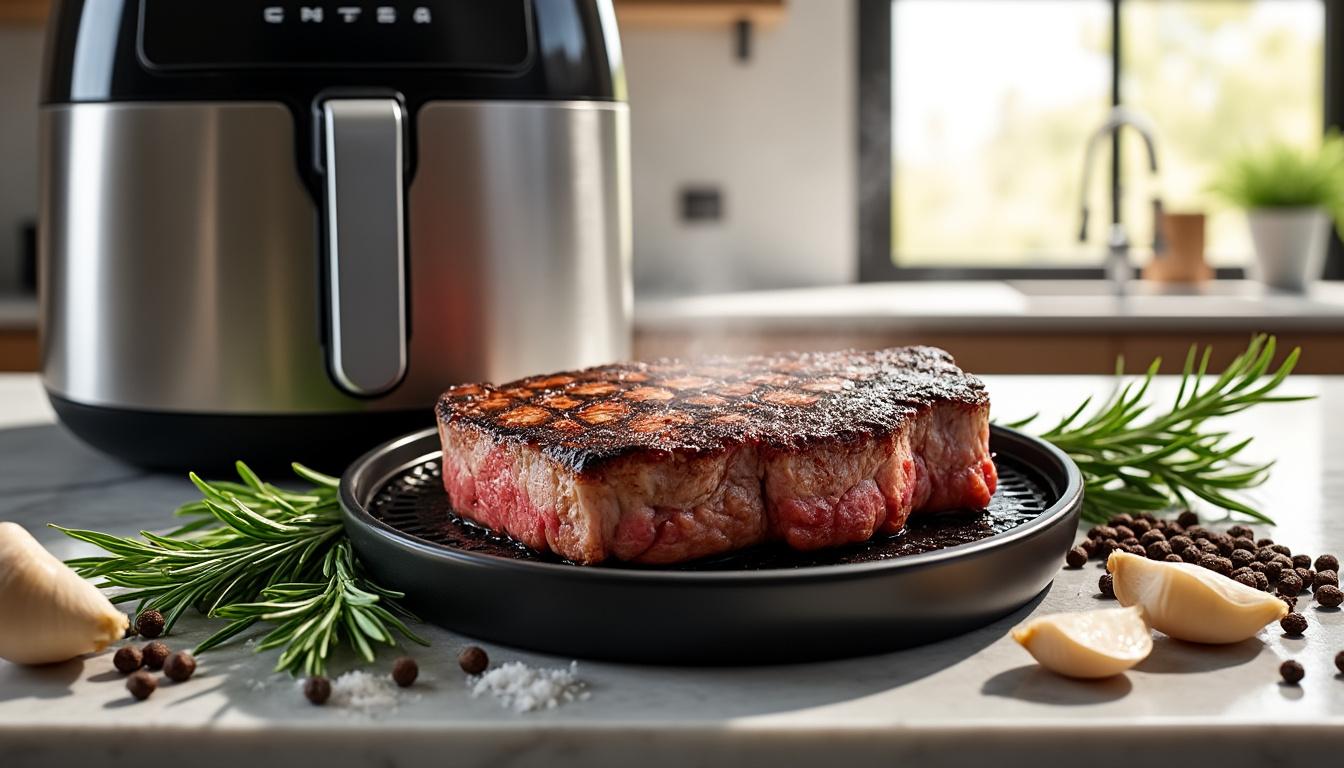
Air frying a steak reframes the ritual of meat preparation: it is precision-driven, fast, and surprisingly forgiving. A well-executed air fryer method produces a crispy, caramelized exterior from the Maillard reaction while preserving a tender, evenly cooked interior — the hallmark of a perfect steak. Modern countertop convection has evolved into a reliable tool for cooks who want steakhouse texture without standing over a smoking pan. The technique favors thick cuts — think ribeye, New York strip, or tri-tip — and a little patience: warm the steak to room temperature, pat it dry, and season boldly with coarse salt and freshly cracked pepper. Preheating the appliance to a high temperature is essential; once the steak hits the hot basket, the circulating air does the work. Resting the meat after cooking allows juices to redistribute, turning a technically correct steak into a memorable bite. This guide weaves practical steps, a compact equipment checklist, and flavor variations that transform simple quick recipes into a centerpiece worthy of guests. The following sections include a step-by-step approach, a handy timing table, and troubleshooting tips so that the next attempt yields consistently juicy steaks.
Essential steps for air fryer steak: a straightforward cooking guide
Start by selecting a cut at least 1 to 1.5 inches thick; thickness is the foundation of a tender interior. Remove meat from the fridge 30–60 minutes before cooking so it approaches room temperature — this ensures even heat penetration during the cook.
Pat the steak dry with paper towels to remove surface moisture, then rub with a tablespoon of olive or avocado oil to help seasonings adhere and to encourage browning. Season liberally with coarse salt, cracked black pepper, and optional garlic powder or Italian seasoning for an extra layer of flavor. These simple steps in meat preparation set the stage for a perfect steak every time.
Preheat, placement and timing for reliable results
Preheat the air fryer to 400°F (200°C) for at least five minutes; a properly preheated basket sears the surface immediately and helps form the prized crust. Place steaks in a single layer with space around each piece to allow hot air circulation — avoid crowding to prevent steaming.
General cook times (flip halfway) vary by desired doneness and appliance; a thermometer is the definitive tool. Remove steaks about 5°F below target temperature because carryover heat will raise the internal temp as the meat rests.
Flipping once at the midpoint promotes even browning on both sides and reduces handling. After cooking, rest steaks tented for about 10 minutes to let juices redistribute; cutting too soon leads to moisture loss. This rest is the small pause that transforms a good steak into a memorable one.
Cooking times, temperatures and a quick reference table
Use the following table as a practical cheat sheet while monitoring with a probe thermometer for the best accuracy. Each entry assumes steaks about 1–1.5 inches thick and an air fryer preheated to 400°F.
| Doneness | Target Internal Temp (°F) | Approx. Total Cook Time | Flip At |
|---|---|---|---|
| Rare | 125°F | 8–10 minutes | 4–5 minutes |
| Medium-Rare | 135°F | 10 minutes | 5 minutes |
| Medium | 145°F | 12 minutes | 6 minutes |
| Well-Done | 160°F | 12–15 minutes | Halfway |
Rely on the thermometer rather than the clock; every air fryer behaves slightly differently. This table simplifies decisions and helps avoid the two most common errors: undercooking the center or overcooking the exterior.
Garlic herb butter and finishing touches
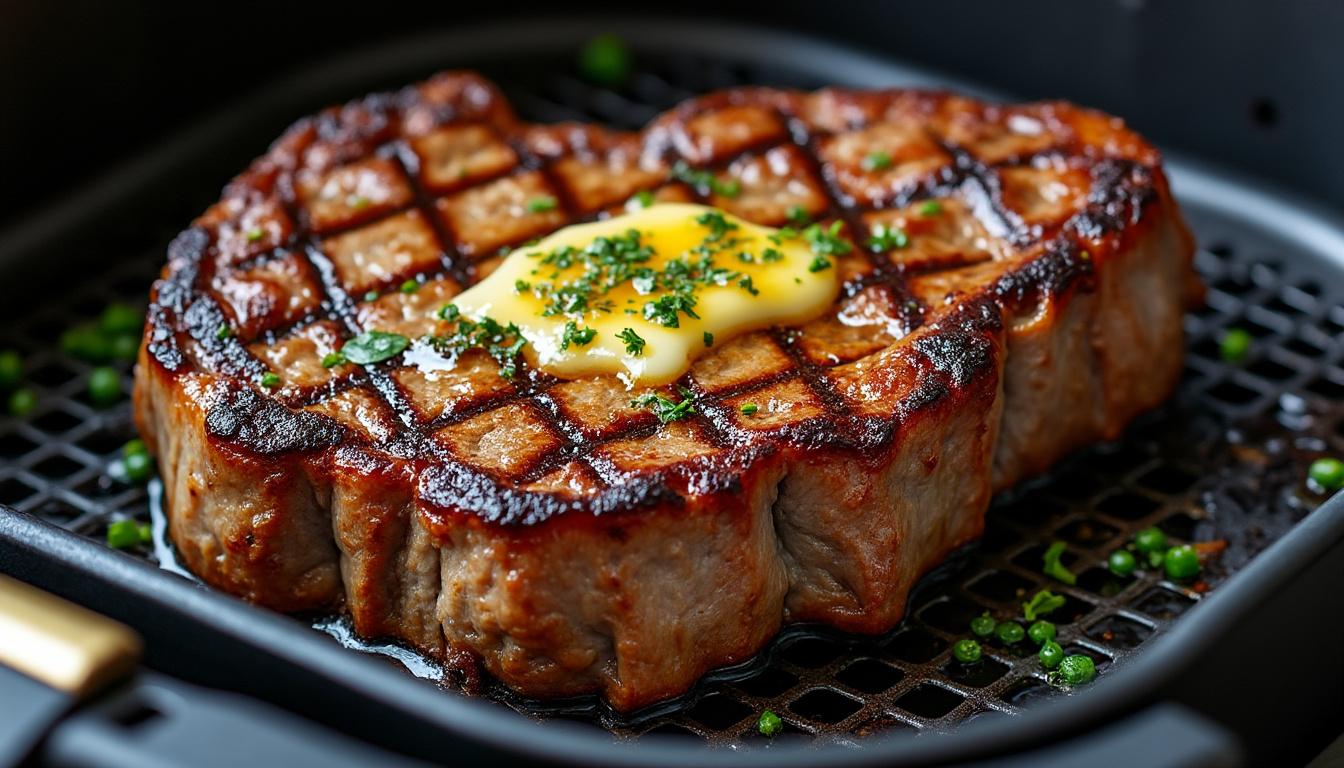
A simple compound butter amplifies the flavor dramatically. Combine 1/4 cup softened unsalted butter, 1 minced garlic clove, and 1 teaspoon each of chopped fresh rosemary, thyme and parsley. Dollop the butter onto the hot steak and let it melt into the crust while the meat rests.
For a smoky edge, add a pinch of smoked paprika or a dash of Worcestershire to the butter. The finishing touch complements texture and elevates the entire plate — never skip it when aiming for a restaurant-style finish.
The compound butter serves both as a flavor booster and as a visual signal of a perfectly finished steak. Letting the butter melt into the resting steak seals in aroma and mouthfeel for a richer bite.
Practical variations, side ideas and healthy cooking swaps
To tailor the result, try these variations: a coffee-cayenne rub for a deep, savory crust; blue cheese crumble added two minutes before finishing; or a lighter olive-oil and lemon zest vinaigrette for a Mediterranean twist.
Pair the steak with quick sides like a wedge salad, air-fried asparagus, or cheesy baked onions for contrast in texture and temperature. For a healthier cooking approach, choose leaner cuts and use olive or avocado oil sparingly — the air fryer already reduces fat compared with pan-frying, aligning the method with modern healthy cooking preferences.
These variations provide creative options while maintaining the core principles of proper meat preparation and timing; experimentation refines technique and palate alike.
Storage, reheating and smart leftover uses
Store cooked steak in an airtight container in the refrigerator for up to 3 days. To reheat while preserving juiciness, warm in a low oven at 250°F until the internal temp reaches about 110°F, or re-slice cold for salads and sandwiches.
Leftover steak thrives in tacos, fajitas, and grain bowls; thin slicing against the grain revives tenderness. Smart reheating and repurposing reduce waste and deliver satisfying second meals.
Troubleshooting common air fryer steak problems and pro tips
Grey, lackluster crusts usually come from insufficient preheating or from cooking moist, unpatted steaks. Overcrowding the basket causes steaming rather than searing; always leave space for air to circulate.
If the steak finishes too quickly on the outside while the center remains underdone, let the meat rest out of the fryer and finish gently in a lower-temperature oven. These fixes turn missteps into learning moments and lead to reliable outcomes.
- Always use a digital thermometer for precise meat preparation.
- Let steaks rest 10 minutes after cooking for optimal juiciness.
- Pat dry and use high-smoke-point oils for the initial rub.
- Flip once at the midpoint for even crust development.
- Experiment with compound butters or bold rubs to personalize flavor.
Adopting these rules reduces trial-and-error and streamlines the path to consistently excellent results.
Further reading and complementary guides can deepen technique: consult a detailed method for air fryer steak to compare timing and seasoning approaches, or review basics on how to preheat an air fryer correctly for optimal cooking results. For creative rubs and plating inspiration, recipes from established food blogs provide tested ideas.
See a detailed air fryer steak method and explore variations like espresso rubs and butter finishes. For additional tested recipes and step-by-step visuals, a popular ribeye technique offers practical timing and doneness guidance at juicy ribeye technique.
To reinforce foundational knowledge about the appliance itself, consult guides that explain how to preheat an air fryer correctly and how to use an air fryer for beginners: these resources clarify the small steps that make a big difference in results, improving every subsequent cook.
How to preheat an air fryer correctly and a step-by-step guide for beginners provide clarity on appliance behavior and settings.
Can frozen steaks be cooked in an air fryer and how does the result compare?
Frozen steaks can be cooked in an air fryer, but thawed steaks produce a superior crust and texture. If cooking from frozen, add 5–8 minutes to the total time and monitor the surface for browning; expect less pronounced caramelization than with thawed meat.
What is the best way to check doneness without cutting into the steak?
Use a reliable digital meat thermometer inserted into the thickest part of the steak. Remove the steak about 5°F below the target internal temperature — carryover heat will raise it during the resting period.
How important is resting and what happens if the steak is cut too soon?
Resting for roughly 10 minutes allows internal juices to redistribute. Cutting immediately causes juices to run out, producing a drier mouthfeel and an uneven texture.
Which cuts perform best in an air fryer?
Ribeye and New York strip are top choices due to their marbling, which helps retain moisture. Tri-tip and filet mignon also work well when adjusted for cook time; avoid paper-thin cuts under 1 inch thick.