

In brief — key takeaways
- ⚡️ Save time: Air fryers cook 20–30% faster than ovens by design.
- 🔥 Temperature matters: 375–400°F is the sweet spot for most crispy texture results.
- ⏱️ Use a temperature chart: A clear air fryer temperature chart removes guesswork on cooking time and air fryer settings.
- 🧊 Frozen foods: Cook straight from the freezer with minor time tweaks for best results.
- 🔒 Food safety: Always verify internal temps with an instant-read thermometer.
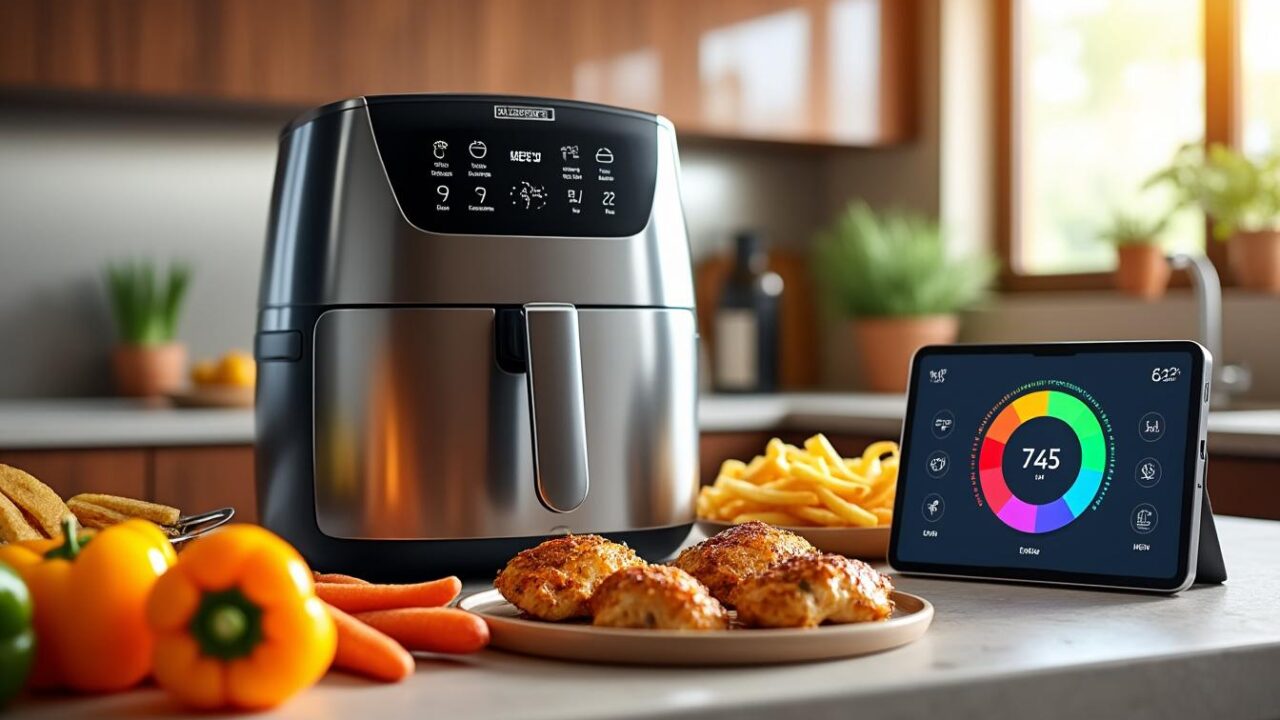
Understanding heat, speed and texture turns the countertop appliance into a kitchen hero. In busy households, a simple temperature guide transforms weeknight chaos into predictable dinners: crisp skins, juicy interiors, and no more soggy fries. This practical primer follows a fictional home cook, Maya, who tests dozens of recipes across models from compact 800-watt units to powerful 1800-watt machines. The result is a usable air fryer temperature chart and a set of air frying tips that account for wattage, capacity and altitude.
This guide combines science and experience: how convection and the Maillard reaction create flavor, why preheating shortens total cooking time, and how to tweak air fryer settings for different foods. Practical links to trusted references provide deeper charts and recipes, while step-by-step adjustments help achieve perfect cooking from frozen snacks to whole birds. The next sections break the theory into actionable routines for consistent results.
Air fryer temperature chart essentials for perfect cooking results
Rapid air circulation concentrates heat inside a compact chamber, so an appliance set to 375°F does different work than a large oven at the same reading. That’s why a dedicated temperature chart for air frying is indispensable: it standardizes cooking temperature and cooking time recommendations for repeatable outcomes.
For a reinforced reference, consult an ultimate timing chart that maps foods to times and temps, then adapt those values to specific wattages and batch sizes. Insight: small adjustments yield big texture improvements.
How to use the conversion formula and preheat strategy
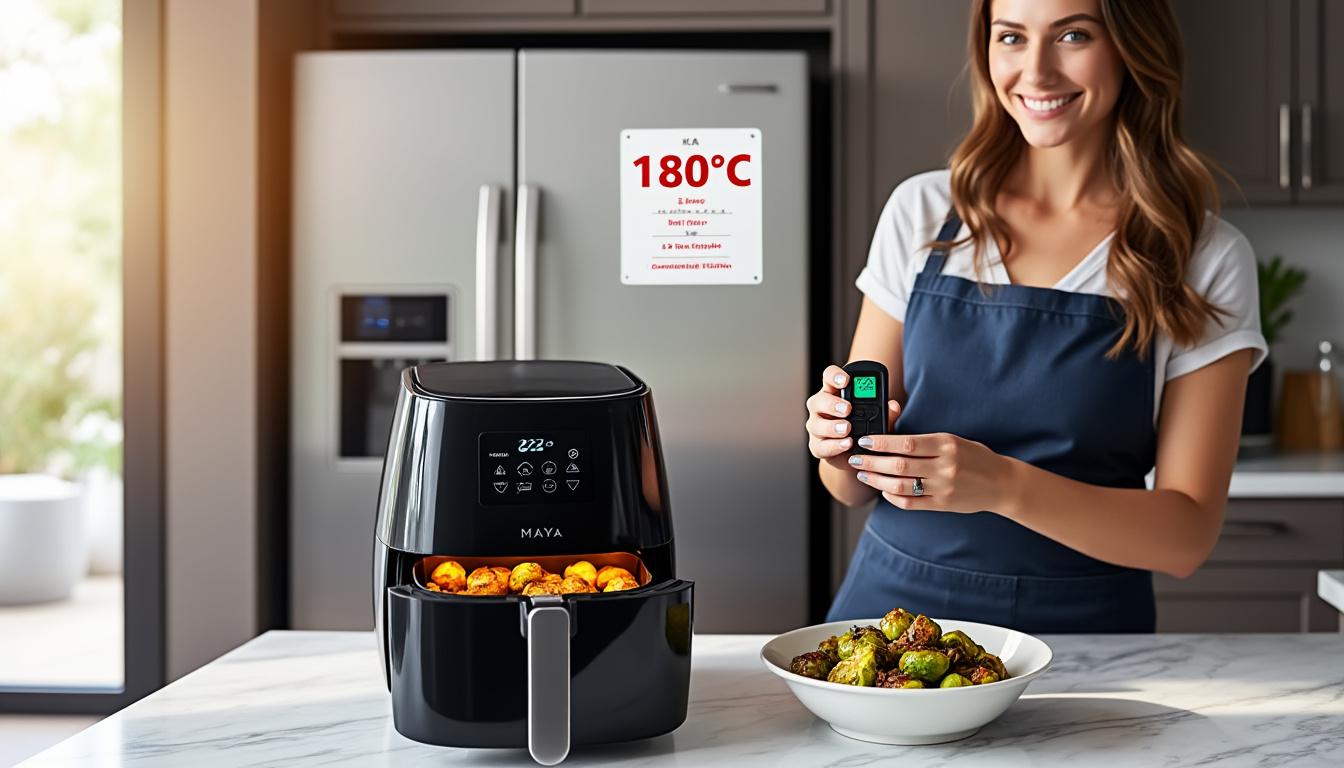
Convert oven recipes by lowering temperature about 25°F and reducing time by roughly 20–25%. For dense items like whole potatoes, reduce time by about 15% instead. These adjustments are the backbone of an efficient temperature guide.
Always preheat for 2–4 minutes beyond the indicator light when seeking reliable searing and crispy texture. For frozen items, add 2–3 minutes or start 25°F hotter for the first few minutes to counteract temperature drop. For more methodical conversion notes, see a concise cooking temperature guide.
Complete cooking temperature chart by food category
This distilled chart gives a practical starting point for typical home-cooked items. Use it as a living document and record model-specific tweaks.
| Food category 🍽️ | Temperature (°F) 🌡️ | Typical cooking time ⏱️ | Quick tip 💡 |
|---|---|---|---|
| Chicken (boneless breast) 🍗 | 375°F | 12–15 min (flip halfway) | Pat dry for browning ✔️ |
| Chicken (bone-in) 🍗 | 380°F | 25–30 min | Check 165°F internal 🔍 |
| Steak (1″ thick) 🥩 | 400°F | 10–12 min (flip once) | Reverse sear for even doneness 🔥 |
| Salmon fillet 🐟 | 400°F | 7–10 min | Skin-side down for crisp skin 🐟 |
| Vegetables (root) 🥕 | 400°F | 15–20 min (shake twice) | Cut uniform 1″ pieces ✂️ |
| Frozen fries 🍟 | 400°F | 15–18 min (shake often) | Do not thaw ❄️ |
| Shrimp 🍤 | 400°F | 5–6 min | Turn once for even color 🔁 |
Practical air frying tips, batch cooking and troubleshooting
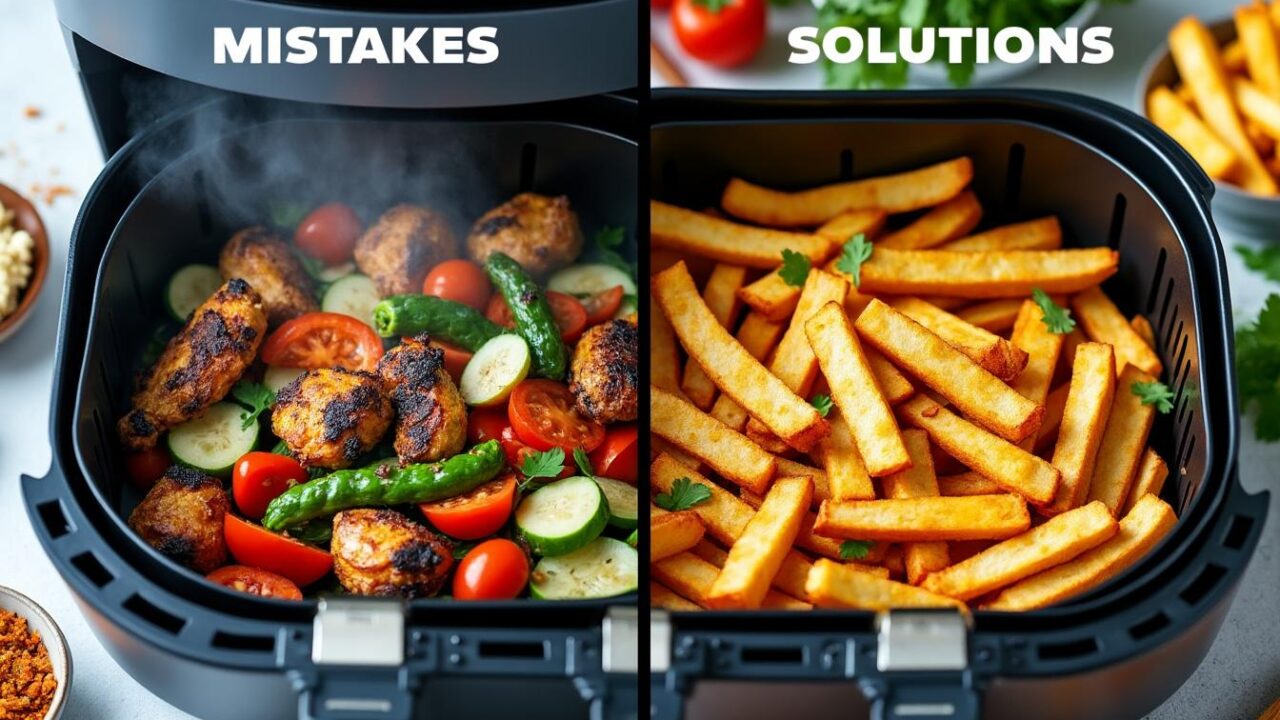
Overcrowding is the main culprit behind uneven cooking; single layers deliver reliable crisping. Temperature recovery matters: cold loads can drop chamber temp by 30–50°F, so expect minor time increases unless batches are small.
- 🔁 Shake or flip halfway for uniform browning.
- 🧴 Use a fine oil sprayer for an even, minimal coating.
- 🥄 For breading: chill before cooking to keep coatings intact.
- 🧼 Clean drip trays regularly to prevent smoke with fatty cuts.
- 🧭 If outside burns while inside is raw: lower temp by 25°F and extend time 3–5 minutes.
For frozen convenience strategies that prevent cold centers and burnt exteriors, a handy resource on cooking frozen food perfectly explains a two-stage approach for many snacks. One more practical recipe to test technique is an air fryer tilapia recipe, which highlights single-layer cooking and watchful timing.
Insight: small procedural habits—preheating, single-layer placement, and mid-cycle attention—create the biggest improvements in texture and consistency.
Food safety, thermometers and model-specific tweaks
Food safety remains non-negotiable: poultry to 165°F, ground meats to 160°F, and whole-muscle beef or pork to 145°F plus 3 minutes rest. Fast air fryer cycles shrink error margins, so an instant-read thermometer is essential for dependable results.
Wattage and form factor change outcomes. Compact 800–1000W units often need 2–3 extra minutes; high-power 1500–1800W models recover heat faster and may require slight time reductions. For an expanded temperature reference across brands and models, consult the comprehensive analyses at air fryer temperature guide.
Tip: document successful settings per item and post a laminated list near the appliance. This turns trial-and-error into a household standard and keeps everyone using the same air fryer settings for consistent perfect cooking.
Essential equipment checklist
- 🔧 Instant-read thermometer (non-negotiable for safety) ✅
- 🧤 Silicone-tipped tongs to protect non-stick baskets
- 🧴 Oil sprayer for controlled misting
- 🧾 Small wire rack for elevated browning in some models
- 📓 A taped temperature chart near the appliance for quick reference
Final insight for this section: investing a few dollars in tools and a simple recording habit returns consistent plates and less wasted food.
{“@context”:”https://schema.org”,”@type”:”FAQPage”,”mainEntity”:[{“@type”:”Question”,”name”:”How should oven recipes be converted for an air fryer?”,”acceptedAnswer”:{“@type”:”Answer”,”text”:”Reduce the oven temperature by about 25u00b0F and cut cooking time by roughly 20u201325%; dense items may need only a 15% time cut. Use the air fryeru2019s smaller chamber and circulation to take advantage of faster heat transfer.”}},{“@type”:”Question”,”name”:”Is preheating necessary for crispy texture?”,”acceptedAnswer”:{“@type”:”Answer”,”text”:”Yes. Preheat until the indicator plus an extra 2 minutes for best searing and consistency. Preheating helps achieve immediate Maillard reaction and prevents soggy bottoms.”}},{“@type”:”Question”,”name”:”Can frozen foods be cooked straight from the freezer?”,”acceptedAnswer”:{“@type”:”Answer”,”text”:”Absolutely. Most frozen snacks perform best without thawing. Expect to add 2u20133 minutes or use a slightly higher starting temp for the initial minutes to offset temperature drop.”}},{“@type”:”Question”,”name”:”How to prevent smoke from fatty foods?”,”acceptedAnswer”:{“@type”:”Answer”,”text”:”Trim excess fat where possible, place a little water in the drawer beneath the basket to catch drips, and clean the tray after each fatty cook. Also reduce temperature slightly or use a foil catch without blocking airflow.”}}]}How should oven recipes be converted for an air fryer?
Reduce the oven temperature by about 25°F and cut cooking time by roughly 20–25%; dense items may need only a 15% time cut. Use the air fryer’s smaller chamber and circulation to take advantage of faster heat transfer.
Is preheating necessary for crispy texture?
Yes. Preheat until the indicator plus an extra 2 minutes for best searing and consistency. Preheating helps achieve immediate Maillard reaction and prevents soggy bottoms.
Can frozen foods be cooked straight from the freezer?
Absolutely. Most frozen snacks perform best without thawing. Expect to add 2–3 minutes or use a slightly higher starting temp for the initial minutes to offset temperature drop.
How to prevent smoke from fatty foods?
Trim excess fat where possible, place a little water in the drawer beneath the basket to catch drips, and clean the tray after each fatty cook. Also reduce temperature slightly or use a foil catch without blocking airflow.