

Air fryers have rewritten the home‑cook playbook: fast heat, less oil and a promise of crunch that fits busy schedules and healthier habits. Yet the same device that turns frozen nuggets into golden bites can betray expectations when small errors compound — from baskets packed like sardines to using the wrong oil or skipping basic maintenance. A fictional neighbor, Maya, learned this the hard way: soggy fries after a family movie night, a smoky warning during a weekend cook‑along, and a sticky basket that refused to release a single tater tot. Those missteps reveal a pattern of avoidable cooking mistakes rooted in airflow, temperature control and simple upkeep.
Practical know‑how today makes all the difference: mastering preheating, respecting temperature settings, choosing the right oil and routine cleaning tips will keep food texture consistent and appliances safe. This guide translates those insights into clear fixes — batch sizing, misting instead of spraying, dry coatings for battered foods, and a maintenance checklist for long life. Every section closes with a clear takeaway so home cooks can test one change at a time and watch results improve.
- 🟢 Air fryer essentials: fix overcrowding, preheat 3–5 minutes, and use a high‑smoke‑point oil.
- ⚠️ Avoid common pitfalls: no aerosol sprays, don’t cook wet batter directly, and clean after each use.
- 🔧 Maintenance matters: periodic deep clean and gentle tools preserve nonstick coatings and reduce smoke.
- 🍟 Texture wins: space items for airflow, shake/flip midway, and tweak temperature settings for thickness.
7 common air fryer mistakes and how to avoid them — practical fixes for crisp results
Maya’s kitchen became a test lab for household science: each failed batch taught a principle that can be applied across models. The following sections break down the seven most frequent errors into problem, solution and a short example that anyone can replicate. Expect actionable tips that address overcrowding, uneven cooking, oil usage, and more.
1. Overcrowding the basket — why air flow matters
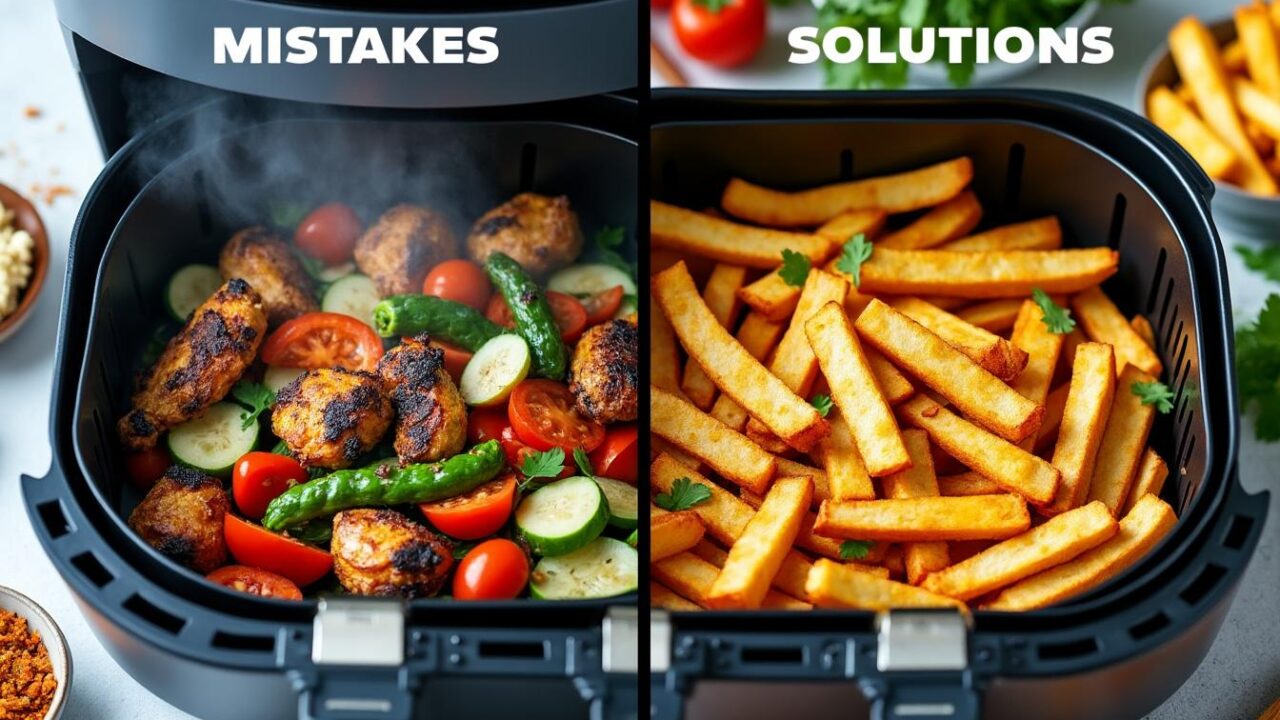
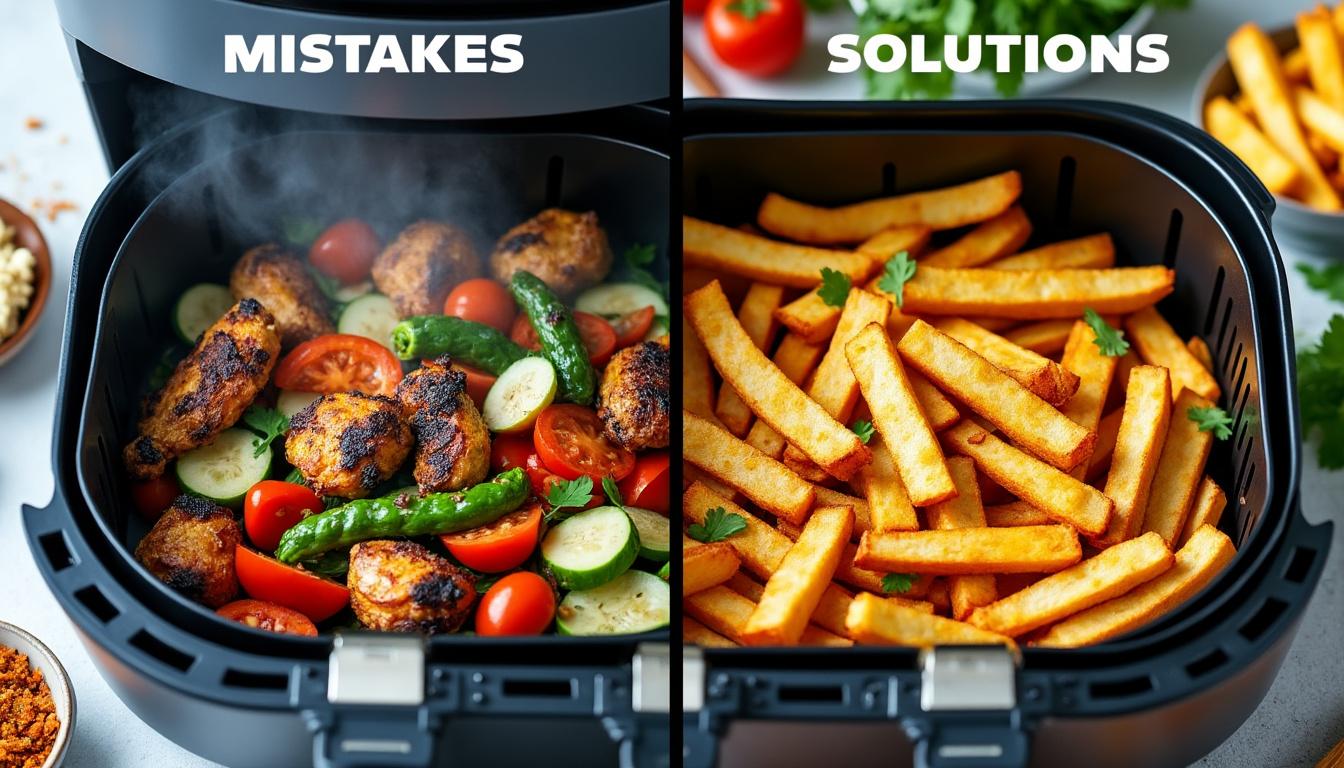
Problem: Piling food into the basket blocks convection and produces uneven cooking, with some edges burning while centers stay underdone. This is the most common of the cooking mistakes, especially when trying to save time.
Fix: Cook in smaller batches or use a two‑stage approach: crisp a first layer, keep warm, then finish the rest. Shaking or flipping halfway restores circulation for an even golden crust.
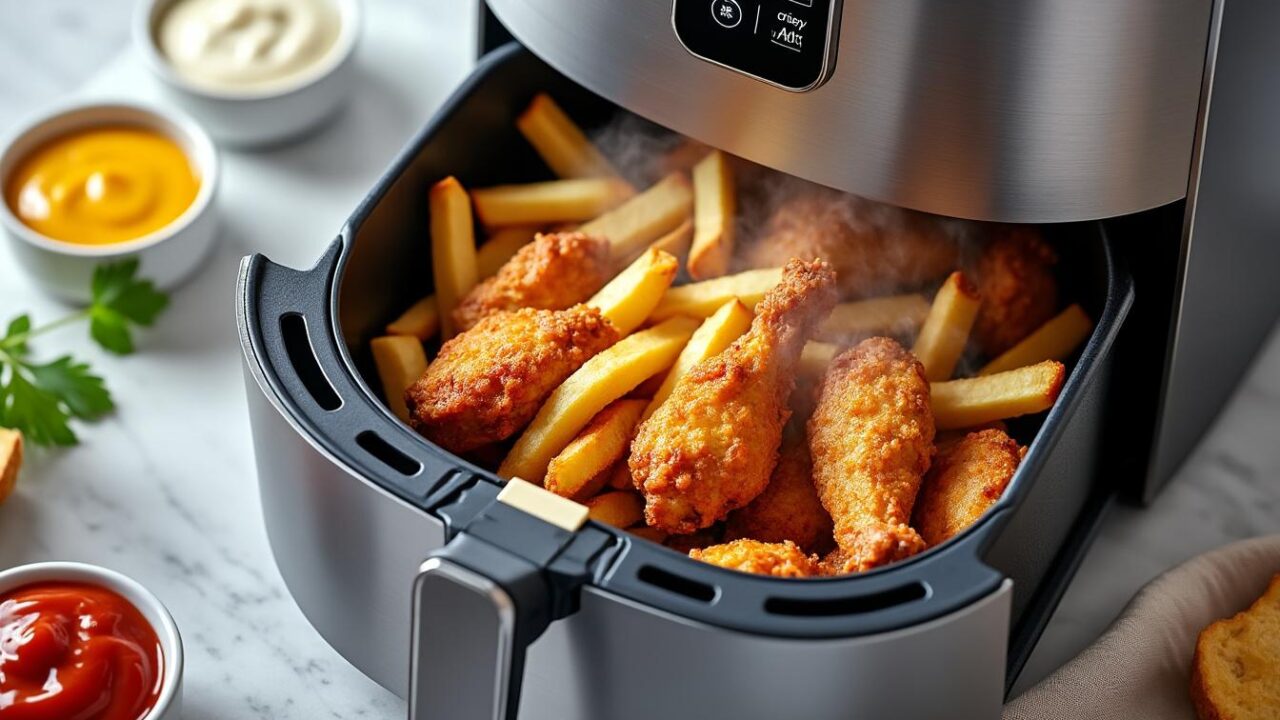
Example: For fries, spread them in a single layer with small gaps; for wings, flip at 10 minutes to avoid doughy centers. Key takeaway: never sacrifice airflow for quantity.
2. Skipping preheat — instant heat = better crisp
Problem: Starting from cold can lengthen cook times and yield limp results because fats don’t sizzle into a crisp at low starting temperatures. Many assume the appliance heats fast enough without waiting.
Fix: Preheat the unit for 3–5 minutes before adding food — a quick step that mimics an oven’s readiness and improves texture instantly.
Example: Preheating a 400°F cycle before placing breaded chicken produces a snappier crust and shorter total time. Final insight: preheating is a tiny habit with a big payoff.
3. Using aerosol cooking sprays — a hidden danger
Problem: Propellant sprays can leave a tacky residue that damages nonstick baskets and causes flaking over time. This degrades performance and increases sticking, a frequent maintenance complaint.
Fix: Use a refillable oil mister or a silicone brush to apply a light, even coat. That approach controls oil usage and protects surfaces.
Example: A quick mist of avocado oil on potato wedges ensures even browning without harming the basket. Lesson: gentle application outperforms heavy spraying every time.
4. Choosing the wrong oils — match smoke point to temperature
Problem: Oils like extra virgin olive oil have low smoke points and can burn at typical air fryer temps, producing off flavors and smoke. That affects both taste and safety.
Fix: Opt for high‑smoke‑point oils such as avocado, refined peanut, canola or grapeseed when air frying at high temperatures. This aligns with recommended temperature settings.
Example: For a 400°F roast, avocado oil resists breakdown and leaves a clean, toasty finish. Insight: oil choice is decisive for both flavor and smoke control.
Transition: The next section explains why wet batters and coatings behave differently in circulating air and offers simple swaps to avoid gummy results.
5. Cooking wet‑battered foods directly — puddles and sogginess
Problem: Wet batters can drip and pool under circulating air, failing to set and turning foods mushy. This is why tempura often disappoints in a basket.
Fix: Use a light dry coating like panko or flour, or place battered items on a mesh rack to let excess drip away. Dry‑coated foods crisp faster and maintain structure.
Example: Coat fish in seasoned panko rather than a runny batter and the result is flaky interior and crunchy exterior. Closing thought: adapt coatings rather than forcing wet batters into the same process.
6. Neglecting cleaning — smoke, odors, and shortened lifespan
Problem: Leftover crumbs and grease build up into a smoke source and unpleasant smells, and can even become a fire hazard if ignored. Many users underestimate routine maintenance.
Fix: Cool, disassemble and wash removable parts after each use with warm, soapy water. Monthly deep‑cleans using a baking soda paste for stubborn residue protect nonstick finishes.
Example: A quick wash after crispy snack night eliminates odors and keeps cleaning tips simple. Key sentence: a clean air fryer is a reliable air fryer.
7. Expecting the air fryer to replace all cooking methods
Problem: Treating the air fryer as an all‑purpose substitute can lead to disappointment; it excels at roasting, crisping and reheating but isn’t suitable for soups, long stews or rice. Misaligned expectations are a subtle yet common mistake.
Fix: Use the air fryer to complement ovens, stovetops and slow cookers — reserve it for tasks that benefit from dry, high heat and circulating air.
Example: Air fry a chicken breast for crisp skin, then finish a sauce on the stove for depth. Final insight: pairing techniques delivers the best meals.
Quick checklist: simple fixes to avoid the top air fryer pitfalls
- ✅ Space items for airflow — avoid overcrowding 🧆
- ⏱️ Preheat 3–5 minutes before cooking ⏲️
- 🫙 Use a refillable mister; avoid aerosol sprays 🚫
- 🌡️ Match oil to temperature — choose high smoke point oils 🥑
- 🔄 Shake/flip halfway for even browning 🍗
- 🧼 Clean after each use to prevent smoke and maintain performance 🧽
These steps are easy to test in one week and will noticeably improve food texture and consistency.
| ❗ Mistake | 🔍 Cause | 🛠️ Quick fix |
|---|---|---|
| Overcrowding | Blocked air circulation → uneven cooking 🍟 | Cook in batches; shake mid‑cycle 🔁 |
| Skipping preheat | Cold start → limp exterior, longer cook ⏳ | Preheat 3–5 minutes; shorten time after testing 🔥 |
| Wrong oil | Low smoke point → burnt flavor, smoke 💨 | Use avocado/canola/peanut oil 🥑 |
| Wet batter | Puddles and sogginess | Switch to panko or use mesh rack 🍤 |
| Poor cleaning | Residue → smoke, odors, damage 🧯 | Wash parts after use; deep clean monthly 🧽 |
For deeper dives and recipe‑specific timing, consult guided resources on ideal temperatures and techniques. For instance, a focused guide explores the best temperature for air fryer chicken, while another explains how to cook frozen chicken safely and evenly. Additional reading on common pitfalls expands practical context: see a round‑up of frequent errors at Instant Pot Eats and a detailed home user perspective at My Food Story.
Practical maintenance and long‑term tips for a happy appliance
Maintenance prevents surprises: a quick daily wipe and a monthly inspection of heating elements will keep performance consistent. Treat the air fryer like any other precision tool; small habits extend lifespan and reduce safety risks.
Keep a small kit: a soft brush, non‑abrasive sponge, baking soda and a refillable oil mister. These items make routine upkeep painless and protect that crispy, reliable output. Final point: maintenance is the invisible secret behind consistently great results.
{“@context”:”https://schema.org”,”@type”:”FAQPage”,”mainEntity”:[{“@type”:”Question”,”name”:”How often should the air fryer be deepu2011cleaned?”,”acceptedAnswer”:{“@type”:”Answer”,”text”:”Deep clean detachable parts monthly if used frequently; wash the basket and tray after each use. Wipe the interior and check the heating element for residue to prevent smoke and odors.”}},{“@type”:”Question”,”name”:”Can all frozen foods go straight into the air fryer?”,”acceptedAnswer”:{“@type”:”Answer”,”text”:”Most frozen snacks do well, but check packaging for air fryer instructions. Thicker frozen proteins may need adjustment in time and temperature; shaking or flipping helps avoid cold spots.”}},{“@type”:”Question”,”name”:”Is olive oil okay for air frying?”,”acceptedAnswer”:{“@type”:”Answer”,”text”:”Extra virgin olive oil is best avoided at high temperatures because of its low smoke point. Use oils with higher smoke points like avocado or canola to reduce smoke and offu2011flavors.”}},{“@type”:”Question”,”name”:”How can overcrowding be managed for large families?”,”acceptedAnswer”:{“@type”:”Answer”,”text”:”Cook in successive batches and keep finished portions in a warm oven (low temp) to maintain crispness. Alternatively, prepare components ahead and reheat briefly in the air fryer to refresh texture.”}}]}How often should the air fryer be deep‑cleaned?
Deep clean detachable parts monthly if used frequently; wash the basket and tray after each use. Wipe the interior and check the heating element for residue to prevent smoke and odors.
Can all frozen foods go straight into the air fryer?
Most frozen snacks do well, but check packaging for air fryer instructions. Thicker frozen proteins may need adjustment in time and temperature; shaking or flipping helps avoid cold spots.
Is olive oil okay for air frying?
Extra virgin olive oil is best avoided at high temperatures because of its low smoke point. Use oils with higher smoke points like avocado or canola to reduce smoke and off‑flavors.
How can overcrowding be managed for large families?
Cook in successive batches and keep finished portions in a warm oven (low temp) to maintain crispness. Alternatively, prepare components ahead and reheat briefly in the air fryer to refresh texture.