

En bref — Quick takeaways
- ⚡ Air fryer = compact appliance using rapid air technology for fast, even cooking.
- 🔥 Hot air circulation replaces deep oil baths to deliver crispiness with minimal fat.
- ⏱️ Precise temperature control and shorter cooking time make it ideal for weeknight meals.
- 🥗 Favoured for oil-less cooking and healthier cooking, but capacity limits and batch cooking remain trade-offs.
How does an air fryer work and what makes it different from traditional cooking
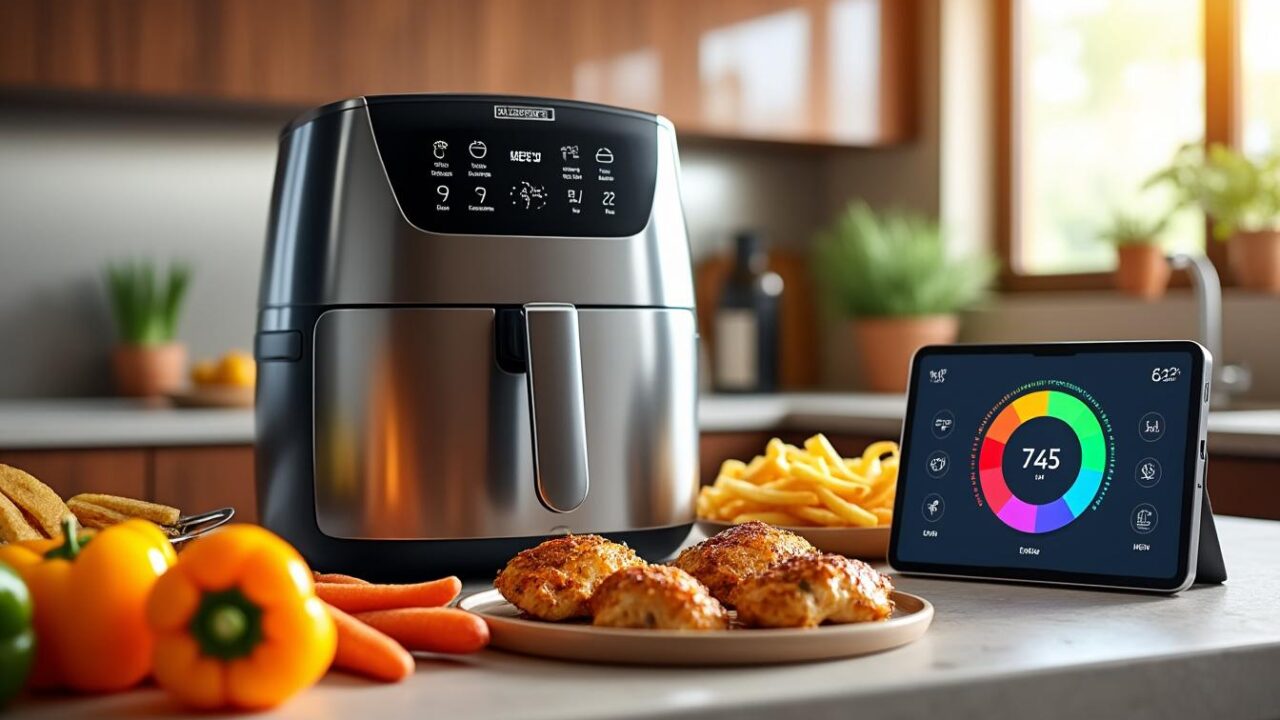
The modern kitchen has a new trick: a countertop unit that mimics deep frying using nothing but heat and airflow. At its heart, the air fryer is a concentrated form of convection cooking — a heating element paired with a high-speed fan forces hot air circulation around food placed in a perforated basket. This focused movement of air, often called rapid air technology, creates a Maillard reaction on the surface of foods, producing the sought-after crispiness while using only a teaspoon or two of oil, or sometimes none at all. The result is food that looks and tastes fried but with far less fat and fewer calories, a core reason the appliance became a household staple after growth in the early 2020s.
Practical differences from an oven or a deep fryer go beyond physics. Smaller chamber volume means faster preheating and more concentrated airflow, which shortens cooking time and reduces energy use for small batches. Paired with intuitive temperature control, this enables weeknight cooks to crisp frozen fries, roast vegetables, or even bake cookies with predictable results. A neighbourhood bistro like the fictional La Petite found it transforms service speed: fries ready in minutes, less oil waste, and a consistent crunch that customers notice — a clear demonstration that technique, not just heat, shapes the plate.
How an air fryer works: rapid air technology and convection cooking
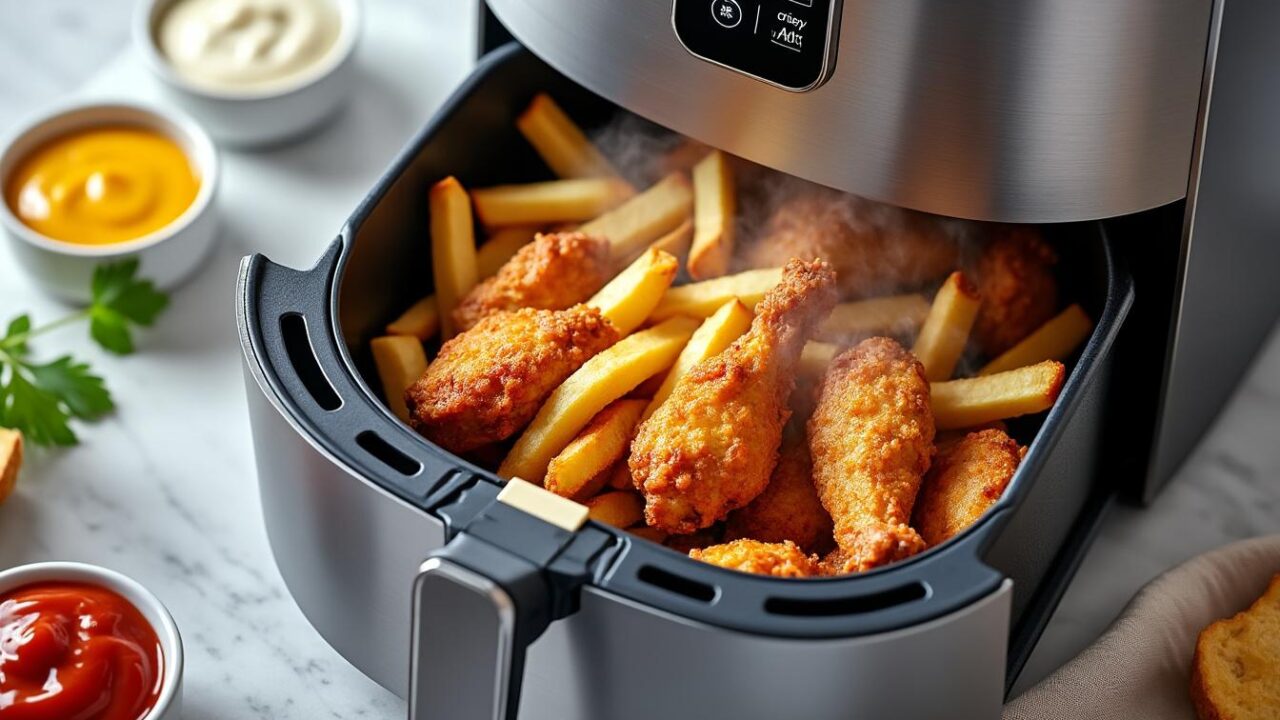
Inside the top lid of an air fryer sits the duo responsible for its magic: a heating element and a high-velocity fan. Once activated, hot air circulation moves downward and across the basket, enveloping every exposed surface of the food.
This moving air replaces the role of oil in traditional frying by transferring energy quickly and uniformly. Because the food sits in a ventilated basket, heated air reaches the underside as well, which enhances browning and crispiness without submerging items in fat. The physics is similar to a convection oven but intensified by the compact space and directed airflow, making the appliance faster at achieving the same finish. Insight: focused airflow plus controlled heat equals crunchy exteriors in a fraction of the usual time.
Air fryer versus traditional frying and ovens: oil-less cooking explained
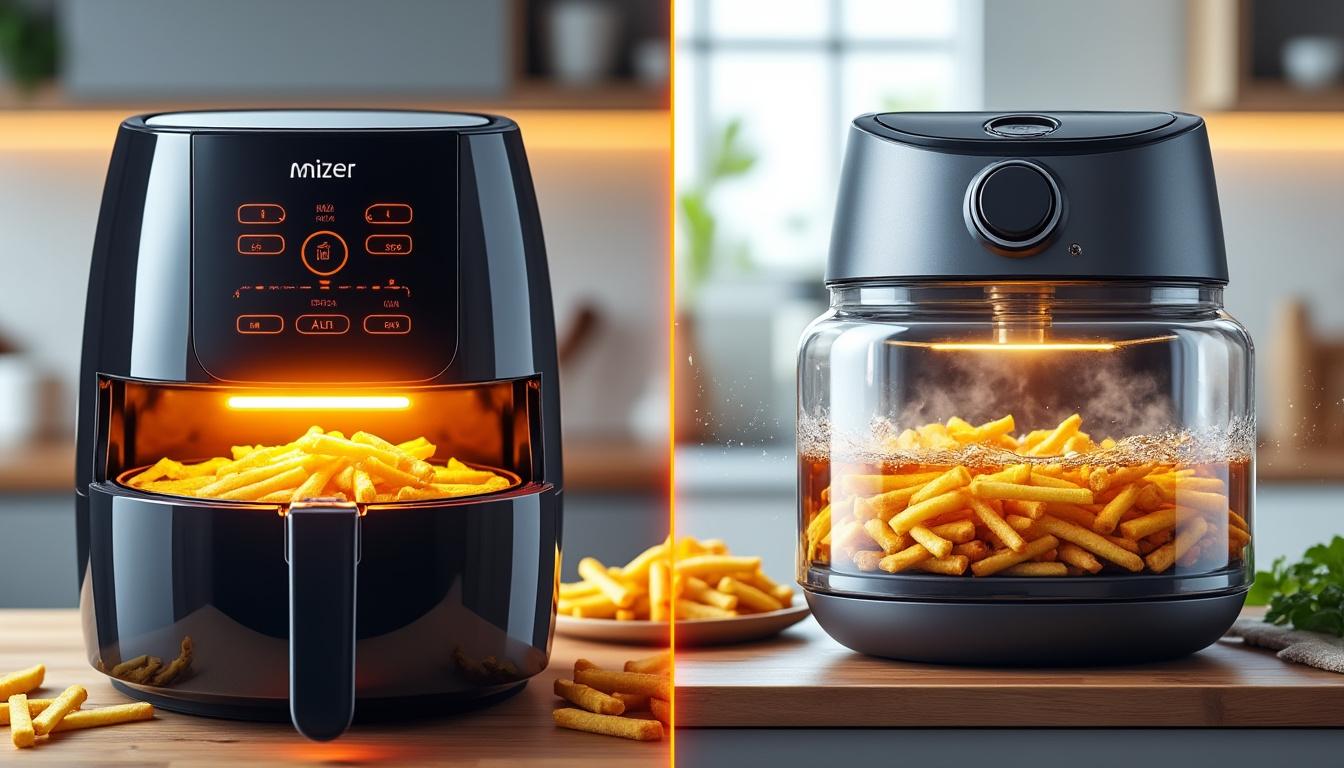
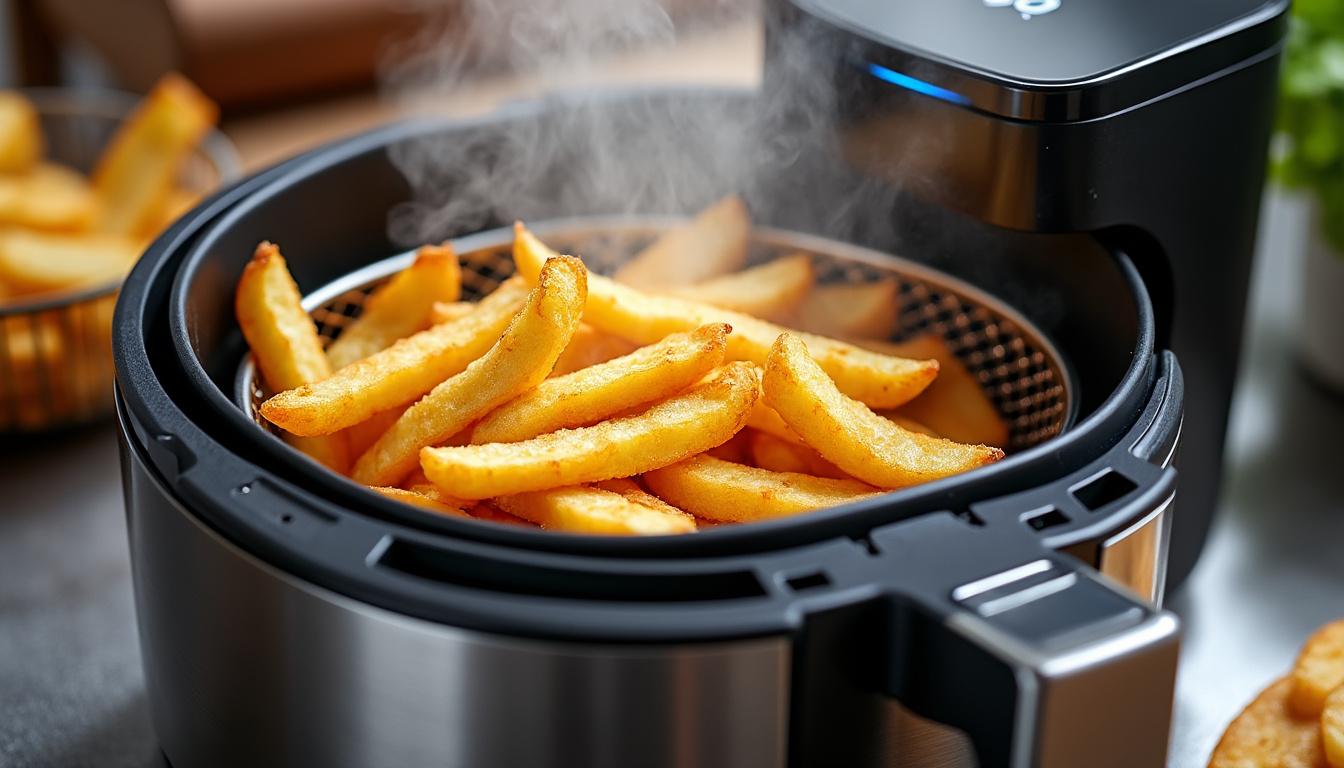
Traditional frying relies on oil as the primary medium for heat transfer, surrounding food with hot liquid at temperatures often above 350°F. In contrast, an air fryer uses rapid air technology to simulate that effect without immersion. Convection ovens also circulate air, but their larger volume dilutes airflow intensity and can produce hot spots; an air fryer’s compact chamber concentrates energy for faster browning.
For home cooks aiming for healthier cooking, this means comparable texture with a dramatic reduction in surface oil. Frozen fries, for example, can go from frozen to crispy with only a spritz of oil, reducing per-serving fat significantly compared with deep-frying. Insight: the method shifts the role of oil from cooking medium to an optional flavor enhancer.
Practical guide: temperature control, cooking time and best practices for crisp results
Successful air-frying is a blend of temperature awareness, sensible portioning, and timing. Typical ranges fall between 350°F and 400°F with cooking time from 5 to 25 minutes depending on the item. Smaller batches mean better air exposure and more consistent results.
- 🔁 Shake or flip halfway through to avoid uneven spots.
- 🥄 Use a light spritz of oil (1–2 teaspoons) to boost browning when needed.
- 🚫 Avoid overcrowding — leave at least 1/2 inch between pieces for airflow.
- ⏱️ Preheat the unit when recipes recommend it to lock in crispness from the first second.
Example: Maya, a freelance cook, perfected air-fried salmon by searing briefly then finishing in the air fryer at 375°F for 6 minutes — a trick that balances a crisp exterior with a silky interior. Insight: controlled heat plus space for air equals predictable texture.
Common mistakes and quick fixes
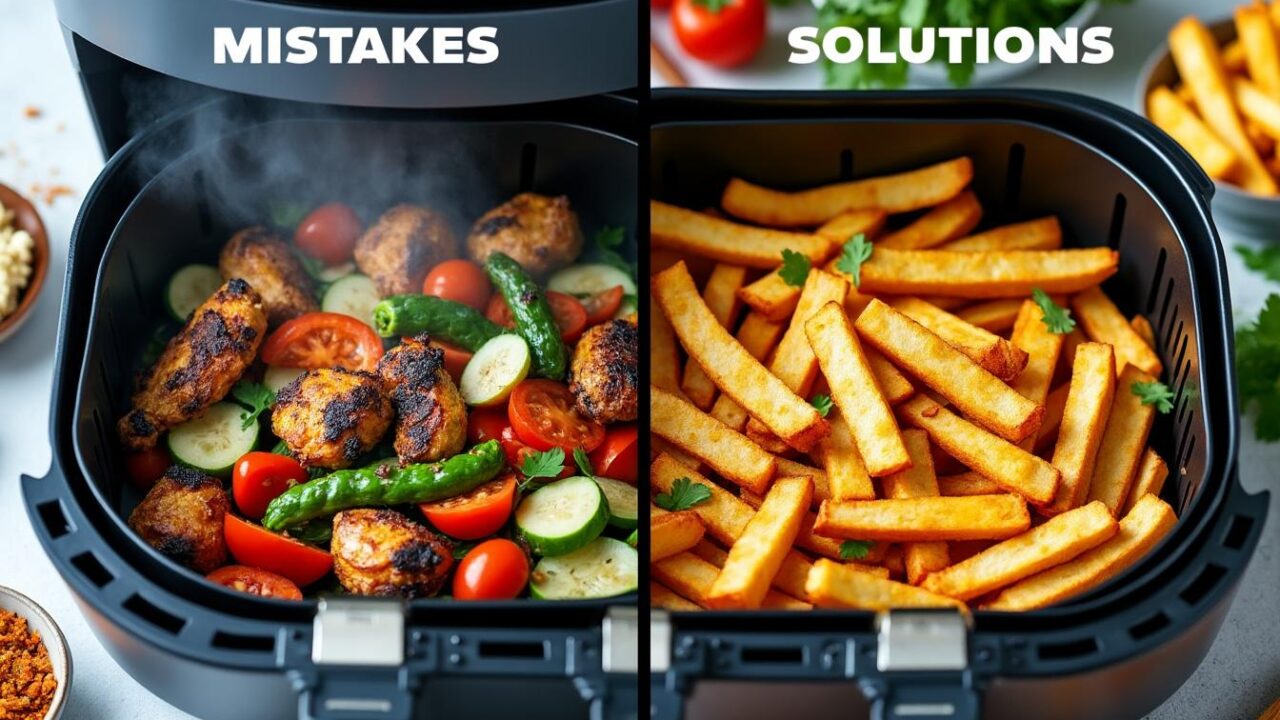
Overcrowding the basket, skipping preheat, or using too much oil are frequent pitfalls. Each reduces airflow or alters thermal dynamics, producing soggy or unevenly browned results.
Simple corrections—single layer cooking, preheating, and measured oil use—restore the intended effect and shorten overall cooking time. Insight: small habits unlock big improvements in every batch.
What to cook in an air fryer: versatile recipes and performance
From restaurant-style fries to unexpected desserts, the air fryer adapts to many roles. It excels with items that benefit from exposed surfaces: fries, wings, vegetable roast, and even baked goods that enjoy fast surface set before interior finish.
| Item 🍽️ | Best temp | Typical time ⏱️ | Why it works 🔥 |
|---|---|---|---|
| French fries 🍟 | 400°F | 12–18 minutes | Direct hot airflow for crisp edges |
| Chicken wings 🍗 | 380°F | 20–25 minutes | Concentrated convection equals crackling skin |
| Apple chips 🍏 | 320°F | 10–18 minutes | Low temp + airflow dehydrates and crisps |
| Cookies 🍪 | 350°F | 6–10 minutes | Fast surface set keeps chewiness inside |
For inspired recipes, try a dessert run or healthy snack: an easy guide to air-fryer apple chips provides a low-oil, crispy treat, while a step-by-step brownie method proves the unit can bake with finesse. See these creative recipes for ideas: air-fryer apple chips guide and air-fryer brownies tutorial. Insight: the appliance is as much for sweet experiments as for savoury staples.
Choosing the right model and accessories
Brands and form factors vary: basket-style units, oven-style with racks, and multi-function cookers. Consider capacity needs (2–10 quarts), footprint, and available presets. Accessories like baking pans, skewers, and silicone mats expand utility.
Test kitchens and reviews highlight models that balance performance and price; for practical buyer guidance consult a compact review or a comprehensive primer to match expectations. For further reading on what an air fryer is and common buying advice, explore the Good Housekeeping guide and the Taste of Home primer. Insight: match the unit to cooking habits for long-term satisfaction.
Science behind the crunch
Research and explanatory articles unpack how hot air circulation and surface dehydration create the Maillard browning that tastes “fried.” The rapid air technology enhances the effect by minimizing boundary layers of cooler air, which is why a compact chamber often outperforms a large oven at crisping. For a deeper technical read, a science explainer breaks down the heat transfer mechanisms in accessible terms. Insight: the science is elegant — airflow, not immersion, is the core of the effect.
Refer to a clear technical overview here: science-focused explainer on air fryers.
Everyday tips to keep in mind
- 🌡️ Check temperature control settings and learn your model’s hot spots.
- 🧽 Clean the basket regularly to prevent smoke and odours.
- 🍳 Rotate or shake for even browning during the cooking time.
- 📦 Use the right size for portions to avoid extra batches.
Insight: small maintenance and observation habits keep performance consistent over years.
{“@context”:”https://schema.org”,”@type”:”FAQPage”,”mainEntity”:[{“@type”:”Question”,”name”:”Are air fryers healthier than traditional frying?”,”acceptedAnswer”:{“@type”:”Answer”,”text”:”Yesu2014air fryers enable oil-less cooking or minimal oil use, significantly reducing surface fat compared with deep frying. Nutrition depends on ingredients, but using an air fryer generally supports healthier cooking by lowering added fats.”}},{“@type”:”Question”,”name”:”How do temperature and cooking time differ from an oven?”,”acceptedAnswer”:{“@type”:”Answer”,”text”:”Air fryers reach target temperatures faster and shorten cooking time because of concentrated hot air circulation. Typical settings are 350u2013400u00b0F for 5u201325 minutes, though individual recipes may vary.”}},{“@type”:”Question”,”name”:”Can an air fryer replace a deep fryer or conventional oven?”,”acceptedAnswer”:{“@type”:”Answer”,”text”:”It depends on needs. For small-batch crisping and fast reheats, an air fryer is superior. For very large quantities or certain baking tasks, an oven or deep fryer may still be preferable. Pairing appliances often yields the best kitchen workflow.”}},{“@type”:”Question”,”name”:”What are common mistakes to avoid?”,”acceptedAnswer”:{“@type”:”Answer”,”text”:”Avoid overcrowding the basket, skipping preheat, and using excessive oil. These errors reduce airflow effectiveness and lead to uneven or soggy results; simple fixes restore crispness.”}}]}Are air fryers healthier than traditional frying?
Yes—air fryers enable oil-less cooking or minimal oil use, significantly reducing surface fat compared with deep frying. Nutrition depends on ingredients, but using an air fryer generally supports healthier cooking by lowering added fats.
How do temperature and cooking time differ from an oven?
Air fryers reach target temperatures faster and shorten cooking time because of concentrated hot air circulation. Typical settings are 350–400°F for 5–25 minutes, though individual recipes may vary.
Can an air fryer replace a deep fryer or conventional oven?
It depends on needs. For small-batch crisping and fast reheats, an air fryer is superior. For very large quantities or certain baking tasks, an oven or deep fryer may still be preferable. Pairing appliances often yields the best kitchen workflow.
What are common mistakes to avoid?
Avoid overcrowding the basket, skipping preheat, and using excessive oil. These errors reduce airflow effectiveness and lead to uneven or soggy results; simple fixes restore crispness.