
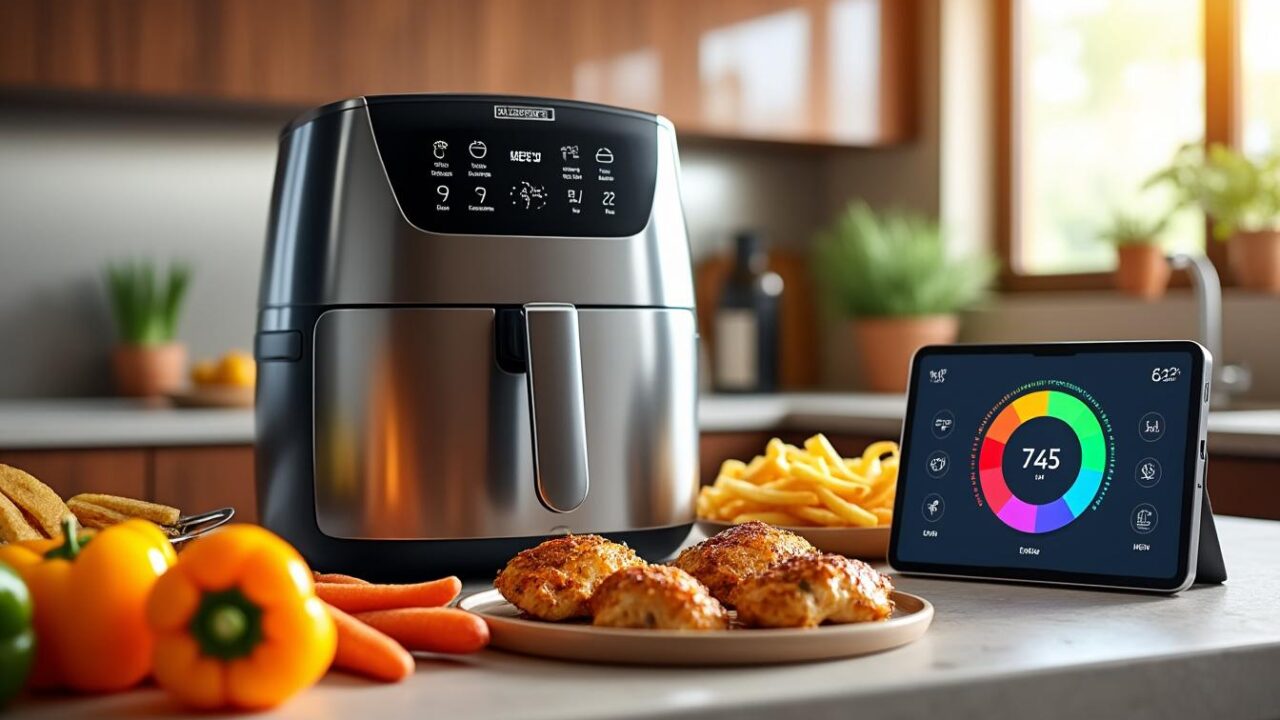
What is an air fryer? complete guide to choosing and using air fryers
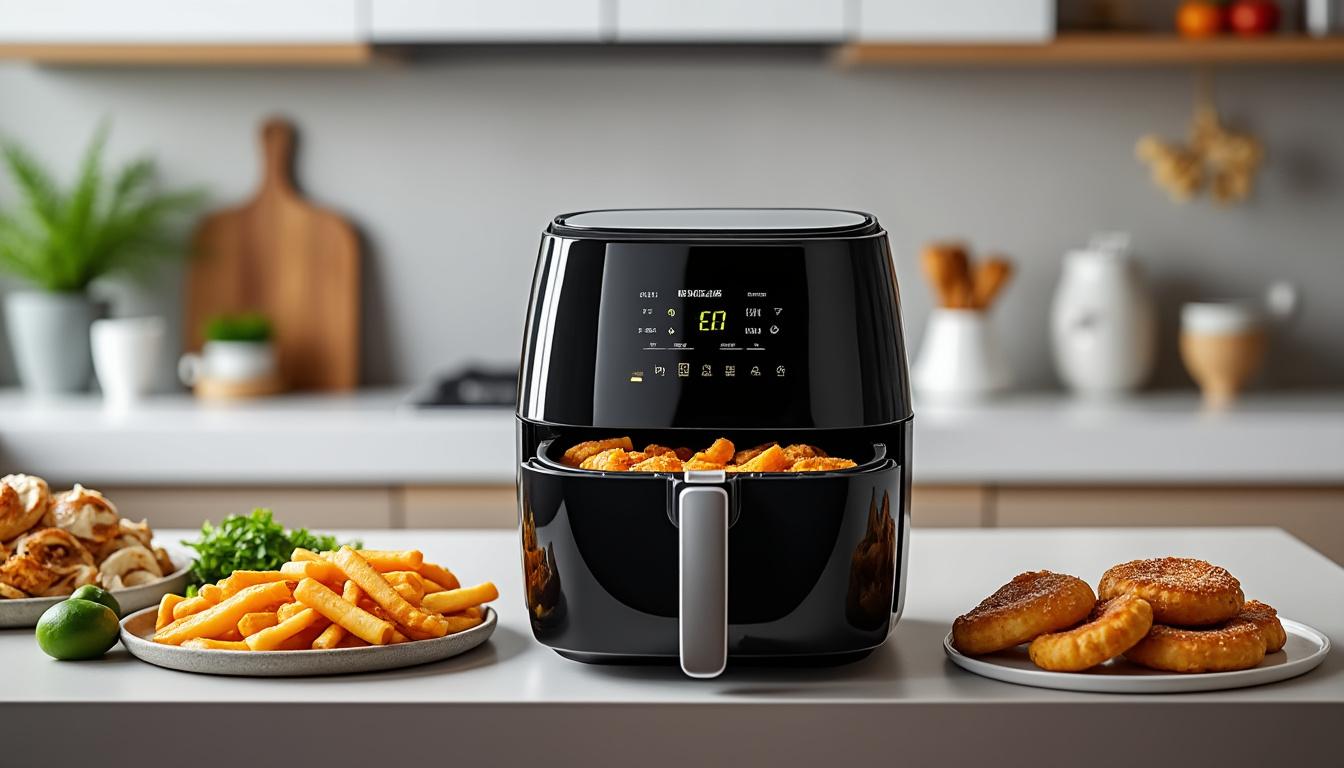
In an age where convenience meets culinary curiosity, the air fryer has established itself as a defining kitchen appliance for modern households. A compact countertop device that mimics deep frying by using high-speed air circulation, the air fryer promises golden, crunchy exteriors with far less oil. This guide unpacks what an air fryer does, how it fits into daily cooking routines, and why the technology matters for anyone seeking flavorful results without the heavy grease. Through practical examples, comparative analysis, and hands-on tips, the following sections explore the science behind crisp textures, the trade-offs in nutrient and chemical formation, and smart buying criteria for different household sizes. A fictional home cook named Maya serves as a thread throughout the guide: a busy urban professional who balances meal prep, family dinners, and a desire for healthier frying alternatives. Maya’s experiments—ranging from reheating slices of pizza to roasting whole chickens—illustrate real-world decisions about capacity, temperature control, and maintenance. For readers who value speed, energy savings, and less mess, the air fryer often delivers; for those focused on nutritional nuance, the device brings both benefits and considerations. The practical tips and evidence-based insights below are designed to help every reader make informed choices about integrating air fryers into a balanced kitchen toolkit.
- Air fryer technology delivers crispy, golden textures using rapid hot air instead of deep oil.
- Healthy frying is achievable with air fryers, reducing oil usage by up to 75–80% for many recipes.
- Temperature control and air circulation are key to even cooking and a crisp exterior.
- Energy efficient for small batches compared with full-size ovens, and offers easy cleaning when maintained properly.
- Choosing the right size and type matters—basket models are compact, oven-style units increase versatility.
What is an air fryer and how air circulation creates crispy food
The core principle behind an air fryer is deceptively simple: replace large volumes of hot oil with concentrated, high-velocity hot air so that the surface of food reaches browning and crunch without submerging it in fat. This method leverages the same physical and chemical reactions used in traditional frying—primarily the Maillard reaction, which generates browned, flavorful crusts when proteins and sugars are heated at high temperatures. A typical air fryer contains a heating element and a powerful fan that forces air around a perforated basket, ensuring that every side of the food is exposed to moving heat. This results in fast evaporation of surface moisture and formation of a crisp layer, while the interior stays moist if cooked correctly.
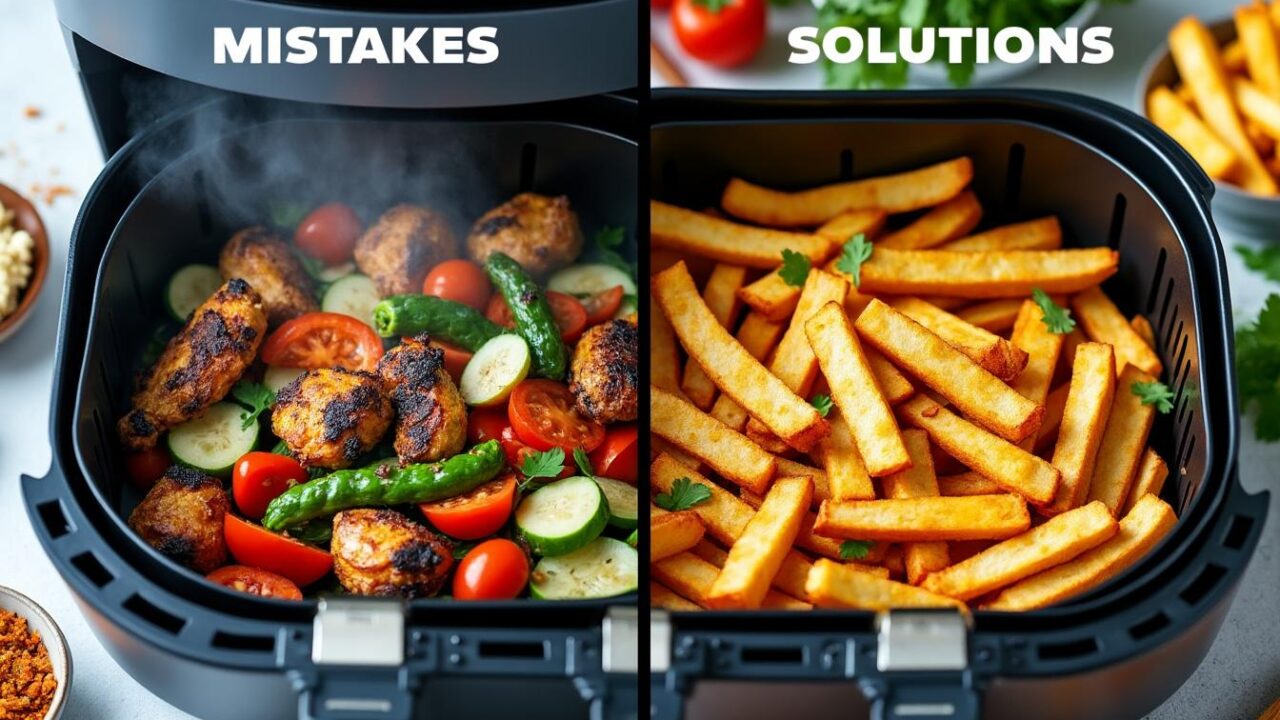
Practically, this technology enables a form of oil-less frying that often requires only a tablespoon or less of oil for a whole batch. Foods that were once exclusively the domain of deep fryers—potato fries, chicken strips, mozzarella sticks—can achieve a satisfyingly crunchy texture with far less oil. The air flow pattern is crucial: a well-designed basket and vents promote even air circulation so that hot air surrounds the food from multiple angles. Some models add a rotating paddle or a stirring mechanism to reduce hot spots and ensure uniform browning. Without good circulation, items close together will steam rather than crisp, which is why avoiding overcrowding is a recurring practical rule.
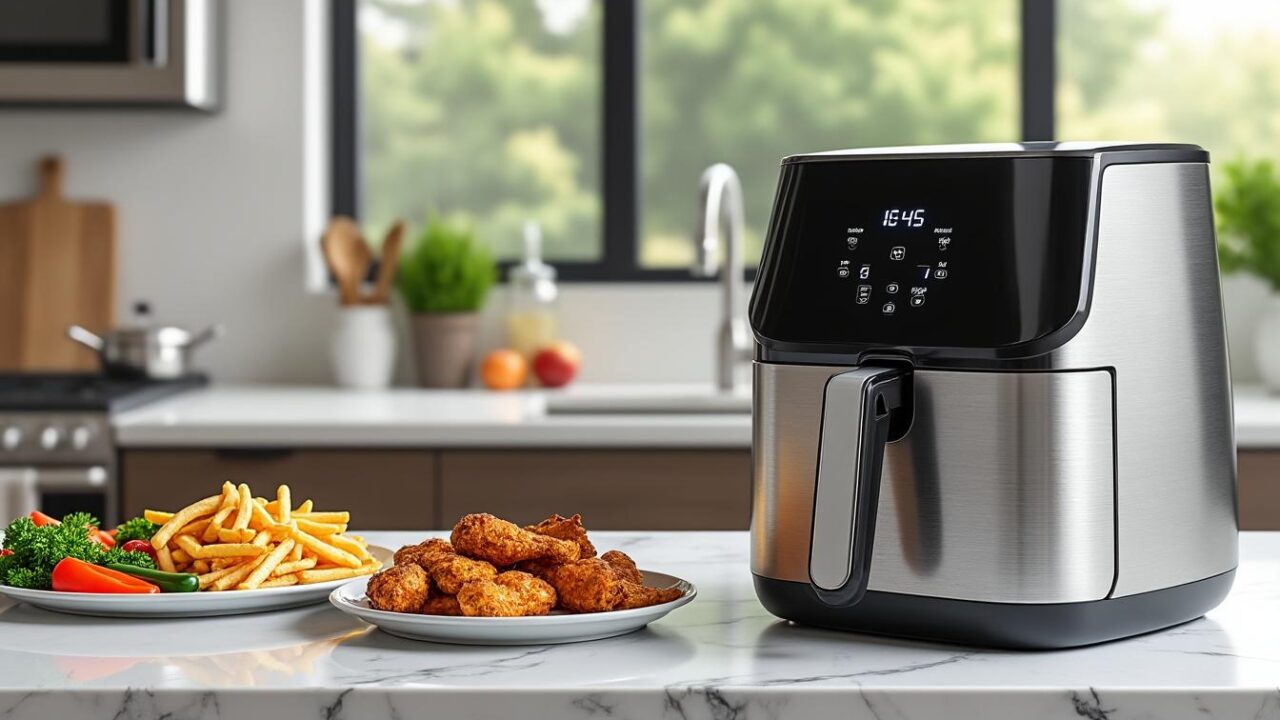
From a user perspective, an air fryer functions as a compact convection oven optimized for browning and speed. Most devices operate between 180°F and 400°F, offering a broad range for delicate reheating and high-heat crisping alike. The concentrated heat and small chamber mean faster preheat times and lower energy draw compared to a full-size oven, making air fryers particularly appealing for single servings or fast weeknight dinners. However, the smaller physical footprint comes with capacity limits; a basket-style model may be ideal for one to three people, while oven-style units offer larger capacities for families or multi-dish meals.
Examples and sensory trade-offs
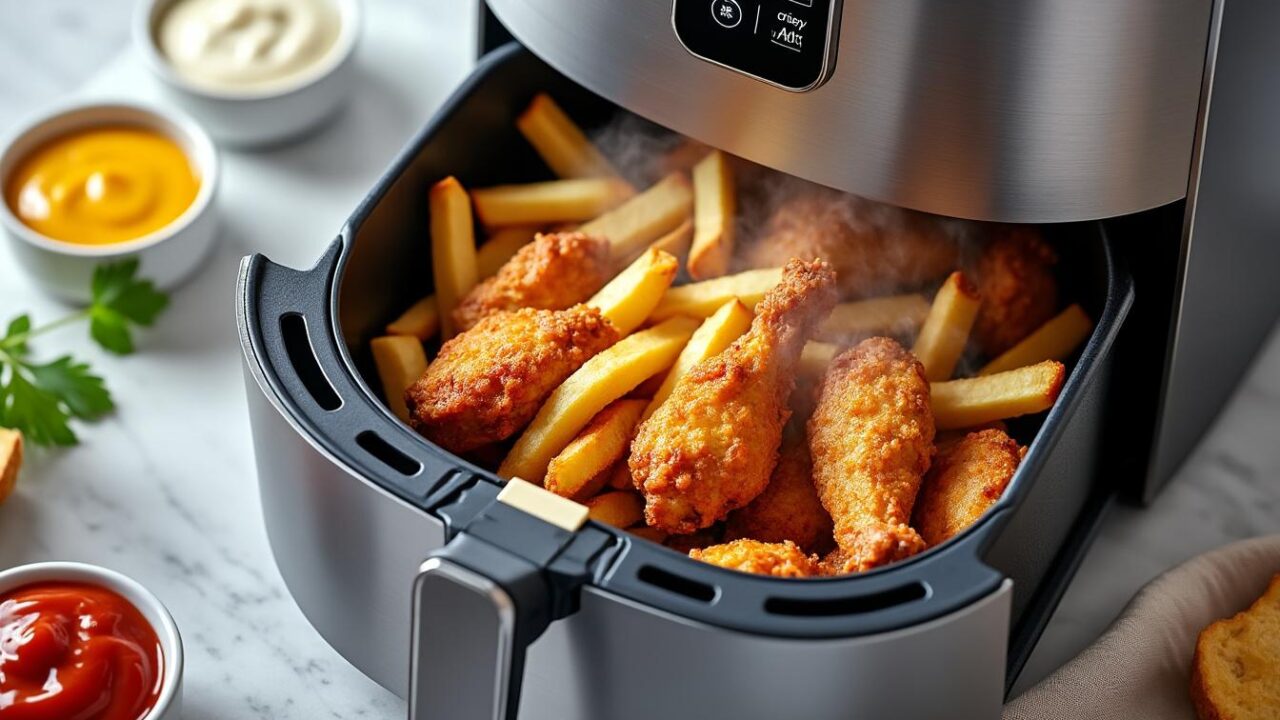
Comparisons between deep frying and air frying show overlapping strengths and some differences in texture. A batch of air-fried fries will present a crunchy exterior and fluffy interior, but they may lack the oil-saturated mouthfeel and darker color associated with classic deep frying. Studies indicate similar moisture retention and color but distinct sensory profiles: air-fried items can feel lighter and less oily, which many people prefer. Nonetheless, certain battered items—where the batter itself absorbs oil for flavor and moisture—may not achieve a perfect replica via air frying without recipe adjustments like light oil misting or pre-coating techniques.
The fictional cook Maya learned this through trial: air-fried onion rings required a thinner batter and a short dip in oil spray to reach the desired crunch, while frozen breaded chicken achieved near-identical results without modification. That illustrates a practical point: technique matters as much as device capability. Factors such as patting foods dry, using small amounts of oil, and ensuring single-layer placement dramatically improve results.
To explore practical operation and troubleshooting in more depth, readers can consult detailed technical explainers like how an air fryer works and manufacturer guides that cover specific models and configurations. Understanding the interplay of temperature control and airflow is the first step to consistently achieving delightful, crispy food. Final insight: when air circulation is optimized and temperatures are set appropriately, the air fryer rewards with texture and speed that fit modern cooking rhythms.
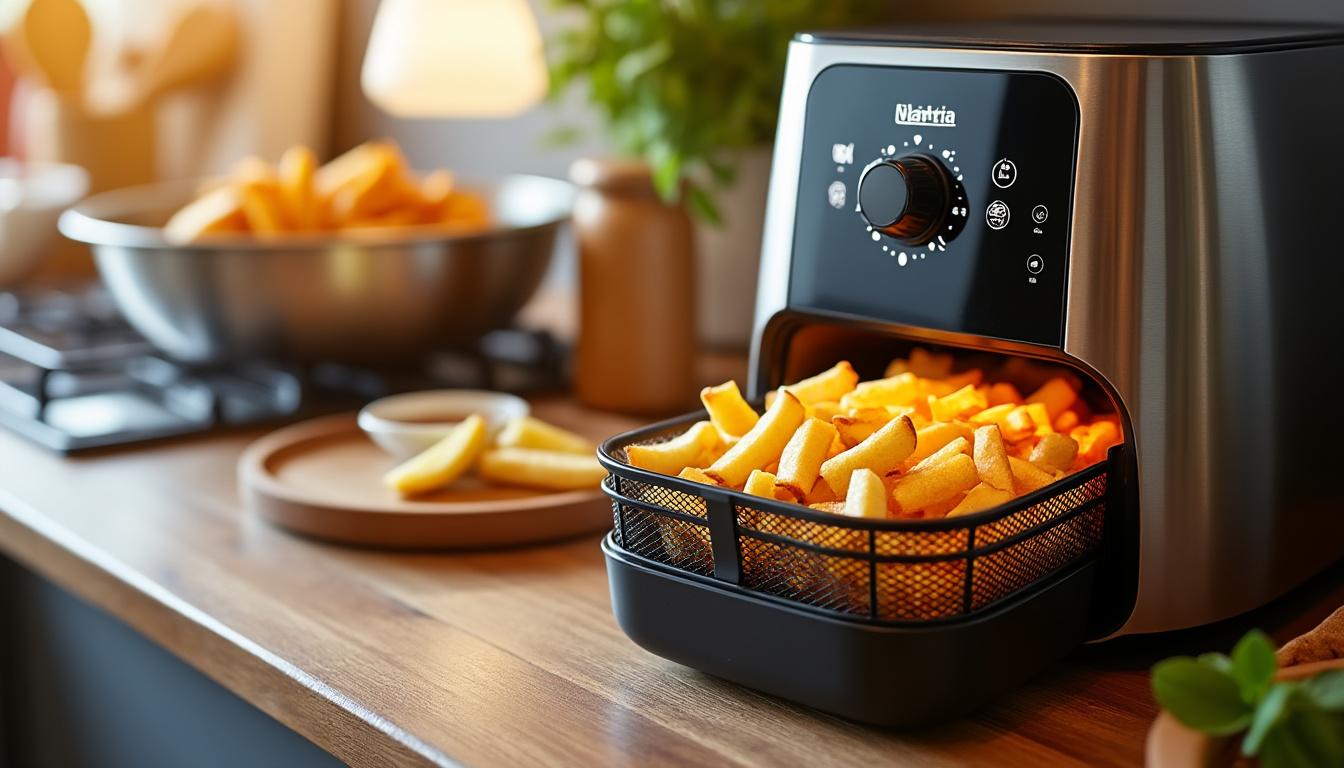
Health advantages and risks of air fryer cooking: balancing benefits and caution
Air frying is often promoted as a healthier substitute for deep frying, and the evidence supports substantial reductions in oil-related calories and fats. Many studies and consumer tests indicate that air frying can reduce oil absorption by up to 75–80% compared with traditional frying, translating into meaningful calorie savings for frequent consumers of fried foods. This lower oil usage aligns with public health guidance to reduce saturated and trans fats in the diet and to limit excess caloric intake linked to obesity, type 2 diabetes, and cardiovascular disease. For people seeking to enjoy crunchy, fried-like textures without the same calorie burden, the air fryer is a practical tool for healthier frying.
Beyond calories, air frying may also mitigate the formation of certain harmful compounds. Acrylamide, a chemical generated when starchy foods are cooked at high temperatures, has been associated with cancer risk in animal studies and is a concern for human health. Research comparing air frying with deep frying found large reductions—one study showing up to a 90% decrease in acrylamide levels for potatoes when air fried. Those findings position air frying as a technique that can lower exposure to specific cooking-related toxins when used thoughtfully.
Risks and nutritional nuances
However, air frying is not devoid of risks. High-heat cooking inherently leads to chemical changes: oxidation of cholesterol in meats and the formation of advanced glycation end products (AGEs) can increase when foods are exposed to intense heat. Some studies report greater levels of cholesterol oxidation products (COPs) in air-fried fish, which are associated in some research with atherosclerosis and other health concerns. Practical countermeasures exist: adding fresh herbs like parsley and chives demonstrated antioxidant effects that reduce COP formation in experimental settings. Thus, recipe choices—seasonings, marinades, and antioxidant-rich garnishes—can meaningfully influence the health profile of air-fried dishes.
Another consideration is material safety. Many air fryers include plastic or non-stick coatings in their construction. While most manufacturers comply with safety standards, there is ongoing scrutiny around potential leaching of plastic-derived compounds at very high temperatures. Recent product trends in 2024–2026 show industry movement toward alternative lining materials and ceramic coatings, reducing potential exposure to concerning substances. Consumers inclined to minimize this risk can opt for models with stainless steel baskets or ceramic-coated components.
From a nutritional standpoint, the food itself remains central. An air-fried, heavily breaded, and sugar-laden treat is still an indulgence. Registered dietitians emphasize that the appliance supports healthier eating patterns when paired with whole foods: air-fried vegetables, lean proteins, and moderate portions work best. For instance, air-fried salmon preserves much of its nutritional value while producing a crispy exterior, though some delicate omega-3 fatty acids may diminish slightly under high heat. Balancing air-fried items with steamed vegetables or fresh salads helps retain dietary fiber and micronutrients.
For those wanting practical health-oriented guidance, reputable sources offer balanced perspectives: healthcare-oriented explanations are available from sites like WebMD’s air fryer guide, and appliance-focused buying and safety advice can be found in consumer guides. The key insight: when used with attention to temperature and ingredient quality, air frying can reduce oil intake and exposure to certain harmful chemicals, but it does not convert inherently unhealthy foods into health foods. Thoughtful pairing and recipe choices preserve benefits while minimizing risks. Closing thought: health gains from air frying depend on what is being cooked and how it is prepared.
How to choose the right air fryer: size, type, and features for every kitchen
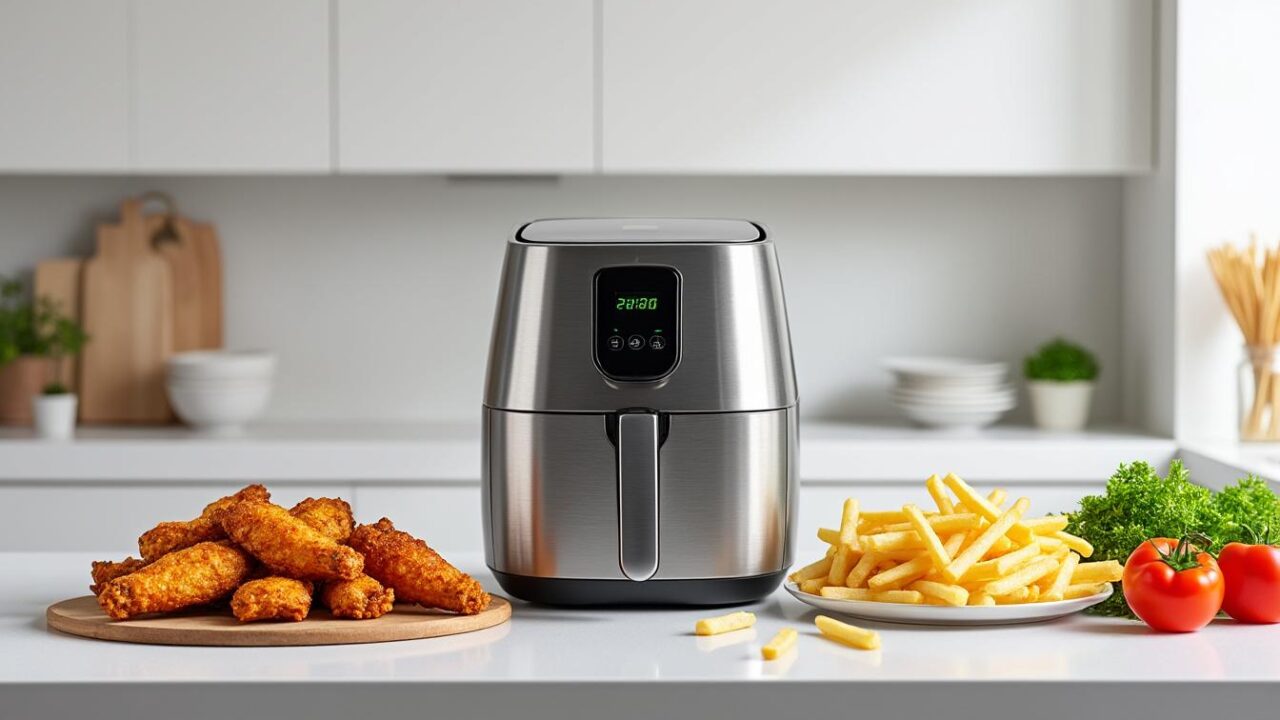
Choosing an air fryer requires clear thinking about household needs, counter space, and cooking habits. While marketing often emphasizes bells and whistles, practical selection rests on three pillars: capacity, type, and essential features. Capacity decisions hinge on who will be fed and how often. Basket-style air fryers, typically 3–6 quarts, excel for singles, couples, and quick snacks. For families or for cooks who prefer batch cooking, oven-style (air fryer toaster oven) units deliver expanded capacity, multiple racks, and more versatile functions like rotisserie and baking.
Consider Maya’s apartment: a two-person household that occasionally hosts friends. A 4–5 quart basket model matched her meal patterns—fast weeknight dinners and crisp reheats—without overwhelming counter space. In contrast, a suburban family might prioritize a 10–20 quart oven-style unit to roast whole chickens and run multiple trays simultaneously. The right size preserves the advantages of energy efficient cooking because smaller chambers heat and cook faster.
Comparing types: basket, oven-style, and multifunction combos
Basket-style models are compact, affordable, and intuitive: slide out the basket, arrange a single layer, and set temperature and time. They are the most common and suit typical crisping tasks well. Oven-style air fryers look like countertop ovens; they accept sheet pans and racks, enabling batch roasting, baking, and broiling. Multifunction pressure cookers and multi-cookers with an air fryer lid combine functions—good for tight kitchens where one appliance must do many tasks. Each form factor brings trade-offs in footprint, noise, and learning curve.
Feature considerations go beyond size. Seek reliable temperature control—digital dials or precise readouts reduce guesswork. Preset programs can help beginners, while manual temperature and time settings satisfy experienced cooks. A removable, dishwasher-safe basket, and non-stick or ceramic coatings make easy cleaning far more achievable. Safety features such as auto-shutoff and cool-touch handles matter for households with children.
Checklist: What to prioritize when buying
- Capacity: 3–4 quarts for one, 5–6 for small families, 8+ for larger households.
- Type: basket for compact frying, oven-style for multi-rack cooking.
- Materials: stainless or ceramic-coated baskets reduce concerns about plastic.
- Controls: look for clear temperature control and reliable presets.
- Accessories: trays, racks, and rotisserie kits extend versatility.
- Cleaning: dishwasher-safe parts and accessible drip trays help maintenance.
Readers seeking deeper buying advice can consult hands-on guides such as the detailed air fryer buying guide or broader consumer testing resources. Budget is relevant: mid-range models often offer the best mix of durability and performance, while premium models may add connectivity or larger capacity. The final choice depends on the balance between frequency of use and desired capabilities. Closing insight: pick the appliance that matches typical meal volumes—bigger is not always better if it goes underused.
Mastering techniques and recipes: temperature control, timing, and getting consistently crispy food
Technique turns a capable air fryer into a reliable culinary partner. Central to mastery are three interlocking variables: temperature control, proper spacing for air circulation, and minimal yet strategic use of oil. Temperature determines browning speed and internal doneness. A high temperature (375–400°F) rapidly crisps battered or frozen items, while moderate settings (325–350°F) suit thicker proteins and delicate vegetables. Timing interacts with temperature; shorter, hotter sessions often outperform lower-and-slower approaches for achieving a golden crust without drying interiors.
Spacing is the unsung hero: single-layer arrangements allow hot air to touch every surface, preventing steaming and sogginess. For large batches, cook in consecutive smaller loads rather than crowding the basket. Turning or shaking the basket halfway through cooking promotes even exposure, and some models’ automatic stirring paddles simplify that step. A light mist of oil—applied with a sprayer or by tossing food with a teaspoon of oil—enhances browning through surface lipid interactions without negating the healthy frying rationale.
Practical recipe adaptations and examples
Frozen foods are forgiving: follow package guidance and rarely need extra oil. Fresh vegetables often benefit from a short toss with oil and seasoning; for example, broccoli florets at 375°F for 10–12 minutes deliver crisp edges and tender centers when not crowded. For proteins, patting dry and seasoning generously helps surface browning. A chicken breast cooked at 375°F can remain juicy with a final blast of 400°F heat to crisp skin. Fish benefits from lower initial temperatures to protect omega-3s, and a finishing high-heat interval achieves a crisp exterior with minimal nutrient loss.
Here is a compact reference table for common items and starting points:
| Food | Temperature | Typical Time | Pro Tip |
|---|---|---|---|
| Frozen fries | 400°F | 12–15 min | Shake basket halfway |
| Chicken wings | 380°F | 20–25 min | Flip halfway, spray lightly with oil |
| Broccoli | 375°F | 10–12 min | Toss with garlic and oil |
| Salmon fillet | 390°F | 10–12 min | Start skin-side down |
For creative exploration, the air fryer supports baking small cakes or reheating pizza with a crisped crust. Many cooks share recipes and timing adjustments in community hubs and detailed tutorials such as first-timer guides that illustrate step-by-step approaches. Video demonstrations can be especially useful to see shaking, layering, and oil-spraying techniques in action.
Precision tools help: leave a meat thermometer nearby for checking doneness and a reusable oil sprayer to apply light, even coats. If smoke appears, reduce temperature 10–20°F and clean the drip tray—accumulated grease is the typical culprit. The closing perspective: consistent crispiness emerges from disciplined spacing, appropriate heat, and small amounts of oil used strategically.
Maintenance, safety, cleaning, and energy efficiency for daily use
Air fryers are celebrated for easy cleaning and rapid meal cycles, yet routine maintenance ensures longevity and safe operation. Grease and food debris accumulate in the drip tray and on the basket surface; cleaning after each use prevents smoke and preserves performance. Most baskets and trays are dishwasher-safe, but gentle hand washing with a soft sponge prolongs non-stick coatings. Avoid metal utensils that can scratch liners—opt for silicone or wooden tools. Periodic deep cleaning of vents and the heating element area prevents odors and maintains optimal air circulation.
Safety considerations stem largely from heat and airflow. Air fryers can reach nearly 500°F in some settings; always use oven mitts when handling hot baskets and be cautious of the vent, where hot air expels. Position the unit on a stable, heat-resistant surface and leave a few inches of clearance around vents. For households with children, select models with cool-touch exteriors and auto-shutoff features. Regular inspection for frayed cords, damaged baskets, or cracked coatings reduces the risk of malfunction.
Energy efficiency and environmental notes
Compared to full-sized ovens, air fryers are generally more energy efficient for small meals. They heat smaller chambers and require less preheat time, consuming roughly 1,200–1,700 watts versus the larger 2,400–5,000 watt draw of some ovens. For single servings or quick reheats, the energy savings are tangible. That said, when cooking large batches for many people, an oven or convection oven may be more efficient due to volume advantages. Choosing the right appliance for the task optimizes energy use and reduces overall kitchen energy consumption.
For long-term environmental mindfulness, consider the appliance’s build quality and potential lifespan. Durable models with replaceable parts reduce waste, and selecting brands that offer recycling information or take-back programs aligns with sustainable kitchen practices. Also, using air fryers to reduce household oil waste can have a small but notable environmental impact.
Practical maintenance checklist:
- Empty and wipe the drip tray after every use to prevent grease buildup.
- Wash baskets and racks with warm, soapy water or place in the dishwasher when allowed.
- Inspect heating elements monthly and remove trapped crumbs gently.
- Avoid abrasive cleansers and metal tools to preserve non-stick surfaces.
- Store accessories and cords safely to prevent damage between uses.
Final safety note: do not use the air fryer in enclosed cabinets or near flammable items while operating. Observing basic cleaning, maintenance, and safety routines will maximize the appliance’s benefits—crisp results, convenient cooking, and consistent performance—and keep the kitchen running smoothly. This practical upkeep closes the loop between joyful air-fried meals and sustainable daily use.
{“@context”:”https://schema.org”,”@type”:”FAQPage”,”mainEntity”:[{“@type”:”Question”,”name”:”What types of foods can be cooked in an air fryer?”,”acceptedAnswer”:{“@type”:”Answer”,”text”:”An air fryer handles a wide range of foods: frozen snacks, vegetables, meats, baked goods, and even some desserts. It excels at producing crispy exteriors with minimal oil, but certain batter-heavy items may require recipe tweaks to match deep-fried textures.”}},{“@type”:”Question”,”name”:”Is air frying healthier than deep frying?”,”acceptedAnswer”:{“@type”:”Answer”,”text”:”Air frying substantially reduces oil consumptionu2014often by 75u201380%u2014lowering calories and some harmful compounds like acrylamide. However, health depends on the food itself; an air-fried high-fat or sugary item remains an indulgence.”}},{“@type”:”Question”,”name”:”How do I prevent soggy results in my air fryer?”,”acceptedAnswer”:{“@type”:”Answer”,”text”:”Avoid overcrowding, pat ingredients dry, use a light oil spray if necessary, and shake or flip food halfway through cooking to maintain even air circulation and consistent crisping.”}},{“@type”:”Question”,”name”:”Which size air fryer should a family buy?”,”acceptedAnswer”:{“@type”:”Answer”,”text”:”For one or two people, a 3u20134 quart basket is sufficient; families of four or more typically benefit from 5u20136 quarts or larger oven-style units. Choose based on typical meal volumes, not occasional needs.”}}]}What types of foods can be cooked in an air fryer?
An air fryer handles a wide range of foods: frozen snacks, vegetables, meats, baked goods, and even some desserts. It excels at producing crispy exteriors with minimal oil, but certain batter-heavy items may require recipe tweaks to match deep-fried textures.
Is air frying healthier than deep frying?
Air frying substantially reduces oil consumption—often by 75–80%—lowering calories and some harmful compounds like acrylamide. However, health depends on the food itself; an air-fried high-fat or sugary item remains an indulgence.
How do I prevent soggy results in my air fryer?
Avoid overcrowding, pat ingredients dry, use a light oil spray if necessary, and shake or flip food halfway through cooking to maintain even air circulation and consistent crisping.
Which size air fryer should a family buy?
For one or two people, a 3–4 quart basket is sufficient; families of four or more typically benefit from 5–6 quarts or larger oven-style units. Choose based on typical meal volumes, not occasional needs.