


How to clean and maintain your air fryer for longevity
The compact, countertop appliance that transformed weeknight cooking now demands careful attention: a clean air fryer not only preserves flavor and texture, it protects delicate electronics and non-stick coatings that are central to performance. This report-style overview lays out practical patterns of care that bridge daily tidying and periodic deep cleans. It highlights which parts can tolerate a dishwasher wash, which require hand scrubbing, and how simple kitchen ingredients such as baking soda and lemon can dislodge baked-on grease without harming finishes.
Practical actions—unplugging and cooling, removing debris from the heating element, and drying components thoroughly—are paired with usage choices that reduce future maintenance, like selecting high smoke point oils and avoiding aerosol sprays. The guidance is grounded in professional repair sensibilities and culinary practicality, showing how small habits can cumulatively extend air fryer longevity and prevent air fryer damage.
In brief — key takeaways
- Unplug and cool before any cleaning to prevent burns and electrical hazard.
- Daily wipe-downs and washing removable parts after use prevent hardened grease.
- Deep clean monthly using baking soda paste and targeted scrubbing for stubborn residue.
- Avoid abrasives and aerosol sprays to protect non-stick coatings and internal fans.
- Inspect cords and elements regularly to catch wear and prevent failure.
Air Fryer Care 101: Regular Cleaning Routines to Extend Air Fryer Life
Routine maintenance is a discipline that rewards with consistent cooking results and fewer repairs. A clean air fryer begins with immediate post-use actions: remove the basket and pan, allow them to cool, then wash with warm water and mild dish soap. These steps prevent grease from polymerizing into stubborn layers that affect both taste and heating efficiency.
For many models, the basket and pan are built from metal with non-stick coatings. Gentle hand washing with a non-abrasive sponge preserves that coating better than the dishwasher. While the dishwasher may be convenient, repeated cycles can accelerate wear on non-stick surfaces; hand-washing keeps the finish intact and helps prevent scratches that lead to flaking over time.
Wiping the interior after each use removes airborne crumbs and moisture that settle on fan housings and around the heating element. A damp cloth—never a soaking one—followed by thorough drying prevents corrosion and stubborn odors. This small ritual reduces the need for aggressive chemicals later and keeps the appliance smelling fresh.
Inspection is part of regular care. Check the plug and cord for fraying, examine the basket for chips, and look at the heating element for food debris. Food lodged near the element not only causes smoke but can burn and shorten the element’s effective life. Noticing these issues early allows corrective cleaning or replacement before a small problem becomes mechanical.
Example routine and cadence
Daily tasks are simple: wash removable parts, wipe the interior, and dry components. Weekly attention might include a deeper wipe of the heating element and a careful brush of crevices. Monthly maintenance should include a deeper clean using a baking soda paste and a close inspection of electrical components and seals.
These habits mirror recommendations found in established resources; for a structured overview on appliance care, consult a practical manual like the guide to caring for an air fryer, which unpacks manufacturer-specific limits and cleaning allowances.
| Component | Frequency | Recommended action |
|---|---|---|
| Basket and pan | After each use | Hand wash with mild soap; air dry |
| Interior cavity | Weekly | Wipe with damp cloth; remove crumbs from heating element |
| Deep clean | Monthly | Baking soda paste on stubborn areas; soft brush for crevices |
Adopting a simple schedule of small tasks will dramatically reduce the need for aggressive interventions and will contribute to long-term performance. The final insight: consistent light maintenance prevents the compounding of grime that demands heavy-duty remediation.
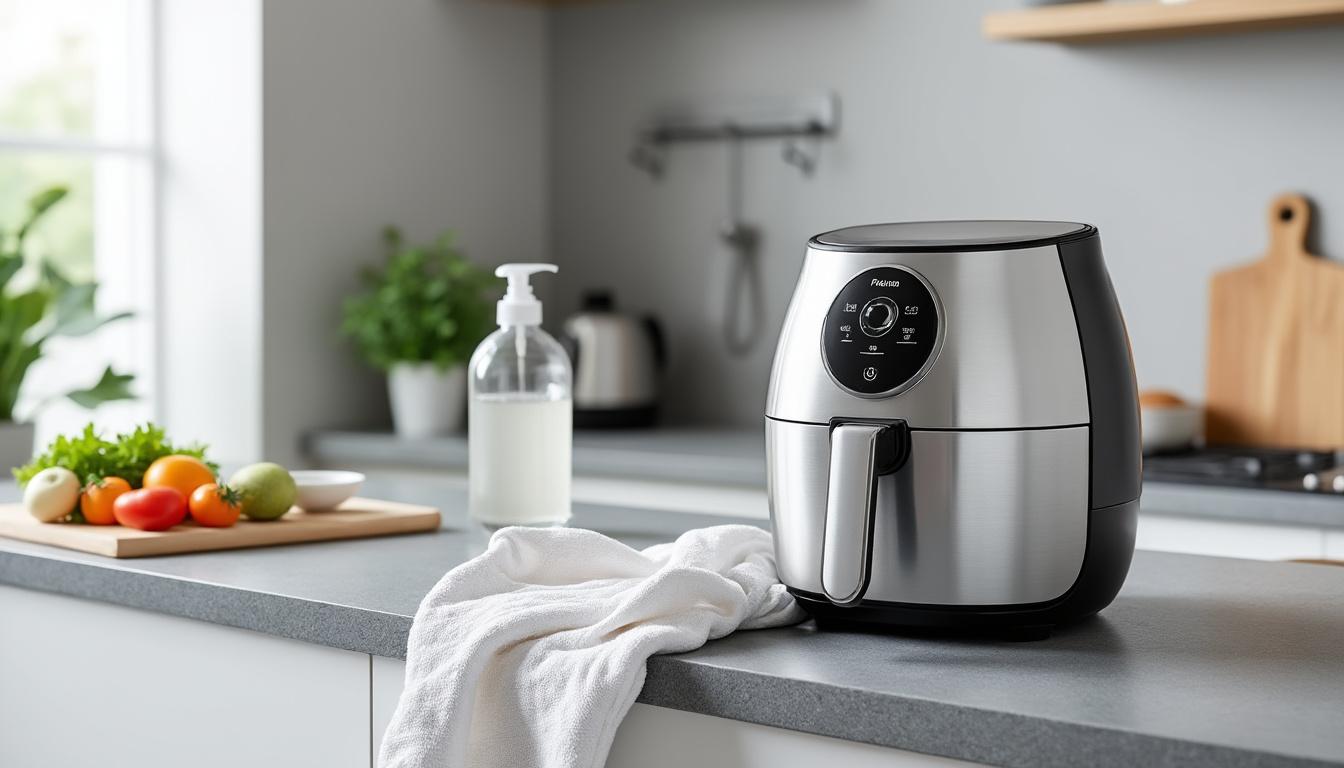
Deep Cleaning Techniques: How to Remove Air Fryer Grease and Stubborn Residue
Deep cleaning is the moment when routine care meets restorative action. When grease has accumulated or food has burned onto the basket, a thoughtful method prevents damage while restoring appearance and function. A commonly effective approach uses household ingredients: a paste of baking soda and water, lemon juice for deodorizing, and warm soapy water for soaking.
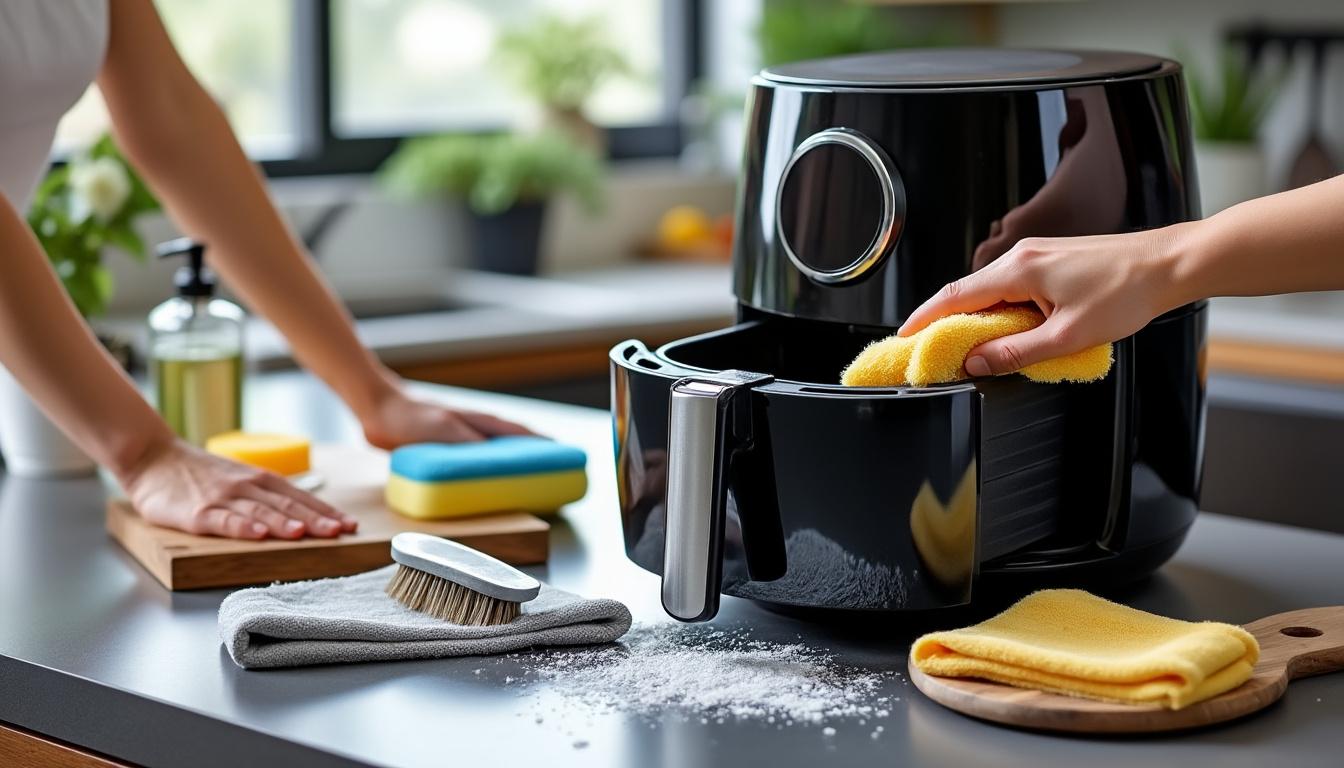
Begin with safety: unplug the unit and wait until it is cool to the touch. Remove all detachable parts and set them aside for a soak. If the manual indicates that parts are dishwasher-safe, that can be used for a baseline clean, but stubborn baked-on grease responds best to a pre-soak and manual scrubbing. Soak the basket and pan for 20–30 minutes in warm, soapy water; then apply the baking soda paste to concentrated spots and let it sit for twenty minutes before scrubbing gently with a soft brush.
For crevices and the heating element, avoid abrasive pads. Use a soft-bristled brush or an old toothbrush dipped in soapy water to dislodge crumbs from vents and seams. Use a damp microfiber cloth to wipe the heating element carefully; concentrated scrubbing is unnecessary and can harm the element if done with metal tools.
Stubborn odors often stem from trapped grease. A short cycle with lemon slices or a small bowl of water and vinegar run at 350°F for five minutes (with the appliance empty and cooled) can help lift and neutralize smells. After such a cycle, allow the appliance to cool fully and wipe interiors again.
If smoke appears during cooking after a deep clean, check for hidden residues under the element or in the fan housing. Any lingering buildup can ignite at high temperatures and provoke both odor and smoke. Persistent smoke is a sign that additional deep cleaning is required or that replacement parts should be considered.
Tools and products that help
Useful tools include a non-abrasive sponge, soft-bristle brush, nylon scrubber, and a refillable oil sprayer for even oil application. Avoid aerosol cooking sprays; they often contain propellants and sugars that leave sticky residues that are difficult to remove. A durable, refillable sprayer such as an Evo-style bottle reduces clogging and keeps non-stick surfaces smoother over time.
For additional step-by-step techniques and safe cleaning product lists, the concise visual walkthrough from BBC Good Food cleaning guide is a helpful companion to this methodical approach.
Approached methodically, deep cleaning transforms an overworked kitchen gadget back into a dependable tool. The closing point: targeted, gentle chemistry and the right tools will remove air fryer grease without sacrificing component lifespan.
Air Fryer Parts Cleaning: Protecting Non-Stick Surfaces and Electrical Components
Understanding which parts can get wet and which must remain dry is crucial. The removable tray, basket, and crisper plate are designed for water exposure, but the main unit houses the motor and control electronics—never immerse it. A damp cloth and a careful touch are the only acceptable cleaning tools for the exterior and control panel.
Some baskets and accessories are labeled dishwasher-safe. Even so, hand washing is often preferred to prolong surface treatments. A gentle cycle in a dishwasher may be convenient, but frequent intense dishwasher cycles may dull finishes and accelerate non-stick wear. For a balance of convenience and care, wash by hand most of the time and reserve the dishwasher for occasional heavy-duty cleans.
Non-stick coatings are a selling point for many air fryers. To preserve them, avoid metal utensils when removing food. Silicone, wood, or nylon tools protect surfaces from scratches that can grow into larger defects. When cleaning, a soft sponge and mild detergent will preserve coatings, while steel wool and abrasive powders will compromise them irrevocably.
Electrical safety is a maintenance priority. Inspect cords for fraying and plugs for discoloration, which can signal overheating. If the control panel becomes sticky or unresponsive, a careful wipe with minimal moisture often resolves issues. When there are signs of electrical malfunction—sparks, persistent burning smell, or frequent tripping—stop using the appliance and seek professional repair. Attempting to open the main unit often voids warranties and risks further damage.
Accessories that support longevity
Accessory kits expand functionality but can also protect primary components when chosen thoughtfully. A silicone mat inside a basket prevents small foods from lodging in the heating element and reduces scrubbing needs. A dedicated instant-read thermometer ensures foods reach safe internal temperatures without overcooking, reducing repeated high-heat cycles that stress the appliance.
For practical advice on daily-use accessories and their care, resources like air fryer maintenance tips offer curated lists and usage patterns that fit regular home cooks.
Protecting non-stick surfaces and electronics extends the life of the appliance. The final insight: choose accessories that reduce stress on core parts while following manufacturer cleaning recommendations to maximize lifespan.
Daily Usage Habits to Prevent Air Fryer Damage and Improve Performance
Preventive habits in the kitchen reduce the frequency of deep cleans and minimize wear. A few behavior shifts—preheating correctly, not overcrowding the basket, and using the right oil—translate into cleaner operation and less mechanical strain. Preheating for a few minutes at the set temperature primes the cooking chamber, improving crisping without extra time at high heat.
Correct preheating techniques are detailed in practical guides such as how to preheat an air fryer correctly, which emphasizes short cycles and attention to model-specific instructions. This avoids unnecessary long exposure to peak temperatures that can darken oils and accelerate residue formation.
Choosing oils with high smoke points reduces sticky residue. For example, avocado, peanut, and refined sunflower oils better withstand high temperatures. Avoid aerosol sprays which contain propellants that coat surfaces with difficult-to-remove films. Instead, apply oil with a refillable sprayer for even coverage and minimal waste.
Food placement matters. Overcrowding forces longer cook times, increases oil usage, and causes more food fragments to fly and lodge in vents. A steady trickle of small batches, or the use of accessory racks, keeps airflow even and reduces the tendency for bits to accumulate.
Parchment paper designed for air fryers is useful but must be used correctly: place it under food and not loose in the chamber to prevent it from contacting the heating element. Aluminum foil can be used sparingly but risks scratching interiors; parchment is safer for the non-stick surface.
Small, consistent habits preserve both flavor and function. The final observation: adjusting usage patterns delivers outsized benefits to air fryer longevity.
Routine Inspection, Troubleshooting and Long-Term Strategies to Extend Air Fryer Longevity
Long-term care blends inspection, timely troubleshooting, and strategic replacements. Monthly checks uncover early wear: loose handles, chipped baskets, or discolored heating elements. These signs indicate the need for part replacement before a failure occurs. Replaceable parts are often inexpensive and readily available from manufacturers.
When smoke, unusual noises, or electrical smells appear, they are red flags. The first action is to stop use and power down. After cooling, inspect the heating element for debris and the interior cavity for grease pockets. If the issue persists, consult certified repair guidance rather than attempting internal fixes. Professional servicing preserves warranties and prevents further damage.
Storage also affects longevity. Storing the air fryer in a dry, cool cabinet prevents moisture-related corrosion. For households that use the unit seasonally, a full deep clean before storage and again after retrieval reduces odor transfer and mechanical issues. Labeling the power cord or storing accessories together reduces lost parts and the temptation to improvise with incompatible items.
Another useful long-term strategy is part rotation. If multiple air fryers or accessories are in use, rotating heavier-use accessories extends the life of each piece. For high-frequency households, keeping a spare basket or tray on hand ensures immediate substitution when one part is being washed, reducing rush cleaning with abrasive methods.
For broader advice on maintaining performance year-over-year, consult longevity-focused resources such as how to choose the best air fryer for your needs, which helps align usage habits with model strengths and expected service life.
Finally, recycling or responsibly disposing of irreparable units supports sustainability and safety. The concluding insight for long-term strategy: proactive inspection and modest, timely replacements preserve performance and extend air fryer life far beyond initial expectations.
- Essential cleaning tools: soft sponge, microfiber cloth, soft-bristle brush, refillable oil sprayer.
- Safe household cleaners: dish soap, baking soda, lemon or mild vinegar solution.
- Items to avoid: aerosol cooking sprays, steel wool, harsh chemical solvents.
How often should removable parts be washed?
Removable parts such as baskets and pans should be washed after every use. Hand washing with warm soapy water preserves non-stick coatings and prevents grease buildup that can lead to smoke and odors.
Can the main unit be cleaned with water?
The main unit should never be immersed in water. Wipe the exterior and control panel with a damp cloth and dry thoroughly. Electrical components and the motor must remain dry to prevent short circuits and damage.
What is the best method to remove stubborn grease?
A paste of baking soda and water applied to cooled, removable parts breaks down baked-on grease. Let it sit for about 20 minutes, then scrub gently with a soft brush. For persistent odors, a short empty run with lemon slices or a vinegar-water mixture can help neutralize smells.
Are aerosol cooking sprays safe for air fryers?
Aerosol sprays are not recommended. They often leave sticky residues and propellants that can damage non-stick coatings. Use a refillable oil sprayer or brush on oils with a high smoke point to prevent buildup and protect surfaces.