
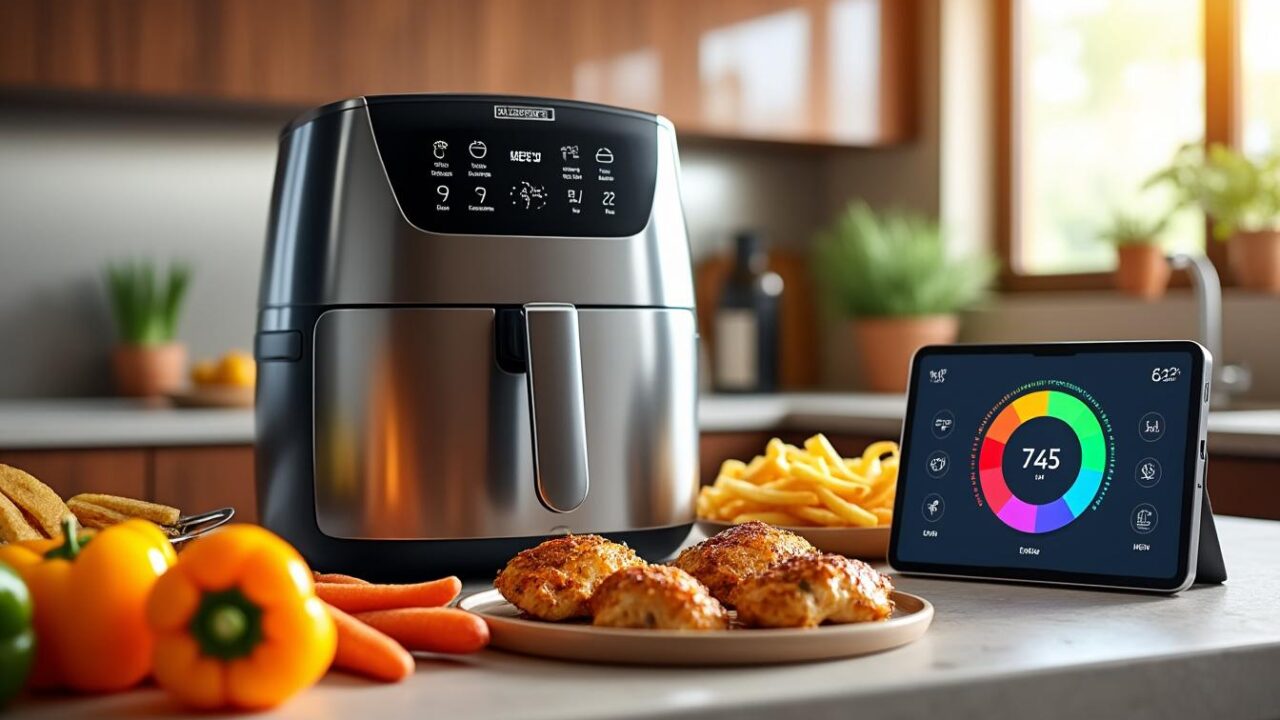
How does an air fryer work? understanding air fryer technology
A compact revolution on the kitchen counter: modern home cooks embrace the air fryer for its promise of crisp, golden results with far less oil and less fuss. This piece surveys the technology behind that promise, tracing how a concentrated heat source, a powerful fan and a thoughtfully perforated basket combine to recreate the sensations of frying. It examines the chemistry of browning, the engineering of airflow, the practical settings that transform raw ingredients into textured delights, and the wider implications for energy use and everyday cooking habits. Practical tips and comparative data are woven with a small narrative about a fictional home cook testing recipes, creating a through-line that clarifies choices for novices and seasoned users alike.
In brief:
- Rapid air technology drives the process: a heating element and high-speed fan create intense hot air circulation.
- Design of the cooking basket and airflow path is essential for even browning and crispy texture.
- Temperature control and timing trigger the Maillard reaction, producing flavor without deep oil immersion.
- Air fryers are typically more energy efficient than full-size ovens for small batches and enable near oil-free frying.
- Cleaning and maintenance extend performance; choose accessories and presets to expand capabilities.
How rapid air technology produces a crispy texture in an air fryer
At the heart of the air fryer’s appeal is the visible transformation of soft, damp surfaces into a brittle, browned crust. That transformation depends on rapid air technology, a coordinated system of heat and motion that concentrates energy where it matters most.
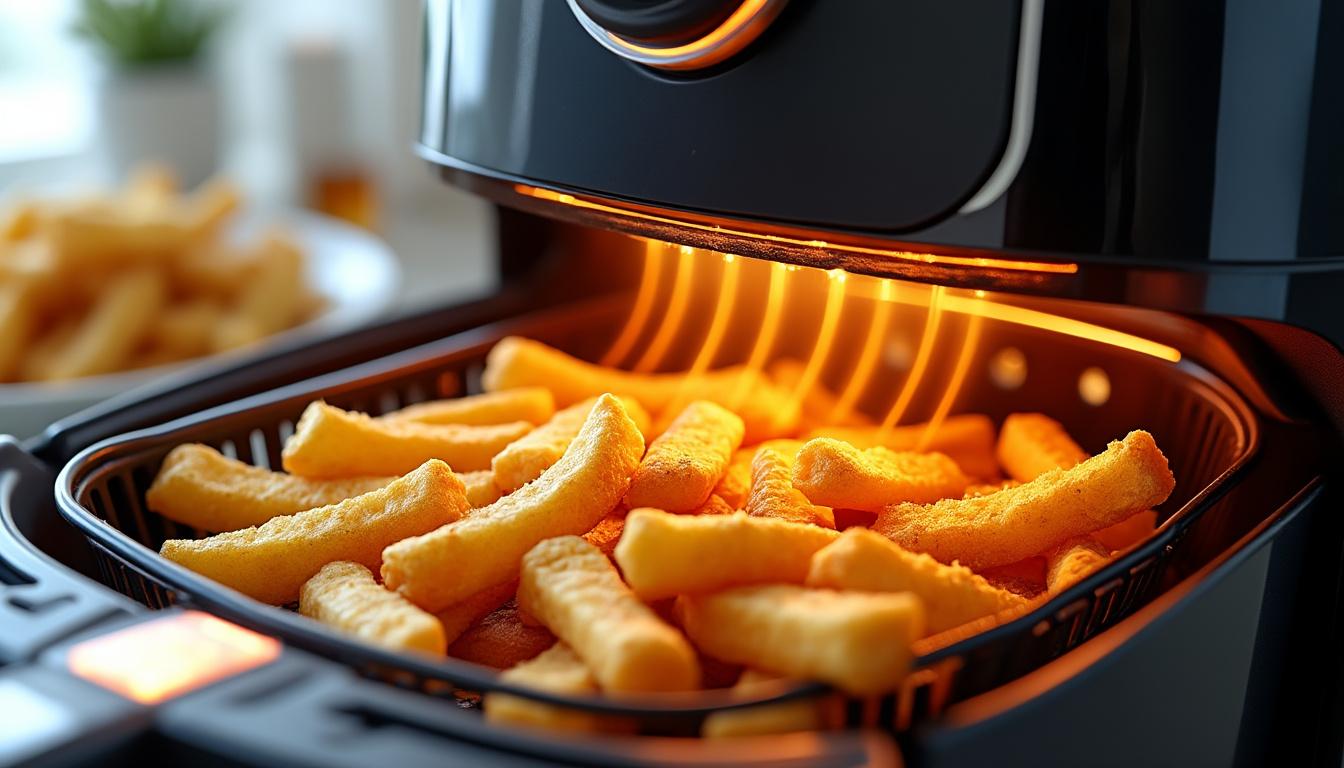
Mechanics first: a compact appliance is advantageous because it confines heat in a small volume, allowing the heating element to raise the air temperature quickly. A powerful fan then forces this warm air across and around the food, establishing intense hot air circulation. The combination acts like a mini convection oven with a turbo booster: instead of passive heat rising and drifting, air is propelled directly at the surface, accelerating moisture evaporation and supporting rapid surface browning.
The chemical partner to this physical process is the Maillard reaction. When surface temperatures reach roughly 300–400°F, amino acids and sugars reorganize into hundreds of volatile compounds that register as roasted, nutty and savory flavors. Unlike deep frying—where hot oil transfers heat—an air fryer relies on the synergy of moving hot air and radiant heat from the element to reach those temperatures quickly and sustain them without submerging the food in fat.
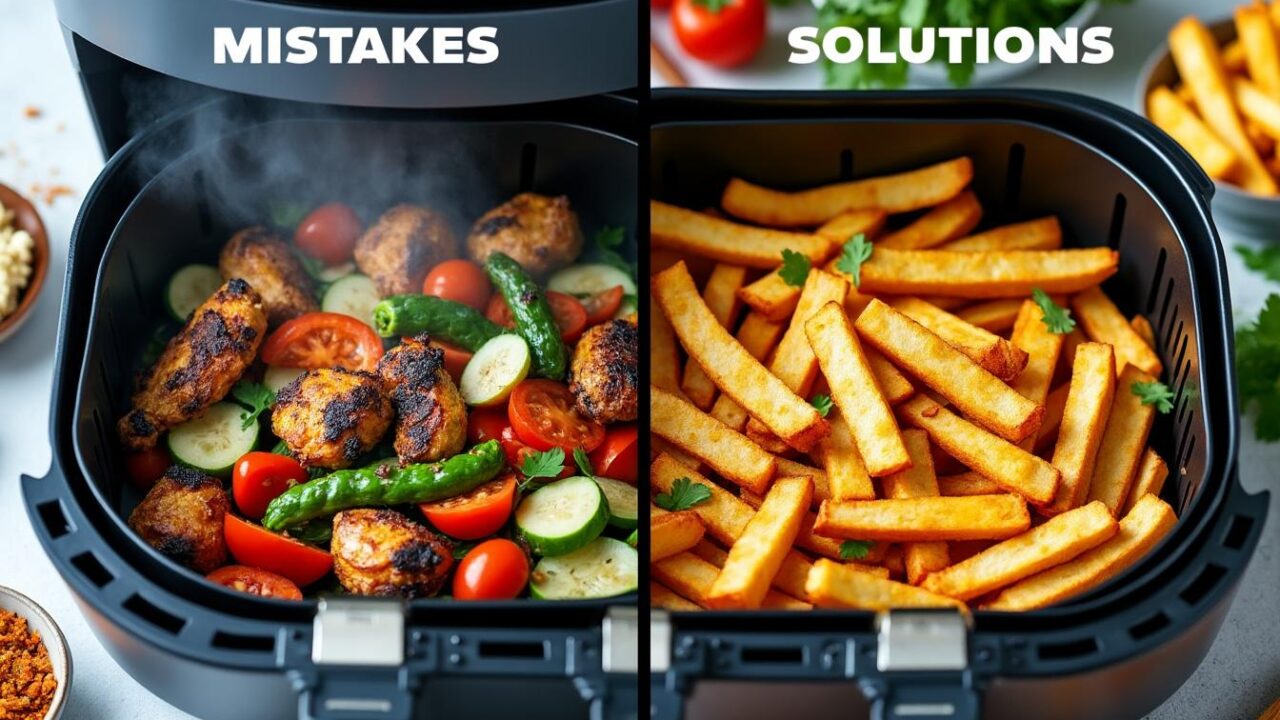
A practical example: when preparing shoestring fries, the objective is twofold—remove surface moisture quickly and maintain interior moisture. The hot air skims the exterior, creating a dry shell that browns, while conduction from the exterior inward cooks the center. A short burst of oil (often a spritz) can improve color and mouthfeel, but the quantities remain minimal compared with deep frying, enabling near-oil-free frying outcomes.
Anecdote: Maya, a fictional neighborhood caterer introduced as a thread throughout this piece, once tested twice-fried fries versus air-fried fries. With careful preheating and a single light coating of oil, Maya obtained a crust that matched the fried version for crunch, with noticeably less oil absorbed and far less cleanup afterward. This concrete experiment highlights how temperature control and airflow patterns substitute for prolonged oil immersion.
When designing recipes for air fryers, attention to surface area pays dividends. Thin cuts, small shapes and pre-drying (patting with paper towel) amplify the efficiency of hot air circulation. Conversely, large dense items require lower temperatures and longer times to avoid a burned exterior and undercooked interior.
In short, the magic of the crispy texture lies not in mystery but in deliberately applied heat and motion; rapid air technology concentrates both to achieve browning, flavor and reduced fat uptake. This insight informs the next section’s deep dive into how the device’s components make that possible.
Inside the device: heating element, fan, and cooking basket explained for consistent results
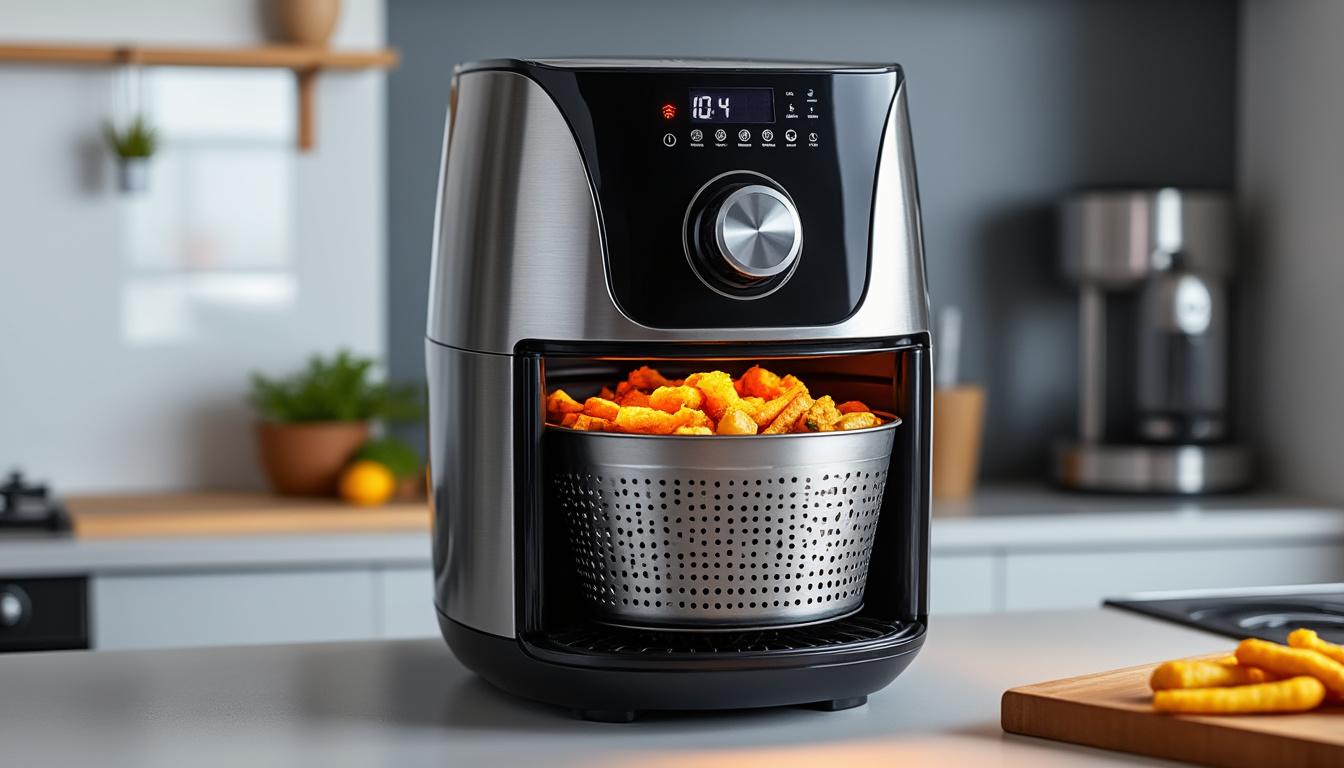
Understanding the specific roles of each component clarifies why different models and accessories perform differently. The critical trio—heating element, fan and cooking basket—work as a system, and small design choices cascade into noticeable differences on the plate.
The heating element provides the thermal energy. Placed near the top in most designs, it emits both radiant heat and warmed air. The fan is positioned to draw that warm air and direct it downward or in a spiral around the food compartment. The cooking basket sits in the path, often perforated to allow air to stream beneath and between pieces, minimizing cold spots.
Model variations matter. Some manufacturers shape the chamber to promote an up-and-over circulation pattern, while others use directed jets to intensify flow. The result is subtle but measurable: in testing scenarios, a basket with wider perforations allows more crossflow and tends to brown foods faster but may require closer monitoring to avoid over-crisping.
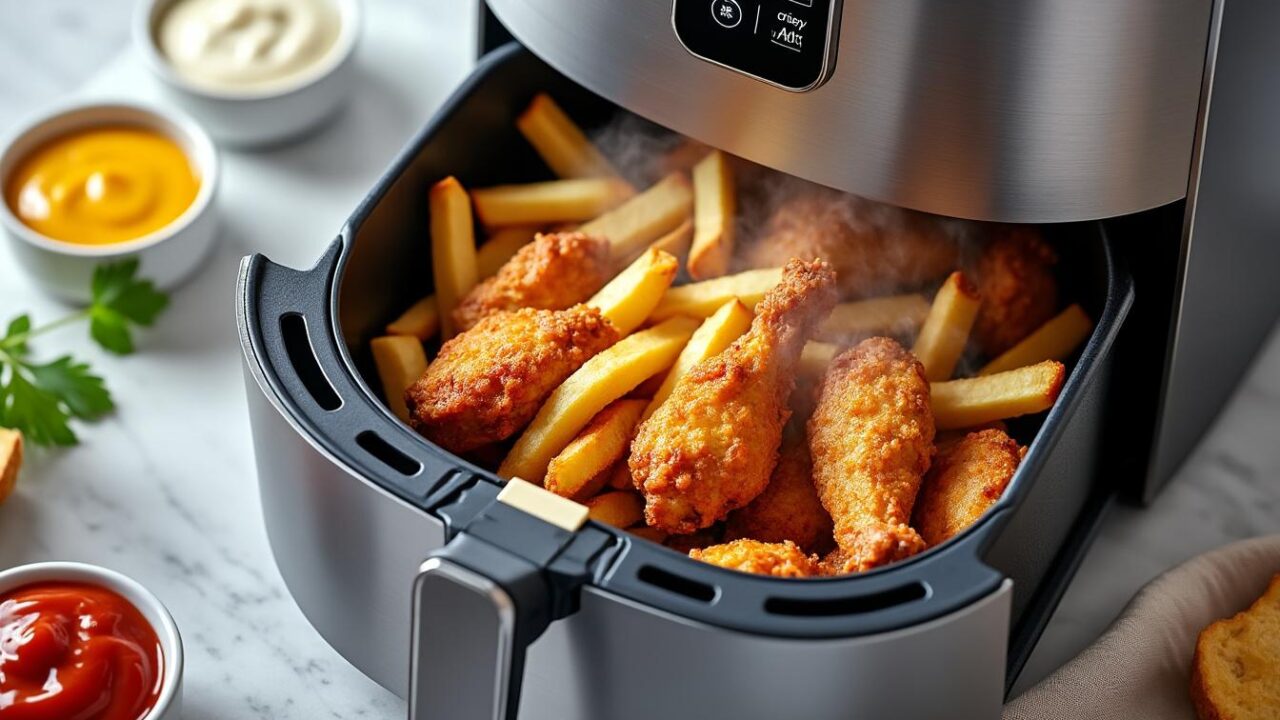
Case study: a small bistro simulated by Maya’s narrative tested chicken wings across three baskets—a solid tray with holes only at the bottom, a mesh basket, and a classic perforated basket. The mesh tray produced the most even skin crisping thanks to unobstructed air movement around each wing. The solid tray with limited perforation had a few under-crisped areas where airflow stagnated. The experiment reinforced that basket choice and arrangement (single layer vs stacked) are as impactful as temperature settings.
Controls and presets encapsulate the user-facing part of the system. Digital panels interpret desired time and temperature and modulate the element and fan accordingly. Advanced units include smart sensors that adjust fan speed or cycle the element to maintain steady heat, improving consistency across repeated batches. This feature links directly to temperature control, discussed further below.
Practical tips for consistent results:
- Arrange food in a single layer when possible to maximize airflow.
- Shake or turn items halfway through cooking to eliminate localized hot spots.
- Preheat for 3–5 minutes when recipes call for immediate high-temperature exposure.
- Choose baskets with perforation patterns that suit the food—finer mesh for small items, larger holes for fries and wings.
For home cooks deciding between models, weigh basket capacity, perforation style, and whether the unit supports racks or multi-level cooking. These small hardware details affect how the hot air circulation translates into plate-ready results. Closing insight: matching basket form to food shape optimizes crisping and reduces wasted energy, a perfect lead into the thermodynamics in the following section.
Convection cooking, Maillard chemistry and the role of temperature control
The broader scientific story of an air fryer intersects with classic cooking science—conduction, convection and radiation—and the particular importance of precise temperature control. Air fryers are essentially compact convection ovens whose engineered airflow accelerates heat transfer and browning chemistry.
Convection cooking refers to the movement of a heated fluid—air in this case—to transport energy. In an air fryer, forced convection from the fan achieves much higher convective heat transfer coefficients than passive convective methods, speeding both exterior drying and thermal penetration. That speed matters because it narrows the window between adequate browning and interior moisture loss.
The Maillard reaction is temperature-sensitive, generally arising above 285°F (140°C). As temperature climbs, reaction kinetics accelerate, producing complex aromas associated with roasted meat, toasted bread and seared vegetables. An air fryer’s ability to reach and fluently sustain these temperatures—thanks to the heating element and targeted airflow—means intense flavor development without needing oil to conduct heat.
Temperature control is the practical thermostat for this chemistry. Imagine cooking salmon fillets: setting too high risks a dry interior even as the surface browns, while too low delays Maillard formation and yields a pale, soft crust. Many experienced air fryer users adopt a two-stage approach—begin at a moderate temperature to bring food through the interior cooking phase, then increase temperature briefly to finish with crisping. This approach mimics professional kitchen techniques adapted to small appliances.
Data-based comparison helps: in lab-like conditions, a 1-inch thick chicken breast reaches safe internal temperature faster in an air fryer than in a conventional oven of the same set temperature, due to the aggressive convective transfer. This means shorter overall exposure to high heat for the interior, reducing the chance of overcooking while achieving desirable surface browning.
A short list of temperature-focused strategies:
- Use lower temperatures for dense, thick cuts and increase at the end for crisping.
- Preheat the appliance to stabilize initial conditions.
- Adjust fan cycles when possible—some recipes benefit from intermittent airflow.
- Monitor small items closely; thin pieces often need less total time and lower heat.
For further reading on practical specifications and recipes that fine-tune temperature and time settings, reputable guides such as what is an air fryer? and technical explainers like how does an air fryer really work offer tested benchmarks and model comparisons. These resources provide context and tested times for common foods that complement the science described here.
In sum, understanding convection cooking and the Maillard reaction empowers cooks to manipulate time and temperature for predictable results—the essence of sophisticated, energy-conscious home cooking.
Practical techniques, energy efficiency and expanding uses of oil-free frying
A concern for many buyers is whether the air fryer is merely a novelty or a genuinely useful appliance. Experience and comparative analyses indicate that for small batches and quick snacks it often outperforms larger ovens in both speed and energy efficient operation, while enabling near oil-free frying that lowers caloric and fat intake.
Energy comparisons depend on context. For a small family meal, heating a large conventional oven wastes energy to warm a vast cavity. An air fryer’s smaller volume reaches cooking temperatures faster and maintains them with lower total power consumption across many common tasks. Practical testing shows typical time reductions of 20–30% for items like fries, wings and roasted vegetables, translating into measurable energy savings over repeated use.
Expanding uses: beyond fries and wings, the air fryer excels with vegetables (brussels sprouts, carrots, beets), reheating leftovers (preserving crispness unlike microwaves), baking small batches (muffins and cookies) and finishing sous-vide proteins. Accessories—racks, rotisserie spits and skewers—transform the appliance into an all-purpose compact oven. A stepwise example: Maya used a rotisserie accessory to cook a small chicken evenly, rotating it to expose all sides to moving hot air. The result: crisp skin and juicy meat, with far less oil than traditional roasting.
Cleaning and maintenance matter for longevity and performance. Regular removal of crumbs, degreasing the basket and checking the heating element for buildup maintain efficient heat transfer and airflow. Most baskets and trays are dishwasher safe, and wiping the chamber with a damp cloth after cooling prevents smoke and off-flavors. These simple steps preserve optimal hot air circulation and extend appliance life.
A short table below helps compare attributes across common cooking methods:
| Feature | Air Fryer | Deep Frying | Conventional Oven |
|---|---|---|---|
| Oil use | 1 tsp or less (often optional) | 2–4 tbsp per serving | Varies (often minimal) |
| Typical cook time for small batch | Short (20–30% faster) | Rapid (minutes) | Longer (preheat and cook) |
| Cleaning | Simple removable basket | Grease and oil disposal | Moderate (tray and oven cavity) |
| Energy efficiency | High for small batches | Variable (high due to oil heating) | Lower for small portions |
For recipes and choosing a model, practical guides provide tested instructions and usage patterns; a thorough consumer guide and recipe compendium is available through a complete guide to choosing and using air fryers at complete guide. Another practical resource that details how the appliance operates in home kitchens is found at what is air fryer and how does it work.
Finally, consider user workflow: batch size, accessory needs and cleaning tolerance. For a single cook or small household, the combination of speed, crisping ability and lower oil use makes the air fryer a highly practical addition. Insight: optimizing usage patterns and accessories increases versatility and sustainability, a natural segue to the user-focused FAQ that follows.
How much oil does an air fryer use compared with deep frying?
An air fryer typically requires one teaspoon or less of oil for many recipes, whereas traditional deep frying often uses several tablespoons per serving. Reduced oil lowers calories and fat content while still enabling a crisp exterior.
Why do some foods need preheating in an air fryer?
Preheating stabilizes the internal temperature and ensures that hot air hits food immediately, facilitating rapid surface drying and browning. For small or thin items, preheating can improve texture and shorten total cooking time.
Can all foods be cooked in an air fryer?
Most foods suitable for roasting, baking or frying can be adapted to an air fryer. Delicate batters or very wet items may require modifications. Using racks, mesh baskets or pans designed for air fryers expands the types of dishes that can be prepared.
How does maintenance affect performance?
Regular cleaning of the basket, tray and chamber prevents residue buildup that can impede airflow and reduce heat transfer. Periodic inspection of the heating element and fan area ensures continued energy efficient operation and consistent results.