
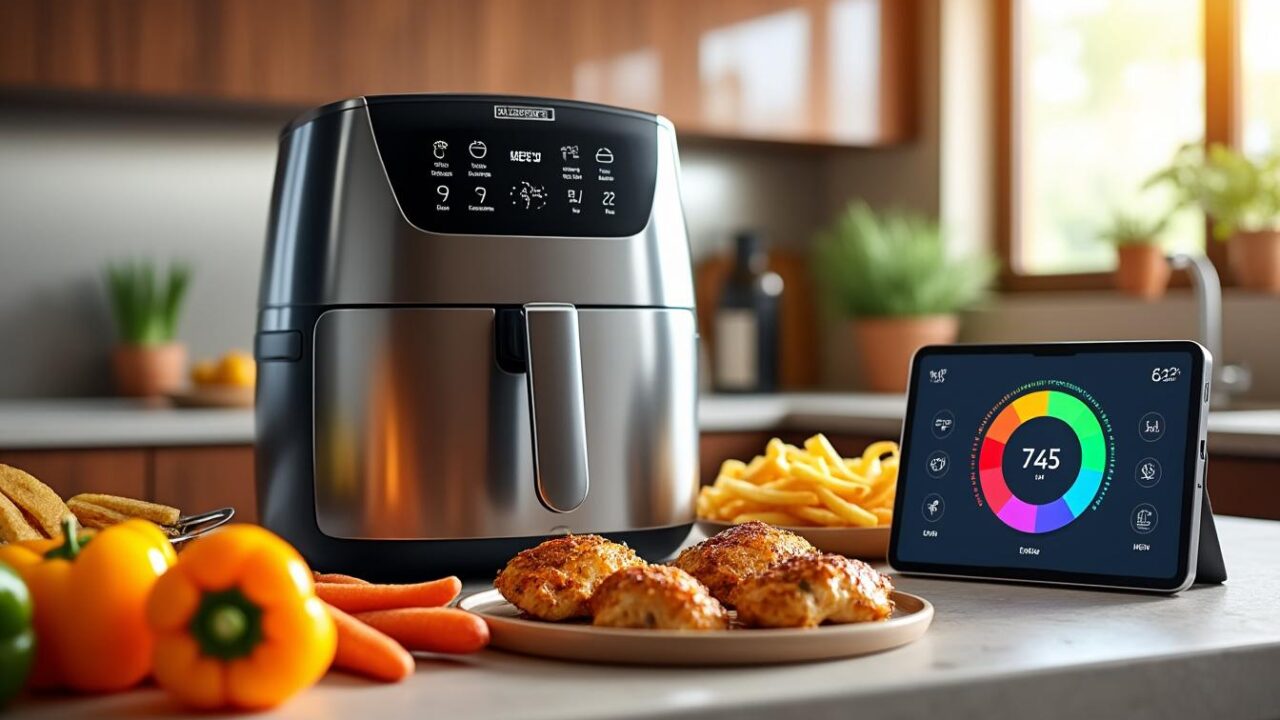
What features to look for in an air fryer: essential vs advanced options
In brief:
- Essential options: capacity, temperature control, timer settings, and easy cleaning determine daily usefulness.
- Advanced options: rotisserie, dehydration, multi-rack trays and smart connectivity add versatility but cost more.
- Design matters: basket-style favours rapid crisping; oven-style grants larger batches and multi-tray cooking.
- Safety & maintenance: automatic shut-off, overheat protection, and dishwasher-safe parts lengthen appliance life.
- Buying checklist: match capacity to household size, consider wattage for speed, review warranties and reviews from trusted testers.
What readers need to know up front: The air fryer transformed home kitchens by delivering a satisfying crisp without the mess of deep frying. Since their market debut in 2010, these appliances evolved from single-purpose gadgets into compact multi-cookers able to roast, bake, dehydrate, reheat and even rotisserie-cook a whole bird. The key decision for buyers in 2026 is not whether an air fryer will replace the oven, but which air fryer fits cooking habits and kitchen space. Practical elements like capacity, temperature control, and timer settings define everyday performance. Meanwhile, advanced options—from app control to multi-rack trays—reshape what one device can do, but also raise questions about value for money and countertop footprint. Independent test labs evaluate noise, cleaning ease, and control intuitiveness, showing that price alone does not guarantee quiet or reliable operation. Readers will find guidance here to weigh essential options against bells and whistles, with real-world examples, a compact buying flow and links to deeper reviews for further comparison.
Essential options every buyer should prioritise for practical daily use
Understanding the mechanical heart of the appliance clears the path to sensible choices. An air fryer uses a powerful fan to circulate hot air in a concentrated chamber, producing a crispy exterior via high-speed convection rather than immersion in oil. That means decisions about temperature control, timer settings, and capacity directly translate to cooking outcomes: accuracy in heat and time yields consistent browning and avoids undercooked cores.
First, temperature control matters. Look for models with an accurate and wide temperature range—ideally at least 200°F to 400°F (95°C to 205°C)—because that span covers quick fries, roasted vegetables and baked goods. Exact digital controls offer smaller increments and clearer feedback than analog dials, useful when adapting traditional oven recipes to an air-fryer environment. Preset programs reduce guesswork by pairing temperature and time, but manual override remains important for custom recipes.
Second, timer settings must be reliable. A visible timer with an audible or digital alert and an auto shut-off feature prevents overcooking and is an essential safety benefit. Some models include a shake reminder to prompt manual turning or agitation for even crisping; this is an elementary but effective feature for basket units. High-end devices may add sensors that pause or adjust cooking if the basket is removed.
Third, capacity should mirror household needs. Compact 2–3 quart units are ideal for singles or couples and excel in small kitchens. A 4–6 quart model serves families of three to four and can often handle a small whole chicken. Larger 7+ quart or multi-rack ovens suit frequent entertainers. In real tests, usable internal volume often falls short of marketed numbers, so inspect the actual usable space, not just the headline quartage.
Fourth, easy cleaning is non-negotiable for consistent use. Removable baskets with high-quality non-stick coatings and dishwasher-safe components reduce friction in daily life. Materials such as stainless steel with PFOA-free coatings can offer a compromise between durability and non-stick convenience, though some users prefer ceramic-like finishes that resist scratching. Exterior materials should wipe clean easily; a smooth, non-porous finish prevents grease accumulation.
Fifth, safety features protect both people and the appliance. Look for overheat protection, a cool-touch exterior to prevent burns, stable non-slip feet and clear certifications such as ETL or UL. Warranties vary widely—some models carry only 60 days while others offer multiple years—so the warranty length often signals manufacturer confidence and should factor into long-term value assessments.
Finally, practical performance metrics such as noise level, ease of use for controls, and cleaning difficulty often determine whether an air fryer becomes a daily helper or a seldom-used gadget. Test reviews from established sources provide useful benchmarks; for example, publications that examine noise and cleaning as core criteria can guide buyer expectations. Choosing an air fryer with precise temperature control, dependable timer settings, sensible capacity, and straightforward cleaning features yields the best foundation for everyday cooking success. Insight: prioritising these basics prevents buyer’s remorse and ensures the appliance earns a regular place on the counter.

Advanced options and extras: which upgrades are worth the premium
Advanced features expand what an air fryer can do beyond crisping fries and reheating leftovers. For some households, this transforms the device into a primary cooking centre; for others, it becomes an expensive novelty. Evaluating these extras requires separating true functional gains from marketing flourishes.
Rotisserie and multi-function attachments are among the most tangible upgrades. A rotisserie spit or basket enables whole-chicken roasting with self-basting motion, delivering a different texture and experience than conventional baking. Multi-rack trays and dedicated pans increase throughput, letting vegetables, proteins and sides cook in parallel. This is especially useful for meal prep or when hosting, though stacking food may require adjusting times and rotating trays.
Dehydration and baking modes convert the appliance into a compact dehydrator or countertop oven. Dehydration settings expand possibilities for snack-making—herb drying, fruit leather or jerky—and often require consistent low temperatures and long run times. Baking functions allow small cakes or quick breads when paired with the right pans, but success depends on even heating and the availability of a preheat option.
Smart features rise and fall in utility depending on the user. Wi-Fi connectivity and smartphone apps bring remote monitoring, recipe libraries and firmware updates. For busy households, the ability to start preheating en route home or receive a notification when the crisping cycle finishes is genuinely convenient. However, smart connectivity can add points of failure and privacy questions; users who prize simplicity may prefer reliable manual or basic digital controls.
Sensor-driven cooking and adaptive presets are useful when they work well. Models that use internal temperature probes or humidity sensors can adjust cycle times to avoid undercooked interiors or dried-out finishes. In practice, reviews show variance: some models consistently deliver accurate sensor-assisted results while others still require user intervention and trial-and-error.
Consider noise, too. Advanced models with larger fans or rotisserie motors can be louder, an issue in open-plan living spaces. Broad testing programs evaluate sound output and operational silence as part of overall ratings. Consumers can compare noise performance when deliberating between a crowded feature set and calmer operation.
Warranty and service are crucial when paying premium prices. Higher-end models typically offer more comprehensive coverage and better customer support, which matters for complex electronics or motorized parts. Independent reviews and seller return policies also help reduce the risk of an expensive mismatch.
Case example: a small catering startup used a multi-rack oven-style air fryer to prepare tapas during weekend events. The rotisserie and dehydration accessories allowed versatile menus, reducing rental needs for separate dehydrators and small roasters. The business paid more upfront but saved on equipment inventory and transport.
Resources that review advanced functionality in detail add value when comparing models. Readers are encouraged to consult testing guides that measure controls, noise and cleaning as part of overall ratings to verify whether a given advanced option performs meaningfully better. See detailed buying criteria in expert reviews for deeper comparisons and lab-based results.
Insight: advanced options deliver meaningful returns for users who will use those specific modes regularly; otherwise, the best value often lies in a well-executed set of essential features paired with solid build and warranty.
Design choices: basket-style versus oven-style air fryers and capacity trade-offs
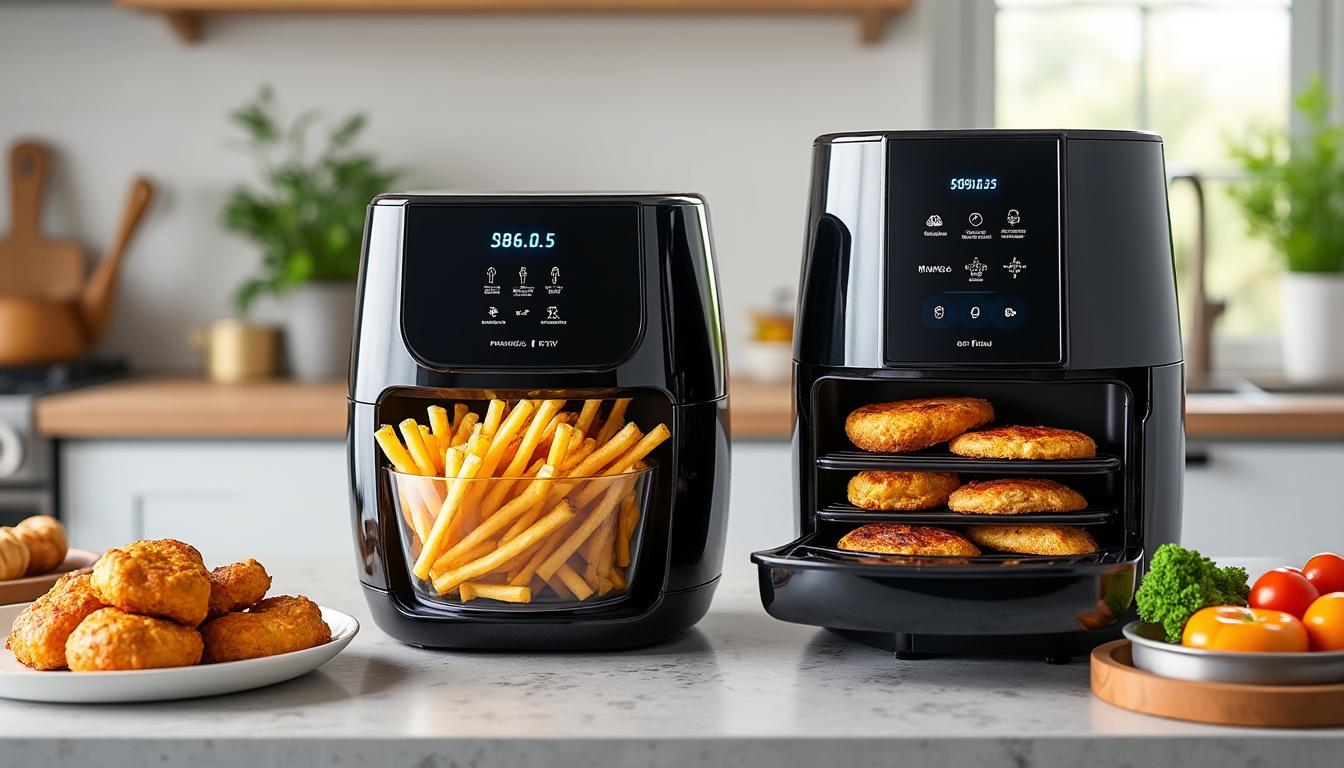
The physical design of an air fryer—basket (drawer) versus oven (tray and rack)—affects cooking dynamics, capacity and everyday ergonomics. Choosing between them involves assessing batch size, preferred cooking style and counter space.
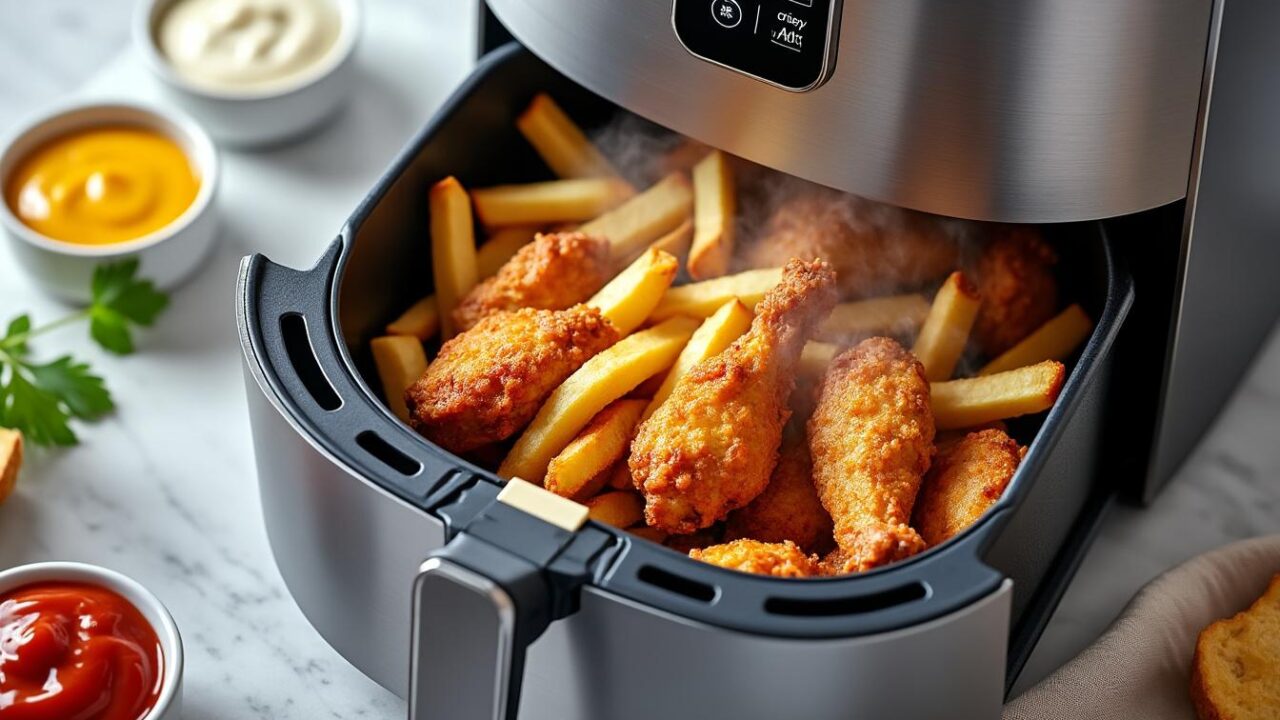
Basket air fryers concentrate hot air around a compact cavity for rapid crisping. The drawer basket makes shaking and turning simple; it also often yields quicker browning because hot air encircles food from all sides. This design is ideal for fries, breaded proteins and small batches. Basket units generally occupy less visible kitchen footprint and can be easier to tuck into cabinetry or store.
Oven-style units resemble mini convection ovens with doors and racks. They accommodate baking pans, multiple trays, and larger cuts of meat, so they are preferable when capacity matters or when cooking several different items simultaneously. The door design reduces heat loss when checking food, and transparent panels permit visual monitoring without interrupting cycles.
Below is a comparative table summarising trade-offs to consider when choosing between basket and oven models.
| Design | Best for | Pros | Cons |
|---|---|---|---|
| Basket-style | Small to medium batches, fry-like textures | Rapid crisping, compact footprint, easy shaking | Limited capacity, may require batch cooking |
| Oven-style (tray/rack) | Multi-dish cooking, baking, larger items | Higher capacity, versatile attachments, visible cooking | Bulkier, may not crisp as quickly as basket |
Capacity considerations must be practical. A family of four that often cooks a whole chicken and several sides benefits from an oven-style unit with multiple racks or a large basket model of 5 quarts or larger. Single occupants or couples who mostly reheat or crisp single servings should prioritize compact, fast-heating baskets.
Wattage is a connected factor: higher wattage speeds up preheat and recovery time after opening the basket or door. A 1500W-plus model will generally perform faster, but household electrical limits and energy use might be considerations. The balance lies in picking enough power to deliver speedy results while ensuring the outlet and circuit can handle sustained use.
Real-world example: an apartment chef moved from a single-basket 3-quart unit to a 6-quart oven-style air fryer after discovering the need to roast whole vegetables and bake small loaves. The change reduced batch cooking and enabled simultaneous sides, improving meal flow and satisfaction in hosting scenarios.
Shopping tip: when capacity numbers are quoted, confirm the usable internal dimensions—some ratings inflate usable space. Independent reviews and in-store inspection can reveal whether a supposed 5-quart basket actually fits a small baking pan or a chicken.
Insight: match design to rhythm of cooking—choose basket for rapid crisping and limited space, oven-style for multi-tray versatility and larger batches.
Cleaning, maintenance, safety features and a practical checklist for longevity
Daily usability hinges on how easily the appliance can be kept clean and how well its safety features function. Practical maintenance extends appliance life and preserves cooking quality.
Start with the basket or tray material. Non-stick coatings that are PFOA-free simplify cleanup and reduce the need for harsh scrubbing. Dishwasher-safe removable parts are time-savers, but longevity also depends on coating quality—abrasive detergents and metal utensils degrade non-stick surfaces over time. Stainless steel baskets with good design reduce sticking when pre-oiling foods and can withstand more aggressive cleaning.
Exterior surfaces should be wiped regularly with a soft cloth and mild detergent. Avoid abrasive pads that can scratch finishes or compromise control panels. Periodic inspection of vents and fan housings for grease buildup prevents overheating and preserves efficiency. Follow manufacturer guidance when descaling or deep-cleaning elements near the heating unit.
Safety features to prioritise include overheat protection, automatic shut-off and a cool-touch exterior. Overheat protection prevents dangerous runaways, while auto shut-off avoids forgotten cycles from creating hot, unattended appliances. Certification marks from third-party testing organisations provide assurance that the unit meets baseline safety standards.
Routine maintenance checklist:
- Remove and wash removable baskets/trays after each heavy use.
- Wipe interior crevices and heating element gently to remove grease every few uses.
- Clean the exterior with a damp cloth; avoid liquid ingress into vents or controls.
- Check seals and handles for wear; tighten loose fasteners to maintain safe handling.
- Store accessories dry and inspect non-stick coatings periodically for scratches or peeling.
Warranties and service options impact long-term ownership. Short warranties may indicate limited support; conversely, multi-year coverage can reflect manufacturer confidence. When comparing models, consider both warranty length and the availability of replacement parts or service centres.
Everyday safety also includes proper placement—maintain clearance around the unit to allow airflow, avoid placing it under cabinets without ventilation, and keep children away during operation. Non-slip feet and stable placement reduce the risk of accidental tipping when removing hot baskets.
For expanded product research and tested comparisons of controls, noise and cleaning ease, consult detailed buying guides and lab-based reviews. These resources regularly update testing protocols and score models on factors that influence user satisfaction, making them valuable complements to hands-on store inspection.
Insight: rigorous cleaning habits combined with prioritised safety features and a sensible warranty produce the most durable and reliable air-fryer ownership experience.
Choosing the right model in 2026: a compact decision flow and final buying checklist
By 2026, the market offers a spectrum from ultra-budget basic baskets to multi-function oven-style units with smart features. The right choice begins with a few practical questions: who is being fed most often, what kinds of dishes are prepared, and how much counter space is available. A fictional connector—home cook Maya—illustrates the flow. Maya cooks for a family of four, values roasted whole meats and simultaneous sides and occasionally entertains. For her, a 6–8 quart oven-style or large basket with multiple racks makes sense.
Decision flow for buyers:
- Assess household size and typical batch needs to pick capacity.
- Decide on design—basket for rapid single-batch crisping; oven-style for multi-tray versatility.
- Check wattage and temperature range for speed and cooking range.
- Evaluate controls: digital with presets for convenience, analog for simplicity and potential durability.
- Confirm easy cleaning: dishwasher-safe parts, high-quality non-stick coatings, and accessible interiors.
- Review safety features: overheat protection, auto shut-off, cool-touch exterior, and certifications.
- Compare warranties and independent reviews for noise and cleaning performance.
Practical buying checklist (tick if present):
- Temperature control with fine increments
- Timer settings with auto shut-off and audible alert
- Capacity suited to household needs
- Dishwasher-safe removable parts for easy cleaning
- Clear presets or manual override for recipe flexibility
- Visible safety certifications and minimum one-year warranty
Price remains a useful filter: units can range from around $30 to $350, and many high-performing models fall under $100. Budget shoppers can find solid basic units, while those seeking advanced modes should weigh cost against the frequency of use for those features. Independent testing and comparative reviews remain indispensable; readers can consult in-depth testing methodology and model ratings for controls, noise and cleaning to corroborate buying decisions.
For deeper reading and purchasing case studies, trusted review articles provide hands-on tips and lessons learned from trial users and lab tests. These sources explore both everyday functions and long-term reliability and can be used to validate model-level choices before purchase. Examples include expert guides that concisely list things buyers wish they knew before purchasing and lab-based buying guides that detail test criteria and scores for controls and cleaning.
Insight: choose the model that matches cooking habits more than the flashiest feature list; the best air fryer in 2026 balances essential options—precise temperature control, reliable timer settings, appropriate capacity, and easy cleaning—with only the truly useful advanced options for the household.
Further reading and trusted resources: seven things to know before buying, a hands-on shopping primer; and a lab-based evaluation that compares controls, noise and cleaning across models at air fryer buying guide. For step-by-step selection guidance and recipe-focused considerations, consult a practical selection guide at how to choose the best air fryer and a companion article on recipe adaptation and usage tips at complete guide to choosing and using air fryers.
{“@context”:”https://schema.org”,”@type”:”FAQPage”,”mainEntity”:[{“@type”:”Question”,”name”:”How important is wattage when choosing an air fryer?”,”acceptedAnswer”:{“@type”:”Answer”,”text”:”Wattage affects heating speed and recovery time; higher wattage (around 1500W+) generally preheats and cooks faster, but also consumes more energy. Match wattage to cooking needs and household electrical capacity.”}},{“@type”:”Question”,”name”:”Are digital controls better than analog dials?”,”acceptedAnswer”:{“@type”:”Answer”,”text”:”Digital controls provide finer temperature increments and preset programs that simplify common recipes. Analog dials are simpler and sometimes more durable, but offer less precision. Choose based on preference for accuracy versus simplicity.”}},{“@type”:”Question”,”name”:”What cleaning features save the most time?”,”acceptedAnswer”:{“@type”:”Answer”,”text”:”Dishwasher-safe baskets, high-quality non-stick coatings and accessible interiors reduce cleaning time. Regular wiping of the exterior and occasional gentle cleaning of the heating element area prevent grease buildup and maintain performance.”}},{“@type”:”Question”,”name”:”Is a smart (Wiu2011Fi) air fryer worth it?”,”acceptedAnswer”:{“@type”:”Answer”,”text”:”Smart features add remote control, recipe libraries and notifications; they are particularly useful for busy households. However, they increase cost and potential points of failure, so weigh convenience against added complexity.”}}]}How important is wattage when choosing an air fryer?
Wattage affects heating speed and recovery time; higher wattage (around 1500W+) generally preheats and cooks faster, but also consumes more energy. Match wattage to cooking needs and household electrical capacity.
Are digital controls better than analog dials?
Digital controls provide finer temperature increments and preset programs that simplify common recipes. Analog dials are simpler and sometimes more durable, but offer less precision. Choose based on preference for accuracy versus simplicity.
What cleaning features save the most time?
Dishwasher-safe baskets, high-quality non-stick coatings and accessible interiors reduce cleaning time. Regular wiping of the exterior and occasional gentle cleaning of the heating element area prevent grease buildup and maintain performance.
Is a smart (Wi‑Fi) air fryer worth it?
Smart features add remote control, recipe libraries and notifications; they are particularly useful for busy households. However, they increase cost and potential points of failure, so weigh convenience against added complexity.