


How to fix air fryer smoke issues effectively
The hum of the fan, the hiss of hot air and the promise of a golden crust: air fryers transformed home kitchens. Yet a plume of smoke can turn that promise into alarm. This piece examines the mechanics behind air fryer smoke, pragmatic fixes for immediate relief, and long-term strategies to maintain an appliance that performs reliably and safely. Through a practical narrative that follows a small café owner named Maya—who relied on an air fryer for fast, healthy sides—readers will encounter vivid scenarios, step-by-step remedies and tested maintenance routines. Each segment breaks down causes, demonstrates fixes, and highlights smoke prevention tips tailored to everyday cooks and small commercial users alike. Expect concrete examples, a troubleshooting matrix, and links to specialist resources that expand on technical points. The guide emphasizes safe handling, sensible oil choices, and adjustments to air fryer temperature settings to keep kitchens smoke-free and meals consistent.
- Quick recognition: identify grease, residue, overcrowding or incorrect oil as the main triggers of air fryer smoke.
- Immediate actions: turn off, unplug, remove food, reduce heat and clear excess oil to fix smoke issues safely.
- Maintenance essentials: regular air fryer cleaning removes burnt particles on the element and tray that cause recurring smoke.
- Cooking choices: choose high smoke point air fryer oil and adapt air fryer temperature settings for fatty or frozen items.
- When to escalate: persistent smoke after cleaning calls for professional air fryer troubleshooting and manufacturer support.
Why air fryer smoke happens: mechanical, culinary and user causes
Air fryers concentrate heat and airflow into a compact chamber to crisp food quickly. This concentrated energy makes them efficient but also sensitive to a handful of triggers that produce air fryer smoke. Understanding the distinct categories of causes helps choose the right remedy.
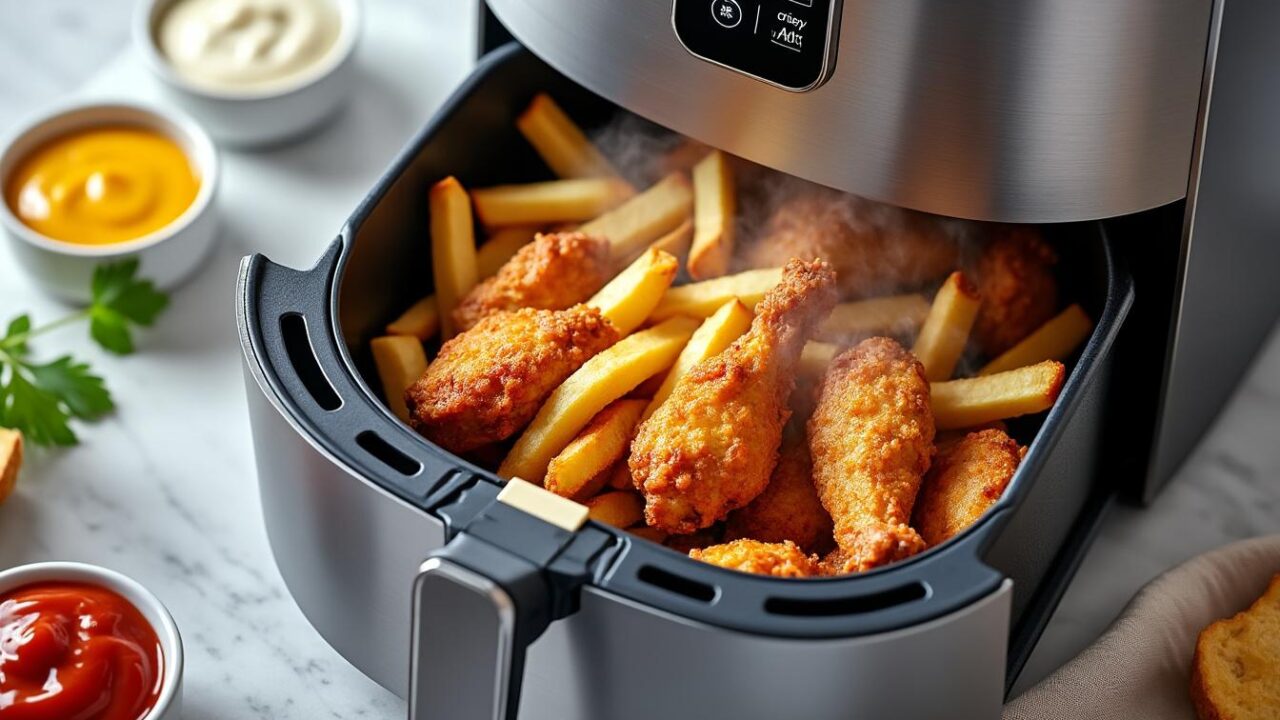
Grease-laden foods are the most obvious culprits. Items like bacon, fatty cuts of chicken or sausages render oil as they cook; when those drips hit the hot surface or heating element they can vaporize and smoke. In Maya’s café, a single tray of wings produced a visible plume because the fryer basket was layered and the fat pooled beneath the element. That simple setup illustrated how cooking style affects smoke production.
Food particles and residue buildup form another persistent source. Tiny crumbs and splatters lodge on the chamber walls and the heating coil. Over several cooking cycles these residues carbonize; once they reach high temperature they smoulder and emit smoke. Regular air fryer cleaning prevents this slow accumulation but many users overlook the heating element when wiping the basket.
Airflow matters. Overcrowding the basket blocks circulation, lengthens cook times and raises local temperatures. A compact heat pocket develops, baking oil into smoke before the food reaches its desired texture. Similarly, blocked vents or a fan obstruction can make hot air linger and increase the chance of burning residues.
Temperature and material reactions round out typical causes. Oils and seasonings have different smoke points; using a low smoke point oil at high heat leads to immediate smoking. Certain coatings or liners—unapproved parchment or foil arrangements—can also degrade under high air fryer temperature, producing fumes.
Technical faults or design issues occasionally cause smoke. A failing thermostat, a damaged heating element or poor insulation may cause uneven heat spikes. In some 2025–2026 product recalls, specific models were flagged for venting inefficiencies that increased localized temperatures; checking manufacturer advisories remains good practice.
Examples and mini-case studies clarify the variety: Maya’s first problem was solved by removing pooled oil and running a cleaning cycle. Another case in a shared apartment involved an overenthusiastic spray of cooking aerosol: the propellant misted and reached the heating coil, making a chemical-smell smoke; switching to a brush-on oil eliminated the issue.
Knowing these causes allows targeted correction: if residue is the problem, air fryer cleaning is the cure; if the smoke emerges from high-fat cooking, oil management and a lower air fryer temperature will often stop it. The next section will lay out immediate steps to fix smoke issues safely and effectively.
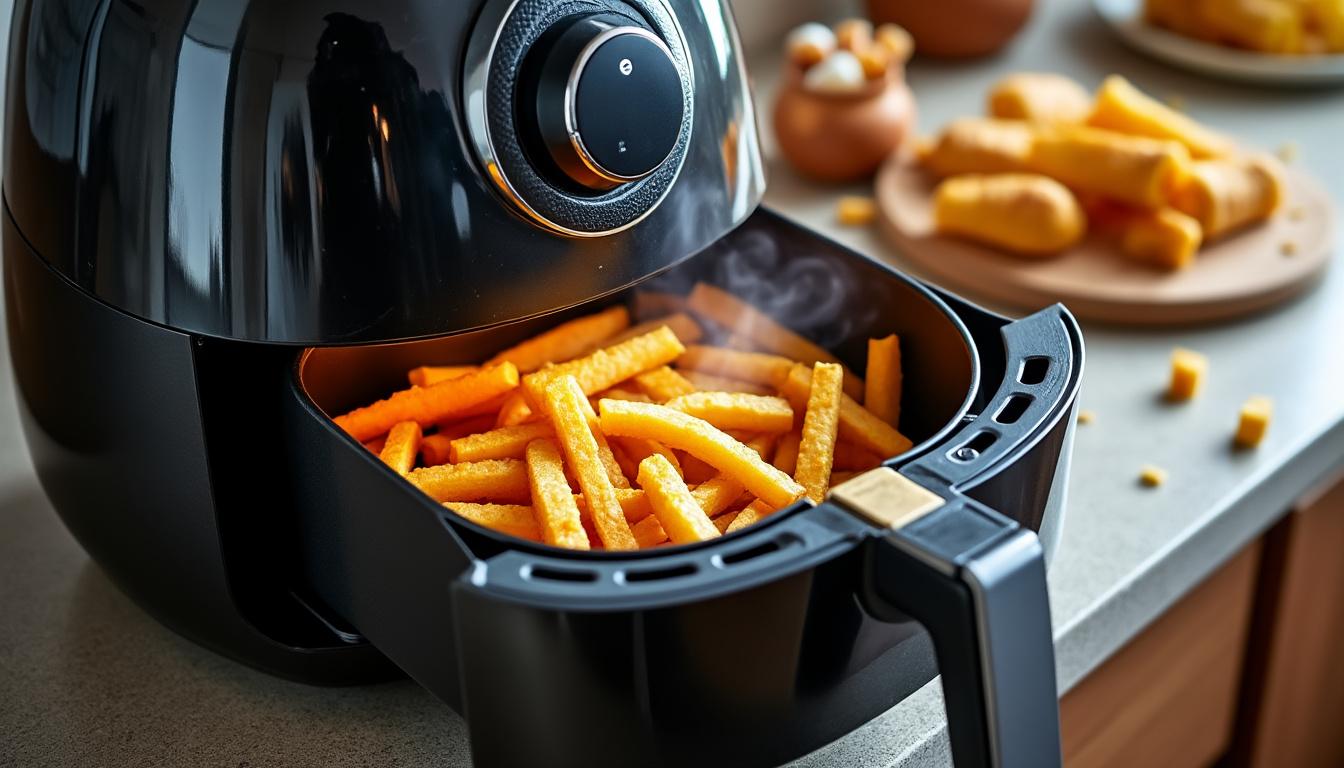
Immediate actions to stop smoke now: safe steps and a quick troubleshooting table
When smoke begins, calm, methodical action prevents escalation. The first rule is safety: cut power, remove heat and ventilate the room. That basic sequence protects users and stops damage to the appliance.
Practical immediate steps:
- Switch off and unplug the unit. Never try to clear or touch hot parts while the fryer remains powered.
- Open windows and switch on an extractor fan to clear fumes quickly.
- Remove the basket or tray to inspect the food. If food is charred, discard it and empty the drip tray of pooled grease.
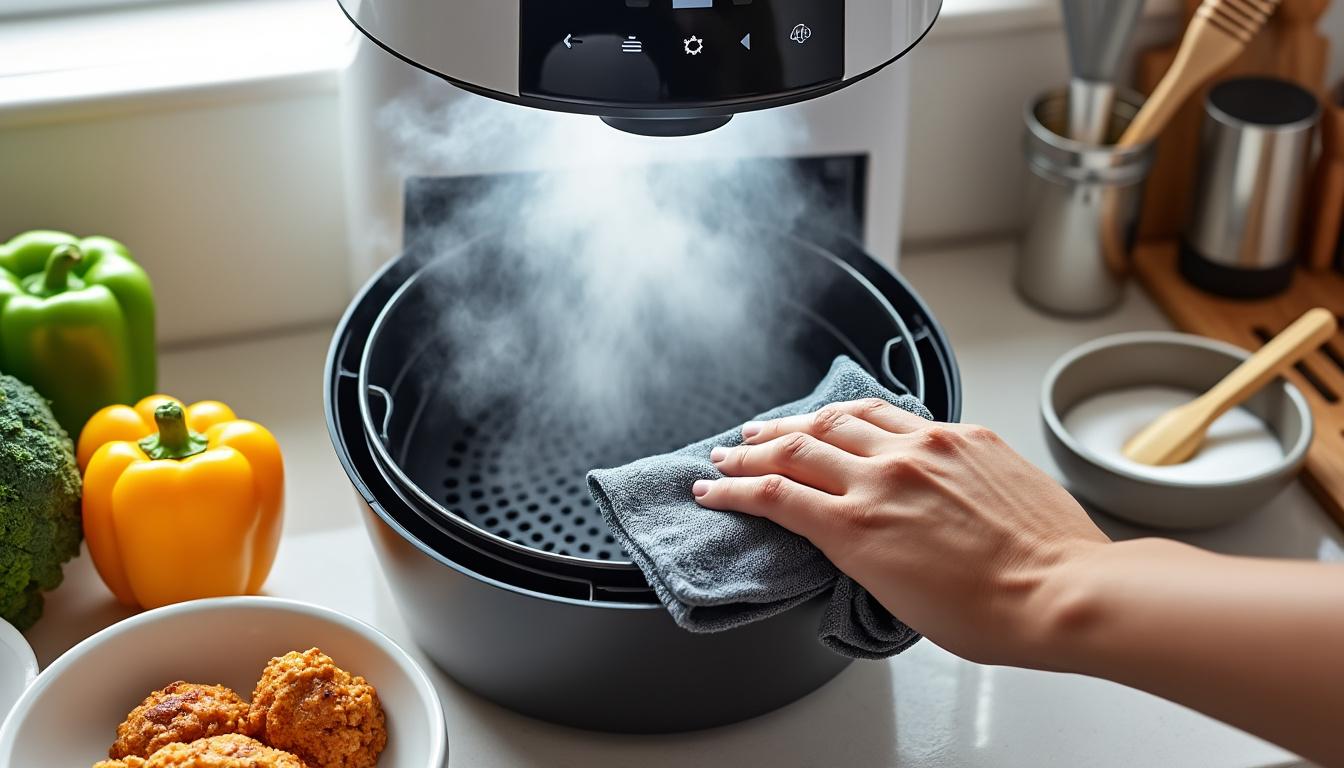
- Use an oven mitt to lift the basket; blot excess oil from the basket and base with paper towels. For small splatters on the element wait until the unit cools before gently wiping.
- Lower the next cooking cycle’s temperature by 10–20°C (18–36°F) and check frequently to determine if smoke returns.
For cooks who prefer a visual quick reference, the following table pairs common causes with immediate remedies and follow-up maintenance.
| Cause | Immediate Fix | Follow-up Maintenance |
|---|---|---|
| Grease pooling beneath basket | Turn off, unplug, drain and wipe grease; discard soaked food | Empty and clean drip tray after each use; schedule deep clean weekly |
| Burnt food residue on element | Cool completely, remove residue with soft brush and warm soapy water | Perform targeted heating-element clean every 10 uses |
| Overcrowded basket | Remove excess items and allow single-layer circulation | Adjust batch sizes; rotate food mid-cycle |
| Wrong oil or cooking spray | Stop and wipe spray residue; switch to brush-on oil | Use oils with high smoke point and avoid aerosol sprays |
| Persistent smoke after cleaning | Cease use and consult manufacturer or qualified repair | Document symptoms and seek warranty support if necessary |
Practical examples sharpen technique: if a frozen burger causes steam then smoke on first contact, remove the burger, pat dry and raise the basket a notch if the model allows. If aerosol sprays were used, a short deep clean—soaking the basket, wiping the coil and running an empty high-temperature cycle with lemon slices—will rid lingering propellant residue.
After the immediate situation is handled, plan a maintenance routine to prevent recurrence. The following section details reliable cleaning and upkeep practices to avoid repeated incidents. Remember: quick action reduces damage, and consistent maintenance is the insurance against future smoke.
Routine cleaning and maintenance to prevent air fryer smoke long-term
Cleaning transforms an alarm-prone machine into a dependable kitchen tool. A systematic maintenance schedule addresses the most common root causes of air fryer smoke: carbonized residue, trapped fat and obstructed airflow. The regimen below blends simple daily habits with monthly checks that suit both home cooks and the busy operator at Maya’s café.
Daily and after-each-use tasks keep deposits from building up. Wipe interior walls with a damp cloth, empty the drip tray, and wash the basket and tray in hot soapy water. For non-stick surfaces, use non-abrasive sponges to avoid scratching coatings. Dry parts thoroughly before reassembly to prevent condensation that can interact with hot surfaces and cause sputtering.
Weekly deeper maintenance includes inspecting the heating element. Once the fryer is fully cool and unplugged, tilt the unit to access the coil area; remove crumbs with a soft brush and wipe with a cloth dampened in mild detergent. For stubborn, baked-on bits, a paste of baking soda and water applied briefly loosens burnt deposits. Always consult the manufacturer’s manual prior to aggressive cleaning; some elements are delicate.
Monthly tasks focus on vents and fan housings. Many smoke problems originate from clogged vents restricting circulation. Remove any detachable filters and wash or replace them. If the model lacks removable filters, use a vacuum with a soft-brush attachment to clear dust from intake and exhaust vents.
Tools and consumables that make maintenance easier include silicone brushes for crevices, a soft-bristle toothbrush for the heating element, a microfiber cloth for the interior, and a small bottle brush for drip trays. Avoid aerosol cooking sprays and non-approved liners; they leave residues that are difficult to remove and contribute to air fryer maintenance complexity.
For step-by-step cleaning guidance, consult detailed how-to resources that map cleaning frequency to usage patterns. A comprehensive clean and maintain your air fryer for longevity resource offers timed checklists and recommended cleaning agents suited to specific materials.
Case study: Maya operated five cycles per day at the café. A neglected crumb tray led to nightly smoke events. Implementing a 90-second break between batches to empty the tray and a nightly deep-clean reduced smoke incidents to zero. The café tracked incidents and correlated them with busy days, showing that simple scheduling prevented repeat problems.
Maintenance extends beyond cleaning. Regularly test safety switches, ensure the power cord remains intact and inspect for any abnormal odors when powering up. If persistent issues appear after a careful maintenance sweep, the problem may be mechanical; detailed troubleshooting steps follow in the next section. The key insight: consistent cleaning, tailored to frequency of use, is the most effective smoke prevention strategy.
Cooking choices—oils, temperatures and techniques to prevent air fryer smoke
Cooking technique is as powerful as cleaning when it comes to avoiding air fryer smoke. Selecting the right air fryer oil, adjusting the air fryer temperature, and adopting methods that promote airflow cut smoke risks dramatically.
Smoke point matters. Oils smoke at predictable temperatures: extra virgin olive oil smokes relatively low, while avocado oil and refined peanut oil tolerate higher heat. For high-temperature finishes—above 190°C (375°F)—prefer oils with a smoke point above the target temperature. Use a light coating of oil applied directly to food rather than blasting the basket with aerosol sprays; this reduces excess oil pooling and the chance of atomized oil contacting the element.
Temperature strategies: many smoky incidents stem from setting the unit too high for a given food. Dense, fatty items often require a two-stage approach. For example, begin at a moderate temperature to render fat slowly, then finish with a brief high-heat burst for crisping. Frozen items benefit from an initial blast to drive moisture out, followed by a lower temperature to cook through without burning the surface.
Airflow and placement: arrange food in a single layer with space between pieces. Larger batches should be cooked in staggered cycles. If the model allows, elevate food slightly on a rack to encourage drip flow into the tray rather than the element zone. Avoid foil or liners that trap grease near the element; when using foil, ensure it’s secured and not covering vents.
Seasonings and coatings: heavily sugary marinades char quickly and produce smoke. Apply sweet glazes in the last few minutes of cooking to avoid early burning. Breaded items should be shaken halfway through to expose any trapped crumbs that can burn into smoke.
Practical example: to cook bacon with minimal smoke, place strips in a single layer on a perforated rack, set temperature to 160–170°C (320–340°F) for fat rendering, then finish at 190°C (375°F) for two to three minutes to crisp. Empty the drip tray immediately and wipe the interior to prevent residual smoke on subsequent cycles.
For recipe-specific techniques and optimal preheating guidance, detailed cooking tips can be found in comprehensive guides such as how to preheat an air fryer correctly and other practical resources on achieving crispy results without extra oil.
In short: the right oil, moderated temperatures and smart placement produce consistent results and are essential smoke prevention tips. The next section covers when appliance faults require professional attention and how to approach air fryer safety.
When to escalate: air fryer troubleshooting, safety and professional help
Persistent smoke despite cleaning and adjusted cooking methods suggests a deeper fault. Distinguishing between user-caused smoke and mechanical failure is essential for safety and asset protection. This section outlines diagnostic steps and safety practices and describes when contacting a manufacturer or technician is the right choice.
Diagnostic checklist: after thorough air fryer cleaning, run an empty test cycle at a medium temperature to observe whether smoke or strange odors persist. If smoke returns with no food present, this indicates residue on hidden surfaces or failing components. Check for discoloration on the heating element, uneven heat patterns, or intermittent fan noise.
Manufacturer resources and warranty: review the user manual for model-specific troubleshooting. Some vendors offer guided resets, replacement parts or recall notices. Online explanations such as the practical troubleshooting flow at engineer-focused troubleshooting or the clear diagnostic steps in specialist articles can guide decisions before arranging repairs.
Safety protocols: if smoke is accompanied by sparks, melting plastic or a burning electrical smell, unplug immediately and do not attempt to power the unit. Move it outdoors if safe to do so and contact a qualified technician. Persistent electrical odors require professional evaluation; do not resume use until a certified repair confirms safety.
Professional repair vs replacement: weigh repair costs against appliance age and warranty coverage. For units under warranty, contact the manufacturer’s customer support for authorized service. For older devices with burned components or repeated failures, replacement might be more cost-effective, especially given improvements in 2025–2026 models that emphasize safer ventilation and easier cleaning.
Case scenario: Maya documented recurring smoke after every Friday rush. A technician discovered a partially detached insulating shield near the heating element. Replacing the shield and reseating the element eliminated the issue. The café instituted a weekly inspection protocol to catch early wear and avoid downtime.
Air fryer safety extends beyond mechanics. Ensure the unit has ample clearance, is on a heat-resistant surface, and never leaves unattended in high-traffic commercial settings. Maintain a small, accessible fire extinguisher rated for kitchen use and train staff on emergency shutdown procedures.
For readers seeking deeper technical context on causes and professional fixes, authoritative explanations and remedies appear in industry resources such as technical analyses of why an air fryer smokes and practical consumer guides. When in doubt, prioritize safety and consult qualified support.
Final practical insight: recurring smoke after all user-level fixes usually indicates a need for professional air fryer troubleshooting. Addressing mechanical faults promptly protects the appliance and the kitchen environment.
{“@context”:”https://schema.org”,”@type”:”FAQPage”,”mainEntity”:[{“@type”:”Question”,”name”:”What should be done immediately if an air fryer starts smoking?”,”acceptedAnswer”:{“@type”:”Answer”,”text”:”Turn the unit off and unplug it, ventilate the room, remove the basket to inspect food and dispose of charred items, then wipe excess oil once cooled. Safety is paramount: do not touch heated components while powered.”}},{“@type”:”Question”,”name”:”How often should an air fryer be cleaned to prevent smoke?”,”acceptedAnswer”:{“@type”:”Answer”,”text”:”Wipe the interior and empty drip trays after every use. Clean the basket and tray with warm soapy water weekly if used frequently. Inspect and clean the heating element and vents monthly or sooner in heavy-use environments.”}},{“@type”:”Question”,”name”:”Which oils are best to prevent air fryer smoke?”,”acceptedAnswer”:{“@type”:”Answer”,”text”:”Use oils with high smoke points like refined avocado oil, refined peanut oil, or light vegetable oil for high-temperature cooking. Apply oil sparingly and directly to food instead of using aerosol sprays.”}},{“@type”:”Question”,”name”:”Can foil or parchment be used safely in an air fryer?”,”acceptedAnswer”:{“@type”:”Answer”,”text”:”Foil and parchment can be used if they are secured and do not block air vents. Do not cover the entire basket or place foil close to the heating element. Follow the manufactureru2019s guidance for liners to ensure safety.”}},{“@type”:”Question”,”name”:”When should a professional be contacted for a smoking air fryer?”,”acceptedAnswer”:{“@type”:”Answer”,”text”:”If smoke persists after thorough cleaning and adjusted cooking methods, or if there is an electrical smell, sparks, or visible damage to the heating element, stop using the unit and consult the manufacturer or a certified technician.”}}]}What should be done immediately if an air fryer starts smoking?
Turn the unit off and unplug it, ventilate the room, remove the basket to inspect food and dispose of charred items, then wipe excess oil once cooled. Safety is paramount: do not touch heated components while powered.
How often should an air fryer be cleaned to prevent smoke?
Wipe the interior and empty drip trays after every use. Clean the basket and tray with warm soapy water weekly if used frequently. Inspect and clean the heating element and vents monthly or sooner in heavy-use environments.
Which oils are best to prevent air fryer smoke?
Use oils with high smoke points like refined avocado oil, refined peanut oil, or light vegetable oil for high-temperature cooking. Apply oil sparingly and directly to food instead of using aerosol sprays.
Can foil or parchment be used safely in an air fryer?
Foil and parchment can be used if they are secured and do not block air vents. Do not cover the entire basket or place foil close to the heating element. Follow the manufacturer’s guidance for liners to ensure safety.
When should a professional be contacted for a smoking air fryer?
If smoke persists after thorough cleaning and adjusted cooking methods, or if there is an electrical smell, sparks, or visible damage to the heating element, stop using the unit and consult the manufacturer or a certified technician.