
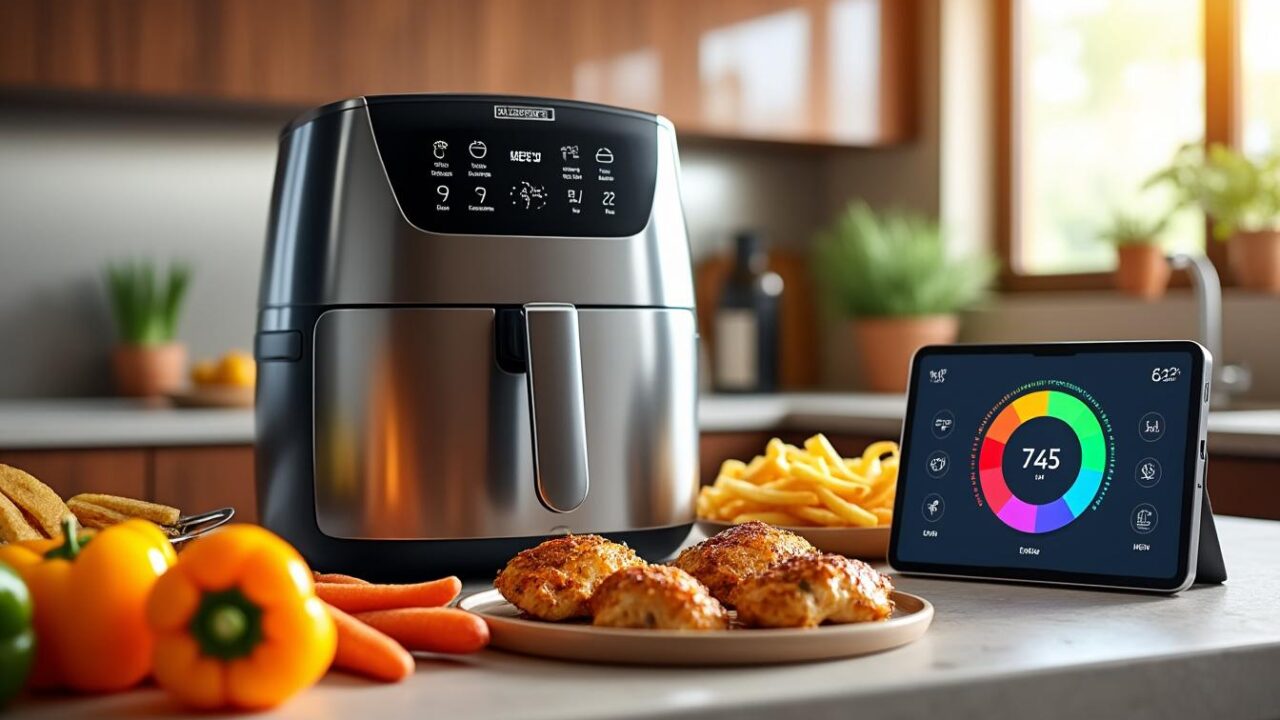
Can you bake cakes and desserts in an air fryer? benefits and tips explained
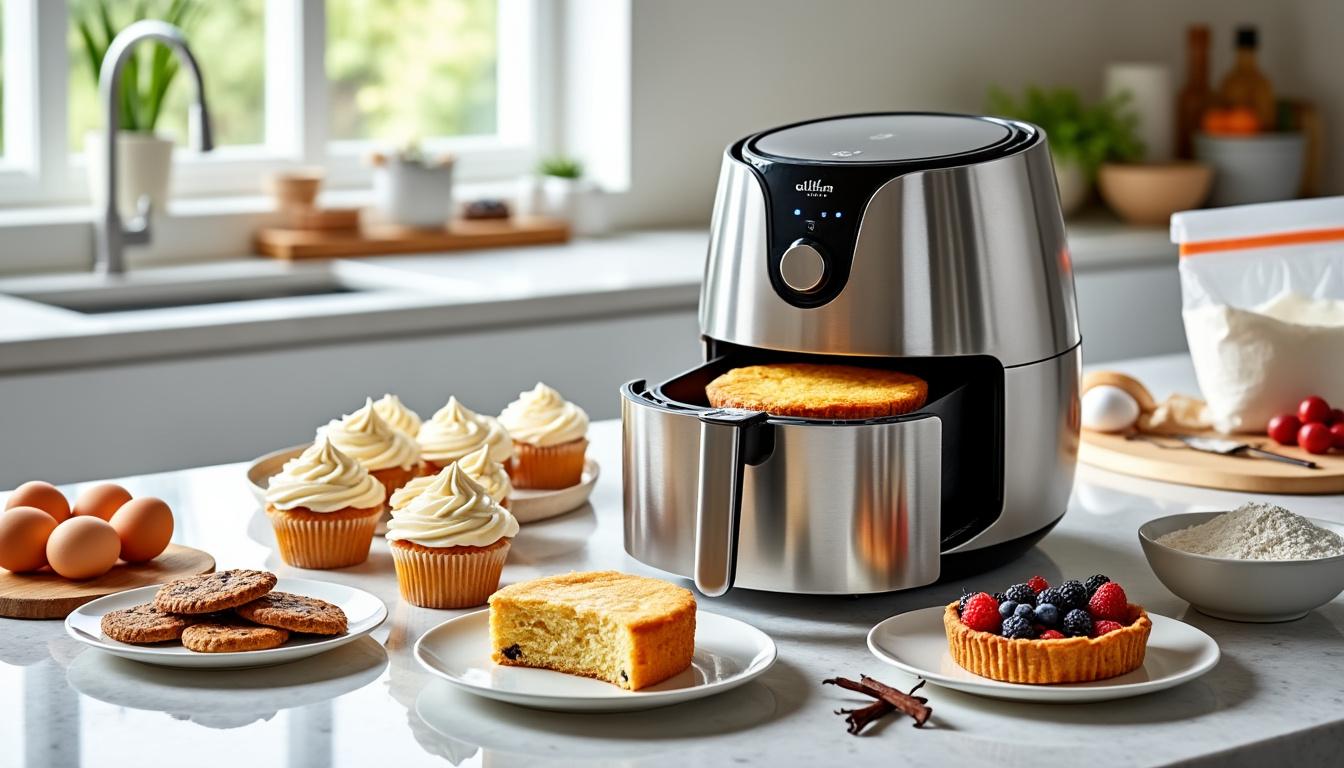
In brief
- Air fryer baking enables fast, small-batch desserts with less energy and minimal kitchen heat.
- Not every recipe translates perfectly: choose recipes with balanced moisture and modest volume.
- Practical air fryer tips such as preheating, temperature reduction, and pan fit make or break results.
- Expect textural differences: denser, taller sponges and crisped exteriors are common compared with ovens.
- Explore easy air fryer desserts like mug cakes, brownies, and fruit crisps for reliable success.
A compact, magazine-style opening sets the scene: kitchens in 2026 favor nimble appliances, and the air fryer stands out as a versatile tool that goes well beyond reheating fries. For home cooks balancing small households, hot summers and busy schedules, the prospect of baking cakes without firing up a conventional oven is compelling. Practical tests and hands-on comparisons reveal trade-offs: the air fryer delivers quick baking methods and lower energy draw, yet it often creates a different crumb structure and requires thoughtful adaptation of recipes. A fictional home baker, Maya, orchestrates a series of experiments: a two-layer vanilla sponge split between a combi-steam oven and an air fryer, a leftover batter mug cake in a compact unit, plus iterative tweaks to temperature and coverage. The narrative exposes common pitfalls—tins that won’t fit, tops that brown too quickly, and centers that remain wobbly—while spotlighting wins: less kitchen heat, faster preheat, and tidy cleanup. Across the following sections, techniques, comparisons, and recipe ideas are developed into actionable guidance for anyone curious about baking cakes air fryer style, including reliable sources and links for further reading.
Cake in the Air Fryer: A Game-Changing Baking Revolution
The air fryer has transformed everyday cooking into a compact, rapid method that appeals to households seeking convenience and energy savings. When applied to cake-making, the method reshapes expectations: cakes emerge faster and often with a more pronounced crust than when baked conventionally. This section explores why the air fryer presents a genuine shift in home baking, the basic physics at play, and a practical case study that illustrates the appliance’s potential and limits.
How circulating hot air changes baking dynamics
Air fryer cooking relies on intense convection: a concentrated heating element and a powerful fan send hot air across food surfaces at high velocity. For batters, that intense circulation accelerates surface setting, promotes rapid browning, and encourages moisture evaporation. The resulting exterior is frequently crisp or skin-like, while the interior can remain moist or become denser depending on batter hydration and pan geometry.
That airflow advantage can be a benefit: items that call for quick setting—such as brownies, small sponge layers or individual puddings—can achieve uniform edges and quick caramelisation. Yet the same mechanism complicates fragile rises. Leavening agents that rely on sustained, gentle heat to expand—baking powder or beaten egg whites—may require a preheat burst to lock in volume, followed by a lower effective temperature to finish the crumb without over-browning.
Case study: Maya’s birthday experiment
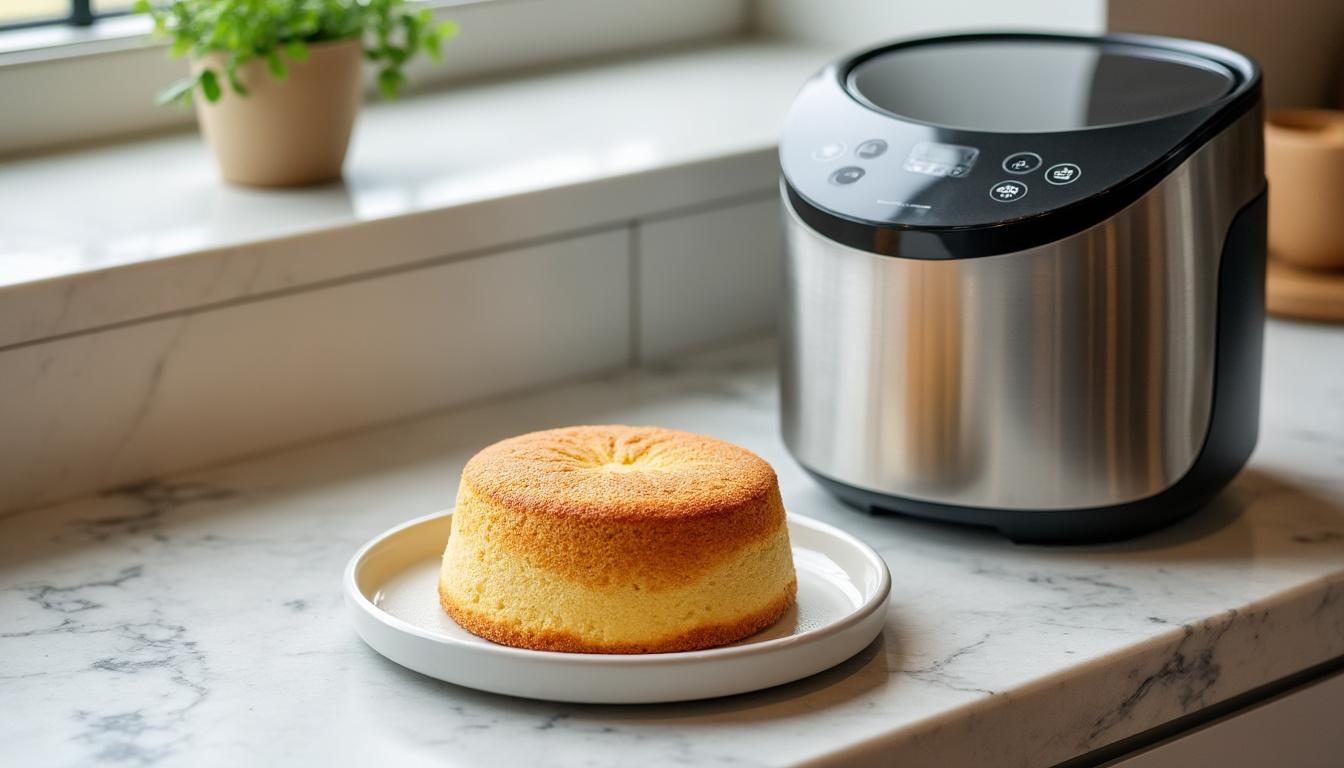
In a practical comparison, a two-layer vanilla sponge was split between a combi-steam oven and an air fryer. The oven layer produced a light, airy crumb and delicate texture typical of convection-assisted baking, while the air-fried layer rose tall and impressive but with a denser interior and larger air pockets. The air-fried cake required more frequent checks and the use of a lid to prevent premature browning, yet it delivered a satisfying taste and a visually appealing profile that suited a small celebration. This anecdote illustrates a central concept: air fryer baking often rewards patience and adaptation rather than direct recipe lift-and-shift.
For readers drawn to the technical side, further test protocols and comparative observations are discussed in detailed guides, including a practical write-up by Homes & Gardens air fryer cake test. Those resources demonstrate repeatable approaches to monitoring internal temperature and using lids to slow crust formation.
Key insight: Air fryer baking is a revolution for small-batch baking—fast and energy-wise—but it transforms textures, so recipes must be tuned rather than copied verbatim.
Benefits air fryer baking: why choose air fryer for cakes and desserts
Choosing to bake in an air fryer brings tangible advantages aligned with modern cooking priorities: reduced energy usage, smaller heating footprint in the kitchen, and shortened preheat and total cook times. This section unpacks those benefits in detail and quantifies practical outcomes, comparing the air fryer to conventional ovens across several dimensions.
Energy, time and summer-friendly cooking
Air fryers typically heat a much smaller cavity than household ovens, resulting in lower energy consumption for short bakes. For a single-layer sponge or a batch of cupcakes, the appliance can reach working temperature in just a few minutes—often shaving 5–15 minutes off overall cook times versus a conventional oven once preheat and ramping are considered. In hot weather, this reduces the thermal load on a kitchen, a real advantage for temperate summers or mini heatwaves.
Speed varies with model. Some combi units with dedicated air-fry modes may begin their cycle at higher minimum temperatures; this necessitates compensating adjustments in either time or batter formulation. Authoritative write-ups on the broader benefits of air fryers are available, offering a deeper look at efficiency and practical gains in household cooking: see the guide on benefits of using an air fryer.
Space, portion control and cleaning
Small households and those who dislike leftover mass appreciate the air fryer’s suitability for modest portions. Baking a two-layer or single-layer cake that fits the basket eliminates the need to scale down a large oven recipe and leaves less surplus. In terms of cleanup, removable baskets and non-stick tins reduce scrubbing and simplify maintenance. Regular cleaning extends the appliance’s life and prevents carryover flavors; practical maintenance steps are outlined in manufacturer-focused manuals and upkeep guides.
| Factor | Air Fryer | Conventional Oven |
|---|---|---|
| Preheat time | Typically 2–5 minutes | 10–20 minutes |
| Cooking time for small cake | 20–40 minutes depending on model | 20–30 minutes |
| Energy usage (short bakes) | Lower | Higher |
| Capacity | Small to medium | Large |
| Texture tendency | Taller, denser crumb; crisped top | Airier, even crumb |
For those selecting a unit in 2026, features that influence baking success include precise temperature control, adjustable fan speed, and basket geometry. Readers can consult a thorough buyer’s checklist that explores features to prioritize when choosing an air fryer: how to choose the best air fryer for your needs.
Key insight: The benefits of air fryer baking are strongest for small batches and quick baking methods; careful selection of the machine and recipe tuning optimizes outcomes.
What you can and can’t bake in an air fryer | Complete guide to choices and limits
Not every dessert adapts smoothly to the air fryer. Understanding which recipes translate well and which require caution is essential. This section presents a practical sorting: categories that thrive, those that are possible with adjustments, and those best left to ovens. Case examples and strategies appear alongside troubleshooting advice to reduce the guesswork.
Best candidates for air fryer desserts
Individual-sized and dense desserts excel. Examples include mug cakes, brownies, small loaf cakes, fruit crisps and certain cheesecakes baked in small pans. The air fryer’s fast heat sets edges quickly, so recipes that benefit from a slightly caramelised exterior—like brownies and fruit crisps—are great fits. For brownies, a slightly lower oven temperature converted for the air fryer and a shortened time often yield a fudgy center with a desirable crust.
Recipes that require caution or adaptation
High-liquid cakes such as very moist batters, chiffon cakes or multi-layer celebration cakes pose challenges. These recipes rely on sustained, gentle heat to develop a delicate, aerated crumb. In experiments, sponges baked in air fryers often come out denser with larger pockets and a swirled top texture. Such outcomes can be mitigated by using smaller tins, preheating to lock in rise, and covering with a lid during initial bake minutes to prevent over-browning.
Fit is often the practical bottleneck. Before starting, measure basket diameter and consider low-sided tins or split the batter into multiple smaller tins. For complex recipes like classic genoise that require controlled, gradual heat, the traditional oven remains a safer option.
For a broad catalog of what can and can’t be baked, a curated list and examples are provided in comprehensive resources: consult the comparative guide at what you can and can’t bake in an air fryer for real-world recipe ideas and limitations.
Key insight: Choose recipes that benefit from rapid surface setting or that are single-portion; reserve delicate, high-volume cakes for conventional ovens unless willing to experiment.
Air fryer baking tips: making delicious desserts with practical techniques
Success with air fryer desserts hinges on a set of reproducible techniques. This section offers extensive air fryer tips and operational strategies, presented as a toolkit for bakers ready to translate conventional recipes into the air-fried realm.
Essential operational rules
Preheat when using chemical leaveners: an initial burst of heat helps expand batter volume and stabilizes the rise. Where the appliance lacks a preheat setting, run it empty for several minutes before placing the tin. Reduce recommended oven temperatures by roughly 10–20°C (or 10–20°F depending on recipe conventions) to compensate for more efficient heat circulation.
Avoid loose foil in the basket; it can be displaced by airflow and contact heating elements. Instead, use a fitted lid or secure foil tight to the pan rim if needed. Covering helps with uneven browning: start covered for the first two-thirds of the bake, then uncover to finish and develop color.
Practical checklist for first-time air fryer bakers
- Confirm pan dimensions against basket capacity before mixing batter.
- Preheat the unit and reduce the recipe temperature by 10–20°C.
- Check progress periodically—three checkpoints often suffice for a 30–40 minute bake.
- Use a skewer or thermometer to confirm doneness; skewer should come out clean or with a few moist crumbs for fudgier desserts.
- Adapt batter hydration for dryer environments: slightly increase liquid if cakes tend to dry out.
Beyond these basics, specific technique guides and recipe-tested advice can be found in practical compilations such as King Arthur’s set of air fryer baking tips and other step-by-step resources for beginners. For an actionable walk-through of preheating and beginner steps, see the guide on how to preheat an air fryer correctly.
Key insight: A reliable routine—measure pan fit, preheat, lower temperature, monitor progress and use a skewer—turns experimentation into repeatable success for air fryer cake recipes.
Air fryer cake recipes, healthy dessert recipes and quick baking methods for small households
Air fryers lend themselves particularly well to creative, health-minded desserts and fast preparations. This final section presents recipe frameworks, healthy swaps, and quick-bake ideas suitable for 2026 home kitchens, with concrete examples and troubleshooting tips for each.
Recipe frameworks and healthy substitutions
Simple formulas adapt well: a boxed cake mix can be reduced in sugar, combined with applesauce or mashed banana for moisture, and portioned into small tins or ramekins. For gluten-sensitive eaters, almond or oat flour blends can yield pleasingly dense results in the air fryer. Using Greek yogurt or silken tofu as part of the liquid matrix introduces protein and moisture without excessive fat.
Healthy dessert recipes that work reliably include fruit crisps with an oat topping, brownies made with reduced sugar and avocado oil, and mini cheesecakes baked gently in water-bath-like small pans. Each requires attention to moisture balance and precise timing; the air fryer’s efficiency can be an asset when the batter is tailored for it.
Quick air fryer cake recipes to try
- Mug cake: single serving, 90–120 seconds at medium-high heat for dense, immediate gratification.
- Mini chocolate pound cake: small loaf pan, 25–30 minutes at adjusted temperature for a compact, indulgent slice.
- Fruit crisp: sliced fruit with a light syrup, oat crumble on top, 12–15 minutes for bubbling fruit and golden topping.
- Brownie bites: dense batter in silicone molds, 12–18 minutes for fudgy centers and crisp edges.
For step-by-step recipes and a catalogue of air fryer-friendly desserts, consult curated recipe hubs such as Air Fryer Baking Tips: Making Delicious Desserts and practical how-tos that test specific cake formulas in household appliances.
Cleaning and maintenance post-bake is straightforward: remove crumbs immediately, wash removable parts and inspect heating elements for splash. Regular maintenance prevents smoke and preserves flavor neutrality.
Key insight: With thoughtful ingredient swaps and portion-aware recipes, the air fryer becomes a reliable platform for small, healthy and fast desserts that suit modern living.
{“@context”:”https://schema.org”,”@type”:”FAQPage”,”mainEntity”:[{“@type”:”Question”,”name”:”Can any cake recipe be converted for the air fryer?”,”acceptedAnswer”:{“@type”:”Answer”,”text”:”Not every recipe converts directly. Recipes with moderate batter volume and balanced moisture adapt best. High-liquid or very tall multi-layer cakes usually need significant modification or are better baked in an oven.”}},{“@type”:”Question”,”name”:”Should the air fryer be preheated for cakes?”,”acceptedAnswer”:{“@type”:”Answer”,”text”:”Yes. Preheating provides the burst of heat that helps chemical leaveners activate and preserves rise. If the appliance has no preheat function, running it empty for a few minutes before inserting the pan achieves the same effect.”}},{“@type”:”Question”,”name”:”How should temperature be adjusted from oven recipes?”,”acceptedAnswer”:{“@type”:”Answer”,”text”:”Reduce the listed oven temperature by about 10u201320u00b0C (roughly 20u201335u00b0F) and monitor closely. Some air fryers start at higher minimum settings, so compensate by shortening bake time and checking doneness early.”}},{“@type”:”Question”,”name”:”What pans work best in air fryers?”,”acceptedAnswer”:{“@type”:”Answer”,”text”:”Low-sided, heatproof tins that match the basket diameter work best. Silicone pans and small round cake tins are convenient. Confirm dimensions before mixing batter.”}}]}Can any cake recipe be converted for the air fryer?
Not every recipe converts directly. Recipes with moderate batter volume and balanced moisture adapt best. High-liquid or very tall multi-layer cakes usually need significant modification or are better baked in an oven.
Should the air fryer be preheated for cakes?
Yes. Preheating provides the burst of heat that helps chemical leaveners activate and preserves rise. If the appliance has no preheat function, running it empty for a few minutes before inserting the pan achieves the same effect.
How should temperature be adjusted from oven recipes?
Reduce the listed oven temperature by about 10–20°C (roughly 20–35°F) and monitor closely. Some air fryers start at higher minimum settings, so compensate by shortening bake time and checking doneness early.
What pans work best in air fryers?
Low-sided, heatproof tins that match the basket diameter work best. Silicone pans and small round cake tins are convenient. Confirm dimensions before mixing batter.