
How to make frozen foods in an air fryer: essential tips and tricks
The air fryer has reshaped the way frozen foods transform from convenience to culinary delight. A blend of rapid air circulation, compact heat chambers, and temperature control allows frozen staples to emerge with a crispy texture and tender interior, while retaining the benefits of healthy cooking and speed. This piece maps practical strategies for home cooks and busy households: how to set the right temperatures, when to preheat, and which frozen items respond best to air frying. Practical examples—from fries and chicken nuggets to frozen vegetables and mini pizzas—are examined with precise timing, seasoning advice, and plating ideas. A fictional household, led by neighborhood cook Nora Rivera, will thread examples throughout to show how batch cooking and simple tweaks turn a frozen stash into weeknight showstoppers. Alongside tested techniques, readers will find pointers on maintenance and troubleshooting to keep the appliance performing at its best. Expect clear, magazine-style guidance that connects sensory results (golden crusts, bubbling cheese) to concrete actions (spritz oil, shake basket, increase time in short intervals). The emphasis remains on reproducible success: transform frozen convenience items into quick meal solutions that still look, smell and taste like attention was paid.
- Speed and health: air fryers cut cooking time and reduce oil use.
- Preheating matters: quick preheat sets the scene for even browning.
- Temperature control is essential—adjust by food type for best results.
- Batch cooking keeps evenings efficient; cook in rounds to preserve crispiness.
- Easy recipes include elevated fries, cauliflower bites, and mozzarella sticks.
- Troubleshooting: avoid overcrowding and monitor doneness with a thermometer.
The ultimate guide to using an air fryer for frozen foods without making mistakes
The modern air fryer behaves like a focused convection oven: a heating element and a fan concentrate hot air to form a quick, browning outer layer while steam escapes. For frozen foods this is ideal, because items move from frozen to finished before interior dryness sets in. Understanding the mechanism clarifies why preheating and temperature control are central steps that prevent soggy exteriors and undercooked centers.
Nora, the fictional home cook, treats the appliance as a small kitchen engine. For her, an evening routine begins with a five-minute warm-up and a check of the frozen food packaging for recommended temperatures. Many brands supply oven guidelines that adapt well to the air fryer with minor adjustments; for deeper guidance, the article on how to cook frozen food in the air fryer offers useful starting points that pair with machine-specific tests.
Core advantages make the air fryer a standout for frozen items: it produces a crispy texture without deep-frying, supports healthy cooking by requiring little oil, and delivers a reliable quick meal solution when timing is controlled. To convert conventional oven times, reduce recommended oven durations by roughly 15–25% for many items; however, dense pieces may still need several additional minutes. Mastering these adjustments is a matter of experimentation: start conservative and add small increments until the balance of crust and interior juiciness is achieved.
Air fryers vary in capacity, so assess size when planning dinners or batch cooking. A compact model will excel for single portions or snacks, while a larger-capacity unit helps when preparing multiple servings. For readers seeking device selection advice, a practical primer on how to choose the right size and the benefits of specific features illuminates important purchase considerations at what size air fryer should you buy.
Small rituals pay big dividends: pat frozen items dry if frost is present, arrange pieces in a single layer, and resist the temptation to stack too many items. When items are arranged with breathing room, the fan-driven circulation crisps uniformly; this principle underpins every successful recipe that follows. Insight: treating the air fryer like a staging oven—set, space, and monitor—turns a frozen package into a restaurant-quality plate.
Mastering time and temperature control for frozen foods in the air fryer
Precise time and temperature settings are the backbone of consistent results. Most frozen items fall into predictable bands: thin snacks and fries crisp well at higher heat (375–400°F), while denser foods like stuffed items or thick fish fillets benefit from a slightly lower setting (350–375°F) with a longer cook time. The combination of heat intensity and duration determines whether the exterior browns quickly while the interior remains cold, or whether items cook evenly.
When beginning with a frozen item, reference packaging as a baseline and adjust for the air fryer’s quick heat exchange. As a rule of thumb, set a mid-range temperature and check halfway through. For many frozen snacks, a three-phase approach yields success: an initial high-heat blast to kickstart browning, a short mid-cycle shake or flip to redistribute heat, then a finishing session at moderate heat to ensure internal warmth without over-browning. For a structured checklist on preheating technique, readers will find stepwise guidance at how to preheat an air fryer correctly.
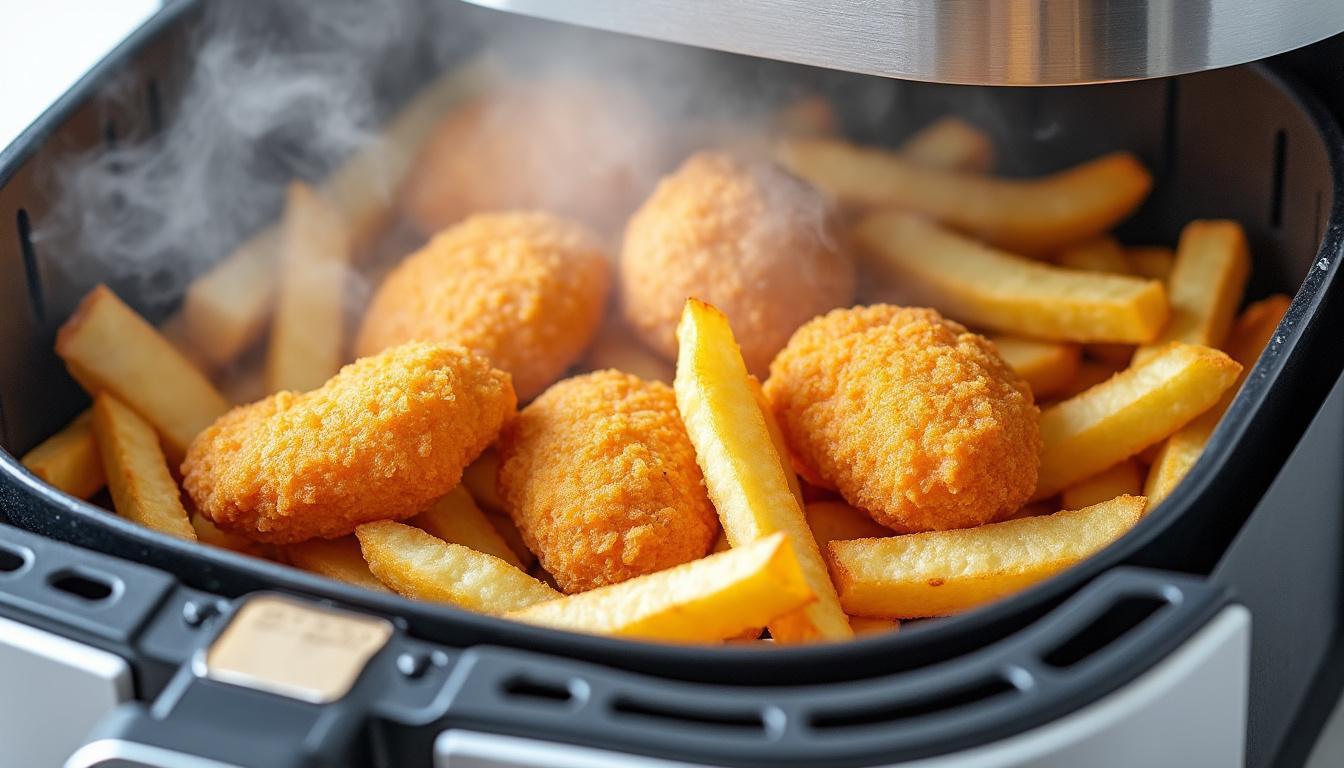
Practical examples illustrate the point. Frozen french fries often crisp best at 400°F for 12–18 minutes, with a shake at 8–10 minutes. Chicken nuggets typically require 375–400°F for 10–14 minutes. Thin fish sticks will cook at 380°F for about 8–12 minutes with a brief flip. Frozen pizzas depend on diameter and crust thickness; small personal pizzas are often best at 380°F for 10–14 minutes. These benchmarks are summarized in the table below to provide quick reference for common frozen foods.
| Food | Temp (°F) | Time (min) | Quick Tip |
|---|---|---|---|
| French fries | 400 | 12–18 | Shake halfway; light spray of oil for extra crisp |
| Chicken nuggets | 375–400 | 10–14 | Flip once; add seasoning after cooking |
| Fish sticks | 380 | 8–12 | Flip at halfway for even browning |
| Personal frozen pizza | 380 | 10–14 | Check cheese melt; rotate if needed |
| Frozen vegetables | 370–380 | 8–12 | Spritz oil and season after cooking |
| Chicken wings | 380–400 | 18–24 | Flip halfway; toss in sauce after crisping |
| Mozzarella sticks | 390 | 6–10 | Turn midway; watch for melting cheese |
To make timing repeatable, log two variables: machine temp consistency and how crowded the basket was. For instance, Nora notes that when the basket is >60% full, add 2–3 minutes for fries. When cooking for guests, stagger batches rather than stacking: batch cooking keeps texture optimal and ensures every serving hits the table hot. For more creative tricks to push frozen food results further, the round-up of 26 air fryer secrets provides inventive hacks that pair well with these timing fundamentals.
One practical habit is to always check internal temperatures for proteins: a quick probe can prevent undercooking, especially with larger frozen pieces. Insight: controlling the interplay of heat and time—rather than following packaging blindly—produces dependable crispness and even doneness.
Seasoning, coatings, and small tricks to maximize crispy texture and flavor
Elevating frozen foods goes beyond timing; seasoning and finishing techniques transform texture and taste. A light mist of oil can create an instant golden crust, while simple dry seasonings added after cooking preserve freshness and avoid burning. Spices and finishing salts can convert a snack into a composed side: smoked paprika and garlic powder for fries, lemon zest and parsley for fish sticks, or a dusting of grated Parmesan for vegetables.
Coatings and breading upgrades are powerful tools. Frozen breaded items often arrive with factory coatings designed for conventional ovens, so a few homemade touches can improve them. Before cooking, a delicate sprinkle of panko or cornflake crumbs combined with a thin oil spray adds crisp layers that respond well to quick, hot cycles. For items meant to remain gooey inside, such as mozzarella sticks, lower finish temperatures prevent over-browning while letting cheese reach that ideal pull.
Flavor layering also counts. Marinades can be applied briefly to frozen meats after partial thawing or after the first crisping phase; alternatively, brush sauces on wings or tenders in the final two minutes to caramelize glazes without burning. Dips and finishing sauces expand the perceived quality of a quick meal. Nora often pairs buffalo sauce with air-fried cauliflower bites; she crisps the vegetable first, then tosses in sauce for a sticky, well-coated finish.
For adventurous cooks, try unexpected accents: a light truffle oil drizzle on fries, za’atar on roasted frozen vegetables, or a citrus gremolata for fish sticks. These touches are easy recipes that convert frozen convenience into a creative plate. For additional technical tips aimed at crispiness specifically, the guide on best air fryer cooking tips for crispy results complements these seasoning techniques.
Practical plating examples reinforce why finishing matters. A bowl of air-fried sweet potato fries with a smoked paprika mayo, or a platter of mozzarella sticks with bright marinara, suggests how minor enhancements shift perception. Insight: seasoning and finishing choices are the final leap from acceptable to memorable; treat them as the last — and decisive — cooking step.
Batch cooking, meal planning, and maintenance for reliable frozen-food results
Batch cooking places the air fryer at the center of weekly meal strategies. Cooking in rounds keeps texture intact and simplifies reheating: crisply finish a portion and move it to a low oven to hold without steaming. For meal prep, pre-cooking proteins and vegetables in batches, then storing them with a quick re-crisp in the air fryer, shortens assembly time on busy evenings.
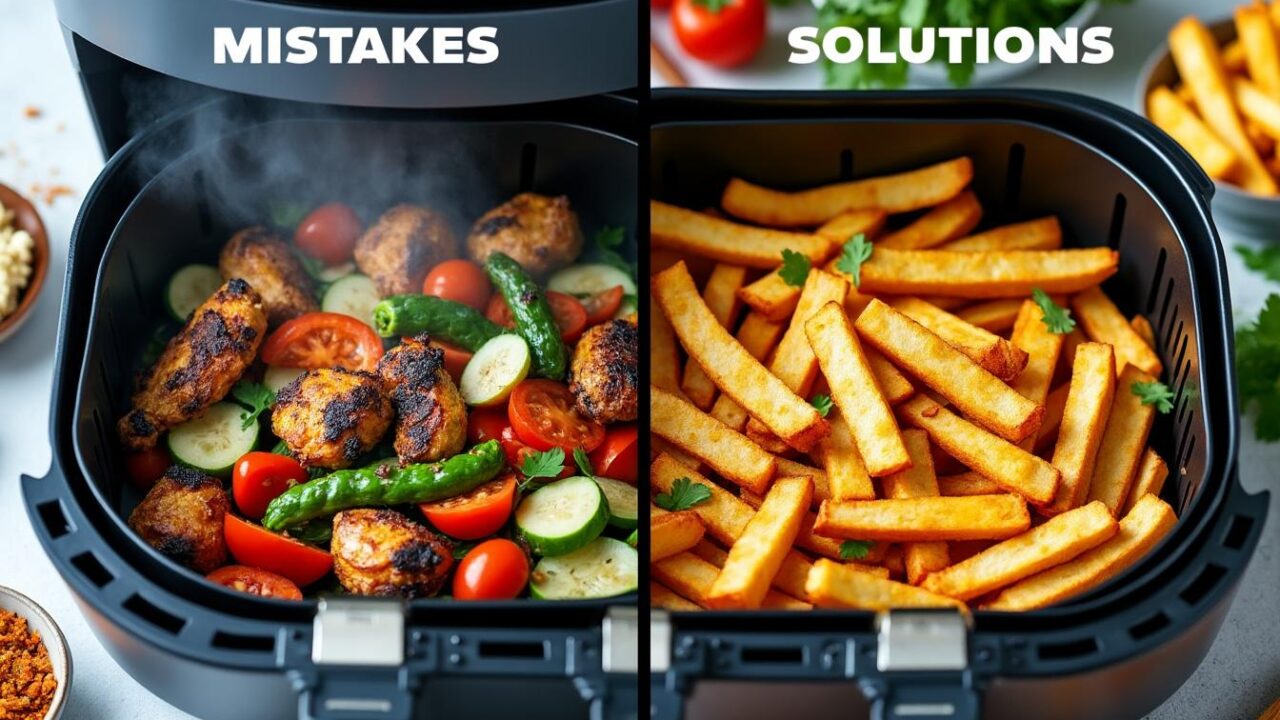
Batch cooking demands attention to capacity limits. Overcrowding is the most common error; when airflow is restricted, crust formation fails. Plan portions by basket volume rather than package size. Use multiple quick cycles to extend capacity while preserving crispness. Nora plans family dinners around two or three batches, timing each so plates come out consecutively rather than simultaneously cold.
Storage and reheating also matter. To preserve crispness after refrigeration, reheat at a slightly higher temperature for a short time rather than microwaving. For instance, chilled patty or nugget portions can be re-crisped at 375–390°F for 4–6 minutes. Freezer-to-air-fryer convenience is one of the appliance’s virtues, but reheating deserves the same respect: a brief high-temperature pass restores crunch without drying the interior.
Maintenance prolongs performance. Regularly empty crumbs and wipe the basket to ensure even airflow, and avoid harsh abrasives on non-stick finishes. Routine cleaning prevents accumulated grease from smoking and impacting flavor. Periodic calibration checks—using a simple oven thermometer—verify that the air fryer’s temperature control remains accurate, supporting consistent outcomes for frozen foods and homemade recipes alike.
Batch cooking aligns well with creative weekly menus: assemble bowls of roasted frozen vegetables, sliced air-fried chicken tenders, and a grain base for easy lunches. Insight: structured rounds, intentional storage, and routine cleaning make the air fryer a dependable engine for fast, healthy meals.
Troubleshooting common problems and creative frozen-food recipes to try
Even with careful technique, issues can arise: uneven crisping, cloudy exteriors, or melted fillings escaping early. Most problems signal one of three causes: overcrowding, incorrect temperature, or inadequate preheat. Corrective steps are straightforward: space items, adjust the temperature by 10–25°F, and add a two- to five-minute preheat if results are inconsistent.
Some specific fixes include flipping irregular items halfway to even out hot spots, using a light oil spray to promote Maillard browning, and pausing to separate any pieces that stick mid-cycle. For sticky fillings like pastry or cheese, a lower finishing temperature prevents blowouts while preserving texture. If smoke appears, remove any loose crumbs and lower heat slightly; a clean basket reduces this risk significantly.
A short, practical checklist helps during chaotic cooking moments: check basket crowding, confirm temperature setting, test one piece for doneness before removing the rest, and allow the machine to recover heat between batches. These steps shorten troubleshooting time and rescue meals that would otherwise need a second run.
Creative recipes turn frozen staples into inspired dishes. Examples that pair straightforward technique with visual payoff include:
- Truffle-enhanced frozen fries with lemon-parsley gremolata.
- Buffalo cauliflower bites: air-fry frozen florets, then toss in warmed buffalo sauce.
- Mozzarella stick tapas: serve with herbed marinara and spicy honey.
- Sweet potato fries finished with cinnamon-sugar for a sweet-savory side.
These recipes are approachable and stress-free, and they demonstrate how frozen foods serve as a reliable backbone for imaginative plates. Insight: most frozen disappointments are solvable with three small interventions—space, heat, and finish—turning a basic package into a memorable meal.
{“@context”:”https://schema.org”,”@type”:”FAQPage”,”mainEntity”:[{“@type”:”Question”,”name”:”Can frozen foods be cooked directly from the freezer in an air fryer?”,”acceptedAnswer”:{“@type”:”Answer”,”text”:”Yes. Most frozen items can be cooked from frozen without thawing. Arrange in a single layer, preheat the air fryer, and adjust time slightly if the basket is crowded. Use packaging recommendations as starting points and add time in small increments when necessary.”}},{“@type”:”Question”,”name”:”Should oil be added when air frying frozen items?”,”acceptedAnswer”:{“@type”:”Answer”,”text”:”Not always. Many frozen foods have a light oil coating already. A light mist of oil can help achieve extra crispiness, but avoid heavy coatings. For healthy cooking, use minimal oil and rely on heat and proper spacing to create a crisp exterior.”}},{“@type”:”Question”,”name”:”How can batch cooking preserve texture when reheating?”,”acceptedAnswer”:{“@type”:”Answer”,”text”:”Cook in manageable batches and store cooled portions in the fridge. Re-crisp in the air fryer at a moderate-high temperature for a few minutes rather than microwaving. This restores a golden crust while preserving interior moisture.”}},{“@type”:”Question”,”name”:”What temperatures work best for frozen vegetables and snacks?”,”acceptedAnswer”:{“@type”:”Answer”,”text”:”Frozen vegetables typically cook well between 370u2013380u00b0F for 8u201312 minutes. Snacks like fries and nuggets often perform best at 375u2013400u00b0F. Adjust time based on basket load and item thickness.”}}]}Can frozen foods be cooked directly from the freezer in an air fryer?
Yes. Most frozen items can be cooked from frozen without thawing. Arrange in a single layer, preheat the air fryer, and adjust time slightly if the basket is crowded. Use packaging recommendations as starting points and add time in small increments when necessary.
Should oil be added when air frying frozen items?
Not always. Many frozen foods have a light oil coating already. A light mist of oil can help achieve extra crispiness, but avoid heavy coatings. For healthy cooking, use minimal oil and rely on heat and proper spacing to create a crisp exterior.
How can batch cooking preserve texture when reheating?
Cook in manageable batches and store cooled portions in the fridge. Re-crisp in the air fryer at a moderate-high temperature for a few minutes rather than microwaving. This restores a golden crust while preserving interior moisture.
What temperatures work best for frozen vegetables and snacks?
Frozen vegetables typically cook well between 370–380°F for 8–12 minutes. Snacks like fries and nuggets often perform best at 375–400°F. Adjust time based on basket load and item thickness.